


"Place names with 'to' in them" from 1 to 9 [Yonohe Edition] Where was the legendary Yonohe? Explore the mysterious Yonohe!

Of the place names containing the character "戸" (to), only "Shinohe" (四戸) no longer exists. While there are various theories as to why the place and its name have disappeared, none can be definitively stated as the established explanation.
However, it has been confirmed that the Shinohe clan, a branch of the Nanbu clan, did exist, and it is certain that the place name Shinohe existed somewhere in the vast Nukanobu district

In this article, we will introduce the most likely theory among the various theories surrounding Shito as to where it was located


The Shitohe clan, a branch of the Nanbu clan

It is said that the Nanbu clan originated when Munekiyo, the fifth son of Nanbu Mitsuyuki, the founder of the Nanbu clan who moved from Kai to Oshu, was granted the territory of Shinohe and adopted the surname Shinohe .
The branch families of the Shinohe clan include the Takeda clan, Kindaichi clan, Kushibiki clan, Nakano clan, and Nukazuka clan, and the castles that these branch families used as their residences came to be called Shinohe Castles in various places
It is thought that this is why there were "four households" scattered throughout Nukabe County
Where is the location of "Yonhe" as suggested by local documents?
The area believed to be "Shinohe" is around the map shown above. Based on a comprehensive analysis of local historical materials remaining in various regions, it is highly probable that the Asamizu, Kenkichi, Nakui, Fukuda, Tomabechi, Kushibiki, and Shimamori districts in the lower reaches of the Mabuchi River are the area that constitutes Shinohe .
Furthermore, the " Iwate Prefectural History ," compiled by Iwate Prefecture , states that the Shinohe district, which was granted to Munekiyo, was located in Ninohe County, and Kindaichi is considered to be that location. As such, the candidate locations are scattered widely within the territory of the Nanbu clan, as listed below.
The theory that it is the Asamizu River basin that flows through Gonohe Town
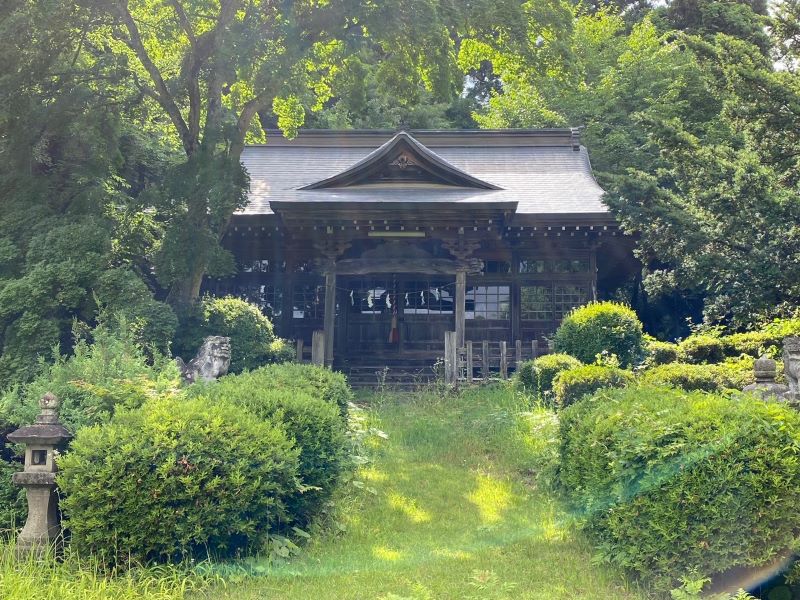
TheAsamizu River is a tributary of the Mabuchi River and flows from west to east between Sannohe Town and Gonohe Town.
Asamizu in particular is said to have been a small post town along the highway, and there are records that state that Nanbu Munekiyo, the ancestor of the Shinohe clan, was the first to live in this area, making it a likely candidate for Shinohe

Additionally, Asamizu is a strategic transportation hub bordering Sannohe to the south, Hachinohe to the east, and Gonohe to the north, and the theory that it was likely used as a defensive base for Sannohe is also one of the reasons for the theory that Asamizu is Yonnohe

In the Asamizu River basin,Asamizu,Shidogishi, andNusa, and these have been suggested as candidates for the location of Shinohe. There is a theory that the castle ruins remaining in Asamizu and Nusa might be the site of Shinohe Castle.
Asamizu Castle Ruins <Information>
- Facility name: Asamizu Castle Ruins (Hachiman Shrine)
- Address: 70 Asamizu, Gonohe-cho, Sannohe-gun, Aomori Prefecture
Google Map
Nozawa Castle Ruins <Information>
- Facility name: Nozawa Castle Ruins
- Location: Ogita, Gonohe-machi, Sannohe-gun, Aomori Prefecture
Google Map
Theory that it is near Kushibiki in Hachinohe City

Kushihiki Hachimangu ShrineisShinohe Hachimangu Shrine, one theory suggests that Shinohe was the area from around the shrine to the present-day Nanbu Town, and that the Kushihiki clan, the lords of Kushihiki Castle, ruled that area.
According to this account, Kushibiki Kiyonaga, who owned a vast territory stretching from Hachinohe City to Gonohe Town and Ninohe City in Iwate Prefecture , was defeated when he rebelled against Toyotomi Hideyoshi in the Kunohe Rebellion, losing his territory and causing the Shinohe clan to disappear.
This theory has been advocated by Mr. Takijiri, a curator at the Hachinohe City Library in Iwate Prefecture, and was broadcast by NHK Aomori Broadcasting Station on October 20, 2023, and was also featured in a special web feature on the station
This theory identifies the Kushibiki family as "the lords of Shinohe," meaning they were the head family of Shinohe, and uses this as evidence that Kushibiki is indeed from Shinohe. In fact, such a description can be found in the Ounan Kyushiroku (Okinawan Records of the Southern Region )
However, other historical documents suggest that the Kushibiki clan was likely a branch of the Shinohe clan, and some even state that they served the Sannohe Nanbu clan and held a fief of around 2,000 koku

This theory also states that Kushibiki Kiyonaga's territory of Shinohe was "divided between Hachinohe and Sannohe after the rebellion, causing Shinohe to disappear," but the Negishi Nanbu clan, who ruled Hachinohe at the time, were vassals of the Sannohe Nanbu clan
Therefore, it is considered legitimate to assume that all of the Kushibiki clan's territories were given to the Sannohe Nanbu clan, and for these reasons, there seem to be many voices that question this theory
Kushibiki Castle Ruins <Information>
- Facility name: Kushibiki Castle Ruins
- Location: Kushibikikanjin, Hachinohe City, Aomori Prefecture
Google Map
One theory is that it was located in Kindaichi in the northern part of Ninohe City

There are documents that state that the Shinohe clan moved from Asamizu Castle to Kindaichi Castle in Ninohe County in the middle of the Sengoku period, and this theory arose from the fact that Kindaichi Castle was called Shinohe Castle
Kindaichi Castle is located on a river terrace on the left bank of the Mabechi River, and it is said that the upper, middle, and lower buildings, separated by dry moats, were the residences of the Shitohe, Kirimaru, and Kindaichi clans, respectively, making it a castle with a complex history

It is believed that this castle came to be called Yonohe Castle because the Yonohe clan, who had previously ruled Yonohe and used the place name as their surname, moved there, and there seems to be little support for the theory that Yonohe was located in Ninohe County
Kindaichi Castle Ruins (Yonenohe Castle Ruins) <Information>
- Facility name: Kindaichi Castle Ruins
- Address: 73 Kindaichidate, Ninohe City, Iwate Prefecture
Google Map
summary
As we have seen so far, there are many different theories about where Yonhe was located and why its name disappeared, and there is still no consensus
However, it is believed that it must have existed somewhere in Nukabe County, and searches for its location are still ongoing
Let's hope that some new discoveries will be made in the near future, leading to the identification of the four houses and the solution to the mystery
Special feature on "place names with 'to' in them" from 1 to 9



I'm a former Edoite (Tokyoite) who loves Morioka and the six prefectures of Tohoku, and I'm a big fan of history, gourmet food, travel, sports, alcohol, and choral singing.
I'll introduce you to interesting things, delicious food, and great places in Tohoku!
Please support NEFT's article creation!
NEFT gathers and publishes articles about the history, culture, and tourism information of various regions in Tohoku
If you enjoyed this article, we would be grateful if you would consider supporting our future interviews, article creation, and website management
*Clicking "Tip" will open the tip sending screen for the external service "codoc"
Other articles

The legend of the buried gold treasure of the Fujiwara clan of Oshu! What is Mount Kinkei in Hiraizumi? [Rock...

Five unique soft-serve ice creams to try at roadside rest areas near Morioka City...

The guardian deity of the years of the Dragon and Snake, Kagutsuchi, the god of fire, is enshrined at Mount Atago...

[Semboku City, Akita Prefecture] A hot topic of craft beer! It's called...

Miyazawa Kenji and the Landscapes of Iwate — Stories of his Hometown Reflected in His Works

Its history dates back to 1900!? A historic shrine with a long history dating back to the Yamato Imperial Court...

[Miyagi Prefecture] Let's show the true power of baseball! Tohoku Rakuten Goal...

[Sendai City, Miyagi Prefecture] Grilled goby is the highlight! Traditional Sendai cuisine...

[Reizen Town, Fukushima Prefecture] Full of nature! Play and learn at Reizen...

A stylish glamping resort inspired by the Kujukushima islands of Kisakata...

Are the various disasters of the year replaced with lies? The lies of Takahata Tenmangu Shrine...
