


The Chagu Chagu Umakko is a traditional early summer event in Iwate, a grand procession of farm horses dressed in gorgeous harnesses!

Every June, a festival that can be considered a symbol of early summer in Iwate Prefecture is held in Takizawa City and Morioka City
The festival, sometimes called "Japan's cutest festival" in some circles, is called "Chagu Chagu Umako ." What exactly makes it so cute? Let's take a look at the full story of this festival!
What is Chagu Chagu Umakko?
Chagu Chagu Umakko is a festival held every year on the second Saturday of June in Takizawa City and Morioka City, Iwate Prefecture
A herd of 60 to 100 farm horses dressed in gorgeous livery marches along a 14km route from Onikoshi Sozen Shrine in Takizawa City to Morioka Hachiman Shrine in Morioka City
There are several theories, but one suggests that the name "Chagu Chagu Umako" originated from the sound of 700 bells of various sizes attached to the horses' costumes during this procession, which sounds like "chagu chagu ."
The festival was designated in 1978 as an "intangible folk cultural property for which measures such as record-keeping should be taken," and the sound of the bells of the Chagu Chagu Umakko festival was also selected in 1996 as one of the "100 Soundscapes of Japan to Preserve" by the Environment Agency
The Nanbu region has long been a breeding ground for fine horses
It has long been known that large, well-built horses inhabit the area around present-day Aomori and Iwate prefectures. The Nanbu clan, who settled in this region from Nanbu-go in Kai Province (present-day Nanbu-cho, Minamikoma-gun, Yamanashi Prefecture), improved the breed by crossbreeding horses from Kai with those from this area, creating the large "Nanbu horse." This breed became popular as a kind of branded horse , and was highly valued throughout the country.
Although the Nanbu horse is now said to be extinct due to crossbreeding with other breeds, the way of life in the Nanbu region, which was intertwined with horses, can still be seen in architectural styles such as the "Nanbu Magariya" (a type of traditional Japanese house with a stable integrated into the building), and in local toys such as the "Hachiman Uma" (Hachiman Horse) that are passed down in and around Hachinohe City, Aomori Prefecture .


The origin of Chagu Chagu Umako
For this reason, in the area surrounding present-day Takizawa City, people have taken to using the horse-related Boys' Festival (May 5th) as a day of rest, and visit Aozen Shrine and Komagata Shrine, the guardian deities of horses, to pray for the good health of their beloved horses
This practice"Osozama-mairi"and took root. Over the years, people gradually began to dress their horses in packing outfits during the pilgrimage, which is said to be the origin of the "Chagu Chagu Umako" festival.
The procession that was born as a result of Prince Chichibu's visit to the prefecture
In 1930, Prince Chichibu, who was famous as a horse lover at the time, visited Iwate Prefecture. After visiting Onikoshi Sozen Shrine in Takizawa City, he marched in a procession of horses to Morioka Hachiman Shrine, where he put on a parade of horses in the horse riding arena in front of the shrine, which was a huge hit with local residents

Therefore, the procession from Onikoshiozen Shrine to Morioka Hachimangu Shrine was held again in the following years, and this is said to be the birth of the current "Chagu Chagu Umakko" format, which involves visiting Onikoshiozen Shrine, then a procession, and then visiting Morioka Hachimangu Shrine
The Chagu Chagu Umako Photo Shoot will be held on the day before the festival」
The day before the festival,a photo session of the "Chagu Chagu Umako"will be held at Onikoshi Sozen Shrine, the starting point of the festival.

There are horses dressed in the festival attire all over the shrine grounds, and you can take photos freely
The format of the festival on the day is similar to watching a marathon or relay race from the sidelines, so if you want to take your time to look at the Umakko and take photos, we recommend going to the photo session the day before. You can get up close to the Umakko and take commemorative photos
However,approaching a horse from behind carries the risk of being kicked by its hind legs, so be sure to approach from the front!

The program for the Chagu Chagu Umako photoshoot. The content and time may change from year to year, but in 2025 it was as shown in the photo above
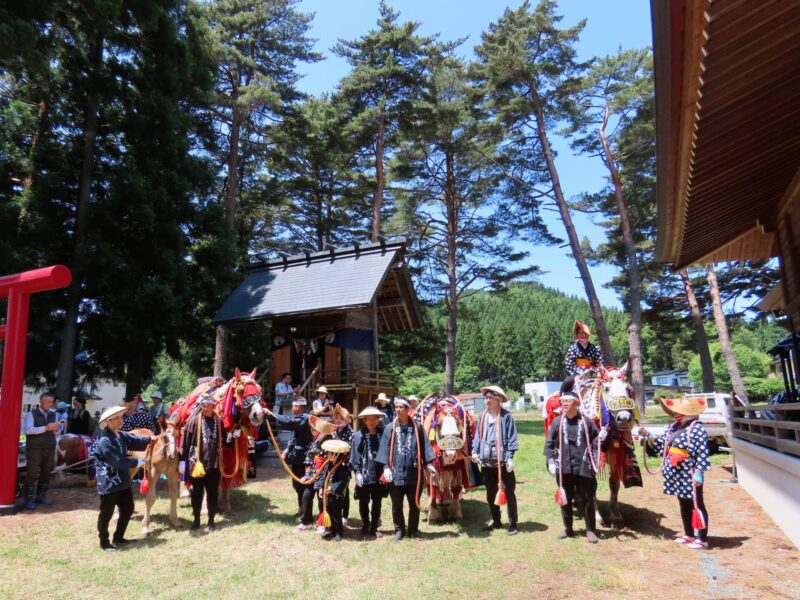
On this day, around 10 horses participated in the photo shoot
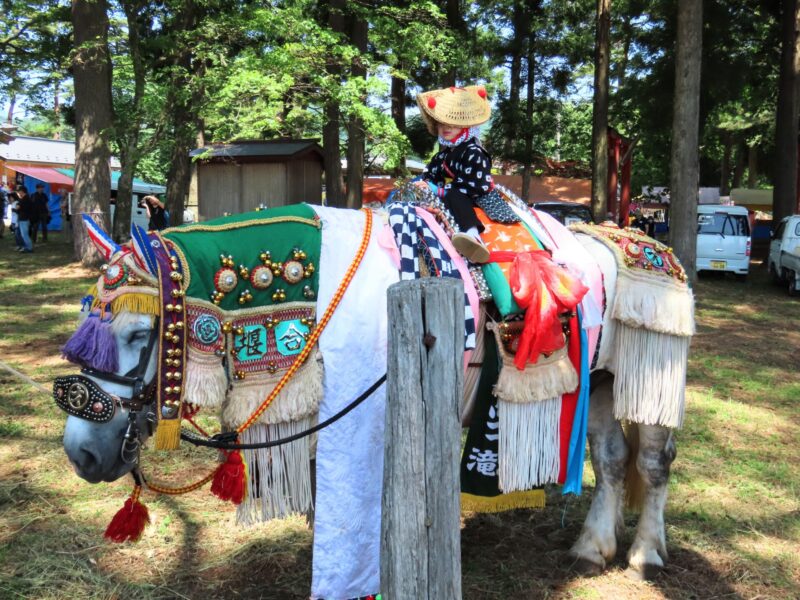
Seeing the horses up close is impressive! They are bigger than what you would normally imagine a racehorse to be, and their legs are incredibly thick

You can also get a close look at the dazzling equipment

Among them are some smaller ponies

The horses set off for a mini parade

The mini parade on the day before will be held twice, once in the morning and once in the afternoon
The day of the Chagu Chagu Umakko festival is bustling with spectators
It's about 14km from Onikoshi Sozen Shrine in Takizawa City to Morioka Hachiman Shrine in Morioka City. It's not an impossible distance to walk, but I wasn't confident about the journey, so I decided to wait for the Umakko to arrive in Morioka City
As the scheduled time approached, the number of spectators along the road gradually increased, and before you knew it, both sides of the road were filled with spectators. The photos below were taken by the author as he followed the approximately 2km journey from the main street to Morioka Hachimangu Shrine

The Chagu Chagu Umakko procession arrives near the main street in Morioka City. Many spectators line the road

Leading the way are seven official horses, ridden by the mayors of Takizawa City and Morioka City

This is the intersection where the main road leads to Iwate Park (Morioka Castle Ruins Park). A cute foal snuggles up next to its mother
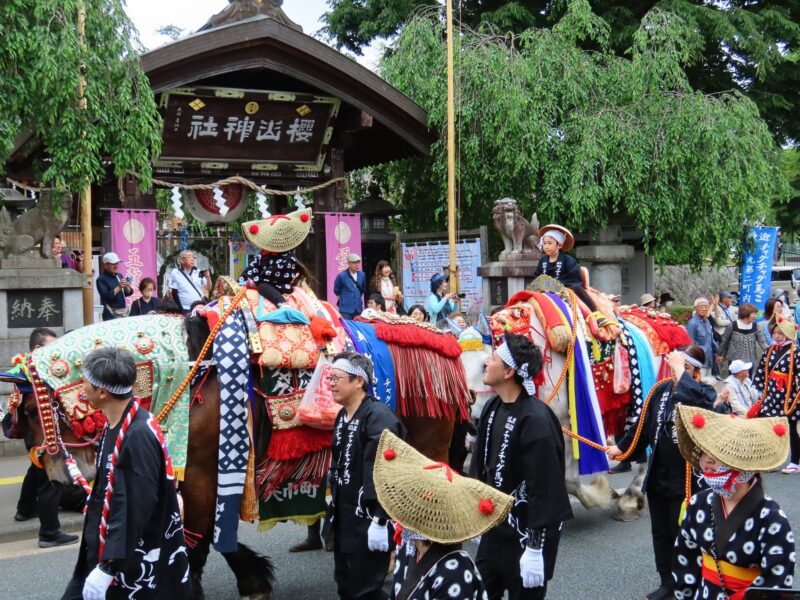
Horse carriages passing in front of Sakurayama Shrine

Just before reaching Nakanobashi Bridge, there is a constant stream of spectators lining the road

The approach to Morioka Hachiman Shrine (Hachiman Street) crosses Sakanamachi Shopping Street

If you take up a position near the large torii gate of Morioka Hachiman Shrine, you can see the Chagu Chagu Umako procession from the front

The runners and their companions waved to the people along the road with bright smiles on their faces throughout the procession, showing no signs of fatigue after walking the 14km distance

Umako also looked somewhat proud of herself as she was cheered on by the many spectators

At the end of the march, the participants did not pass under the large torii gate of Morioka Hachimangu Shrine, but instead went off to the side and entered the grounds of Kasamori Inari Shrine from the front of the approach to the shrine, where the march ended. The finish line was overflowing with people
summary
Because it is a procession, it is similar to going to watch a marathon or a relay race from the sidelines, so if you go to see it expecting a normal festival, you may be surprised at how quickly it ends, but the majestic figures of the Umakko in their cute and gorgeous gear are definitely worth seeing!
If you have the chance, this is a festival you should definitely see live. If you want to take your time to appreciate the Umakko, we also recommend going to the Chagu Chagu Umakko photo session the day before!
Chagu Chagu Umako <Information>
- Name: Chagu Chagu Umako
- Date: The second Saturday of June every year
- Procession route: Approximately 14 kilometers from Onikoshi Sozen Shrine in Takizawa City to Morioka Hachiman Shrine in Morioka City
- Official URL:https://chaguuma.com/

Traveling around the Tohoku region, I enjoy drinking delicious sake and exploring the local history, traditions, and customs. I write articles based on my interests. I'm currently interested in folk performing arts, local toys, and folk beliefs
Please support NEFT's article creation!
NEFT gathers and publishes articles about the history, culture, and tourism information of various regions in Tohoku
If you enjoyed this article, we would be grateful if you would consider supporting our future interviews, article creation, and website management
*Clicking "Tip" will open the tip sending screen for the external service "codoc"
Other articles

Yuzawa City, Akita Prefecture, known as the "hometown of Ono no Komachi"!.

[Yonezawa City, Yamagata Prefecture] Snow Lantern Festival | A mystical experience unique to snow country...

[2024 Event Information] Akita's Kanto Festival, one of the three major festivals in the Tohoku region

Loved by many for 400 years...

Photo report of the Hyakushika Grand Dance (May 4, 2026: Esashi Jinku Festival...).

[Yamagata] Be amazed by the vibrant Hanagasa! Visit the Yamagata Hanagasa Festival...

Dog Palace and Cat Palace – The birthplace of the legendary Japanese dog, the Takayasu dog...

The "Guiding Jizo" that leads the souls of the deceased to paradise | Kesennuma University...

What is Shirakawa Barrier? Shirakawa is a border town where a checkpoint was once located...

[Yamagata Prefecture] Wild vegetables and herbs that can be enjoyed even in early summer...

The missing link in the birth of the Japanese sword? The "fern" wielded by the Emishi...
