


In the early Edo period, hidden Christians (spy Christians) were discovered in the Akita domain, and many were martyred. In the Ogachi region,Kannon statueanda memorial to the Christian martyrsstill remain. This article will focus on these local relics and introduce their history.
We also introduce traces of the "Hidden Christians" that remain in Miyagi and Iwate prefectures in the past. If you read both, you will gain a better understanding of the history of the "Hidden Christians" that spread throughout Tohoku.


Why did Christianity spread in Akita Prefecture?
There are several social factors behind the acceptance of Christianity in Akita, and there are some similarities with the spread of "hidden Christians" in northern Miyagi Prefecture and southern Iwate Prefecture, as introduced in the article above.
It is also said that at that time, the Sendai and Akita domains had churches and were the centers of Christianity in the Tohoku region.
Spread through traders and miners
In the late 16th and early 17th centuries, mining development was active in the Akita region, includingthe Innai Silver Mine and the Ani Copper Mine,attracting laborers and technicians from all over. In an era when indigenous life was the norm, it was rare for so many people to migrate from outside, and it is believed that some of them were already Christians.
Proselytizing by foreign missionaries
In 1602-1603, Pedro Hitomi baptized 200 people in the Senboku region.
It is also recorded that there was a time when Jesuit and Franciscan missionaries visited Noshiro, Kakunodate, and even the mining areas of Ogatsu, and preached with the tacit approval of the local lords.
* Pedro Hitomi - A Christian samurai from Fushimi, Yamashiro Province. He served the Satake clan, a powerful daimyo family during the Sengoku period, and spread Catholicism in northern Dewa Province (present-day Akita Prefecture). His given name is said to have been Kyuemon. ( Quoted from Wikipedia)
A time of religious tolerance
It has been pointed out that in the early days of the reign of Satake Yoshinobu, the first lord of the Akita domain, there was no overt policy of banning Christianity, and therefore some religious activities in rural and mountainous areas may have been overlooked.
The Sendai domain was in a similar situation at the same time, but it is thought that the lord of the Sendai domain, Date Masamune, overlooked this because he was more attracted to the "overwhelming technological prowess of overseas countries" than to the threat of Christianity spreading within his domain.
However, just like other regions, Christianity that spread to Akita would later face a tragic history.
The meaning and origin of the Kitamuki Kannon statue

The " Kitamuki Kannon Statue " erected in Terasawa Park in Yokobori, Yuzawa City, Akita Prefecture , is a Buddhist statue created to mourn the believers who lost their lives during the persecution of Christians in the early Edo period. This is because 15 Christian believers from the Terasawa settlement were among the 32 people executed outside Kubota Castle in Akita on June 20, 1624
While it is generally believed that Kannon statues are placed facing south, this particular Kannon statue is placed facing north, not south
This statue is believed to be facing north (towards Akita City) as a way of mourning the executed believers, and it is interpreted that the Kannon statue is welcoming their souls and offering prayers towards "the far north = the direction of the martyrs."
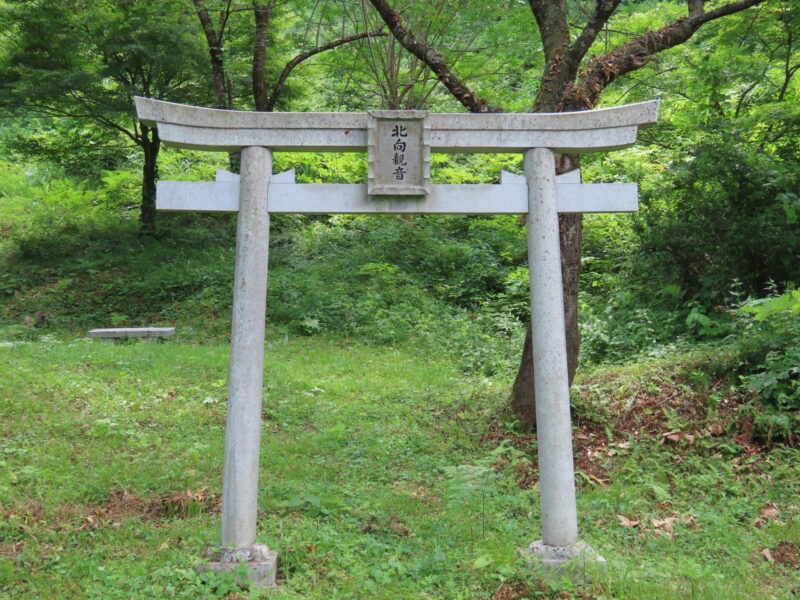
Thus, the "North-Facing Kannon Statue" is considered a Buddhist statue that embodies a background of appeasing Christian martyrs, and it has attracted attention among researchers.
History of its construction and historical background
Records show that the Kitamuki Kannon statue was erected in 1859 (the 6th year of the Ansei era). This was a time when approximately 250 years had passed since the Edo Shogunate banned Christianity, and memories of the persecution of Christians were beginning to fade.
However, even if the surrounding area tried to forget, the local residents did not forget, and the incident was passed down through the generations, suggesting that they had a desire to "mourn the victims someday."
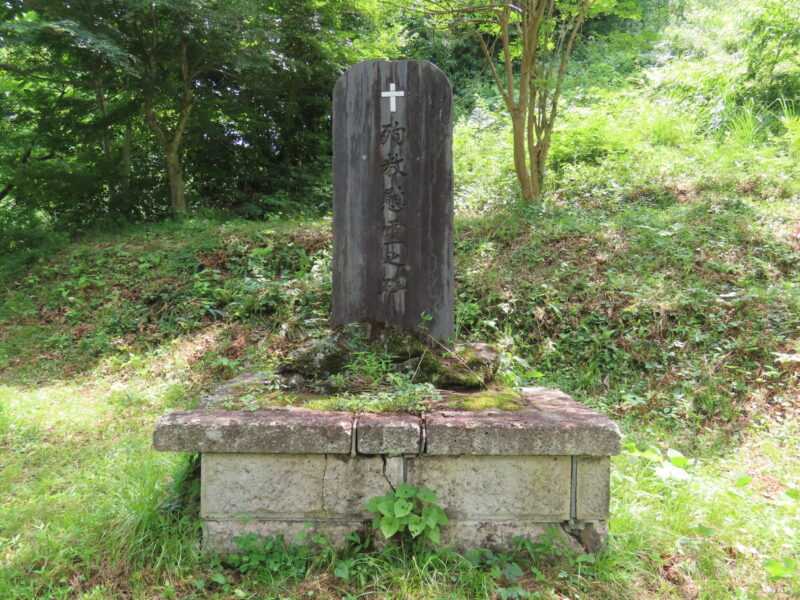
Furthermore, in 1968 (Showa 43), a memorial monument for Christian martyrs was erected nearby by local volunteers , and together with the Kannon statue, it is positioned as a historical religious site in the Ogachi region.

On the back of the Christian Martyrs Memorial, it is inscribed that the first martyrdom occurred in the Akita domain in 1624, and that 15 people were arrested in the Ogatsu area and executed on June 20th of the same year in Sado, east of Kubota Castle, within Yachiyo (the exact location is currently unknown).
The names of the 15 people executed in the Ogatsu area are also engraved, along with a prayer for their souls.
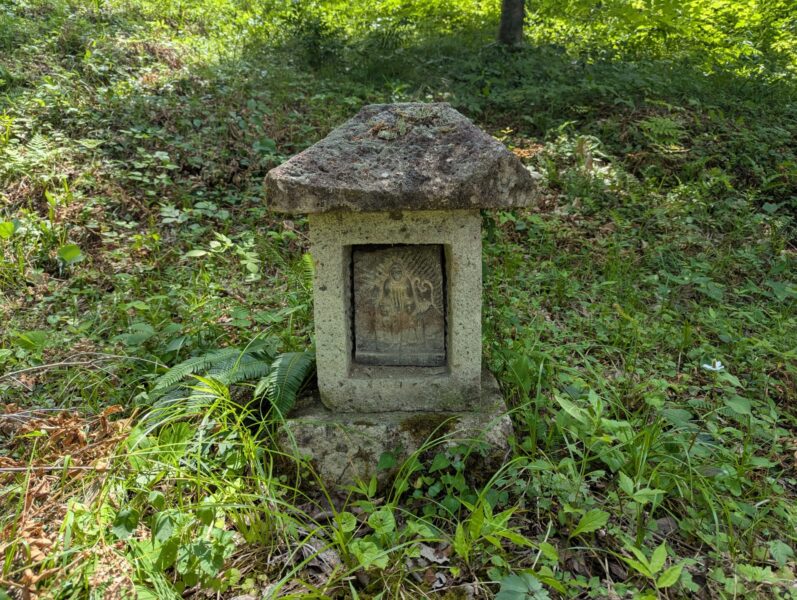
Right next to the Christian Martyrs Memorial is a small shrine, and if you look inside you can see what appears to be a figure of the Virgin Mary.
Kannon statues as a form of faith
At first glance, this Kitamuki Kannon statue appears to be a Buddhist memorial, but its connection to Christian faith has been suggested. In particular, the belief in Kannon Bodhisattva as the Virgin Mary (Maria Kannon) was a common form of faith among hidden Christians throughout the country, and it is thought that this statue may also symbolize the transformation of that faith.
In fact, statues and documents of the Maria Kannon Bodhisattva have been found in nearby temples, indicating that Buddhist beliefs with Christian elements were widespread throughout the region.
Preservation and utilization of the present

The Kitamuki Kannon statue and the memorial monument are now carefully maintained and preserved as Terazawa Park by the city of Yuzawa and the local community association. There are also explanatory signs at the site, which continue to inform visitors of the history.
Information
- Name: Kitamuki Kannon (Terazawa Park)
- Address: Terazawa Hirakata, Yuzawa City, Akita Prefecture, 019-0203
Google Map
Christian remains visible on site
In the Ogatsu area of Yuzawa City, Akita Prefecture, in addition to the Kitamuki Kannon statue and the Martyrs' Memorial, there are several other remains that bear vestiges of the faith and activities of the Hidden Christians. While avoiding overt Christianity, these have been quietly passed down in the region as a sign of the continuation of their faith.
The legend of Innai Silver Mine and hidden Christians
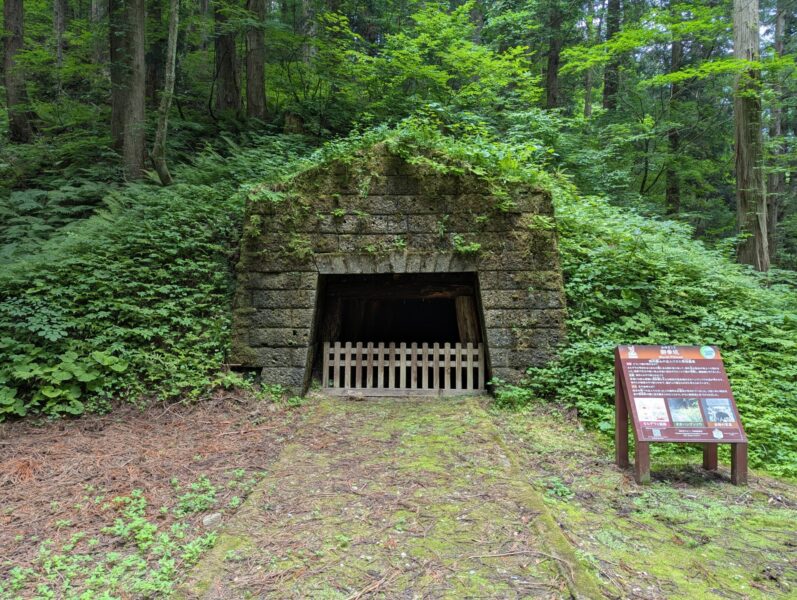
Innai Silver Mine was a mine that flourished from the Sengoku period to the early Edo period, and it is said that Christian believers were among the laborers who gathered there from various regions
Mining work was largely carried out by seasonal laborers and migrants, some of whom were believed to have been baptized in other countries . There are also traditions that missionaries secretly stayed in the area , especially during the peak of the silver mining season in the early 17th century
Legend of the cave as a place of worship
Near the mine, there are several caves and spaces believed to have been used by believers for worship , and these are known locally as " hidden worship sites ." There are also reports of the discovery of fragments of a wooden cross and stone tools believed to be candle holders during the mid-Showa period
Google Map
Hidden Christian remains at Ono Castle ruins

Ono Castle Ruins , located in the Ono district of Yuzawa City , is a mountain castle that, according to legend, was built by a retainer of the Sengoku period daimyo, the Ono-dera clan. However, the details of the builder and local lord remain unknown.
There is a theory that a person named Ono Genba was the builder of the castle, but this is based on local legend, and no historical records have been found to support this at this time .
There is a legend that hidden Christians were hiding here in this area where the ruins of Ono Castle are located.
On this day, when we visited Terazawa Park (Kitamuki Kannon), we had hoped to also visit the "Hidden Christian Ruins" which are said to be located on the mountain path leading to the main castle of Ono Castle, but as you can see in the photo below, the path was overgrown with trees and difficult to navigate. Also, there had been recent bear sightings, so we decided to give up.

According to research, the "Hidden Christian Remains" of Ono Castle Ruins have a stone tower on the mountain path, and a cross can be seen on the back of the stone tower. Some people have actually visited the site and posted photos in the reviews on Google Maps, so if you're interested, it's a good idea to check it out on the map.
Google Map

I'm a member of the Neft editorial team. I love alcohol, music, and travel, and on weekdays I indulge in drinks after work, and on weekends I travel to nearby places whenever I have free time.
My goal is to one day travel abroad to explore connections with Tohoku for a Neft feature! I work hard every day towards that goal.
Other articles

[Part 3] Masumi Sugae's Walk through the Oga Peninsula – The Great Earthquake...

The dreams were big, but...the Nanbu Railway was destroyed by disaster [Aomori Prefecture]

[Akita] Lake Tazawa, Japan's deepest lake, 423.4m deep!

Hanamaki's proud two-sword hero, Shohei Otani! A monument decorating the city...

The Tozawa clan, who first owned Kakunodate in Senboku, rose to become the lord of the Shinjo domain...

Shiwa Inari Shrine, one of Japan's three major Inari shrines, is located in Iwate Prefecture.

Photo report of the Hyakushika Daigun Dance (April 26, 2025: Hidaka Fire Prevention Festival)...

What is Chinese elm? From how to grow it to the significance of including it in New Year's dishes...

Aizu Higan Shishi | A folk performance from the Aizu region, danced during the spring equinox...

The bitter family conflict that unfolded in the Yokote Basin: the "Gosannen War"...
Hote Festival | A fire festival with a history of over 300 years held at Shiogama Shrine...
