This site is an online media that delivers all sorts of trivia about the six Tohoku prefectures, from sightseeing and gourmet spots to local customs, history, and more
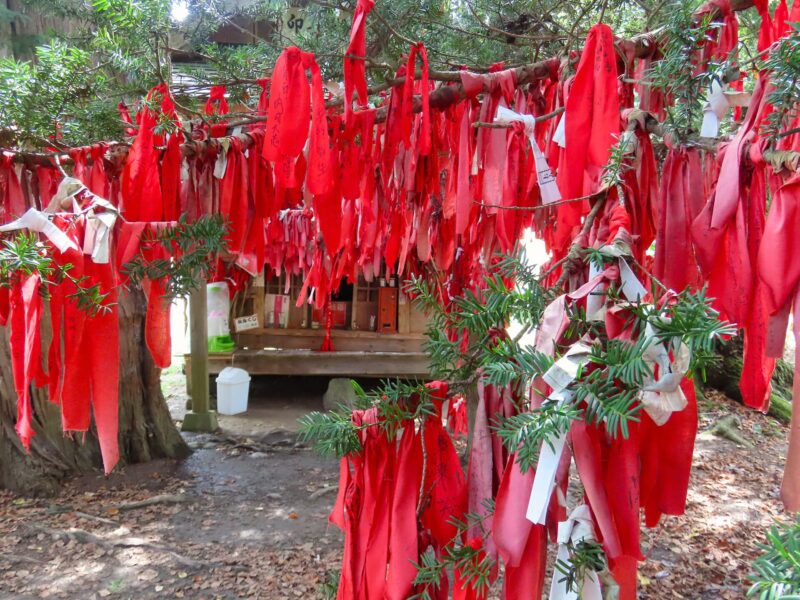
Despite its small size, the shrine exudes an intense presence, and the sight of countless red cloths tied around it is bizarre
This is Unetori Shrine in Tono City, Iwate Prefecture, an ancient place of worship that also appears in Kunio Yanagita's "Tono Monogatari Shūi" (Supplementary Tales of Tono)
What is Ushitori Shrine?
The deities enshrined at "Unetori Shrine" are said to be Manjushri Bodhisattva, Thousand-Armed Kannon, and Fudo Myoo, and the shrine is named as such because these are the guardian deities for the years of the Rabbit, Rat, and Rooster, respectively
The shrine is said to have been founded in 1791 (Kansei 3) when Heibei (Minatoya), a native of Fudai Village who had served in Tono for a long time, invited a divided spirit of Unotori Myojin, located at the Fudai Village Torii (which refers to the place name and the entrance to the Unotori Shrine, a representative tourist attraction of Fudai Village, Shimohei District, Iwate Prefecture)
A matchmaking legend that also remains in "Tono Monogatari Shūi"
The Unotori Shrine has a legend that is also recorded in Kunio Yanagita's "Tono Monogatari Shūi" (Supplementary Tales of Tono)
About a kilometer from the town of Tono, at the foot of Mount Atago, lies a small shrine called "Unetori-sama."In the past, this was a large lake (or pool), and it is said that if one made a wish to the spirit of the pool, a romantic relationship would miraculously be established.In a small pond beside it,"one-leaved reeds"grow abundantly.
That's it
The original shrine, Utori Shrine, is also worshipped as a "god of matchmaking," and, as mentioned above in the Tono Monogatari, it remains a popular power spot for matchmaking and fulfilling romantic wishes, attracting many visitors even today
A world of overwhelming "red" that adorns the temple grounds
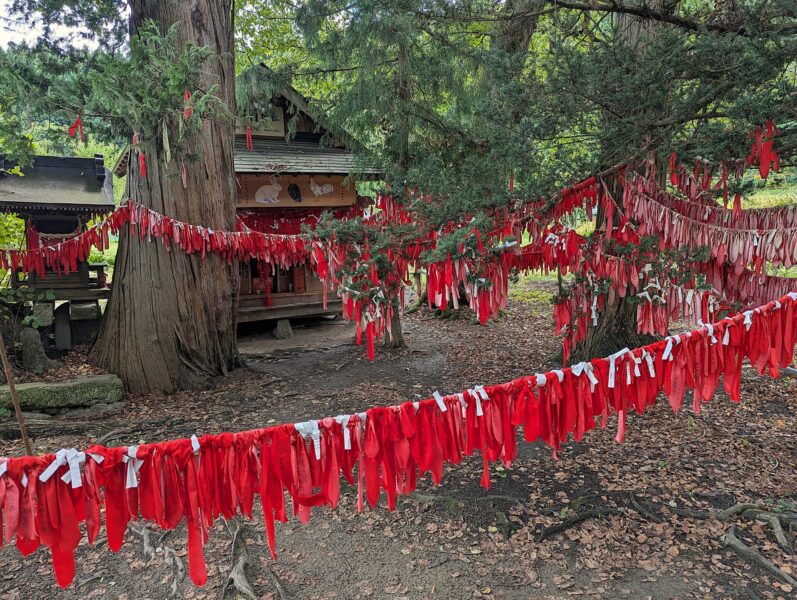
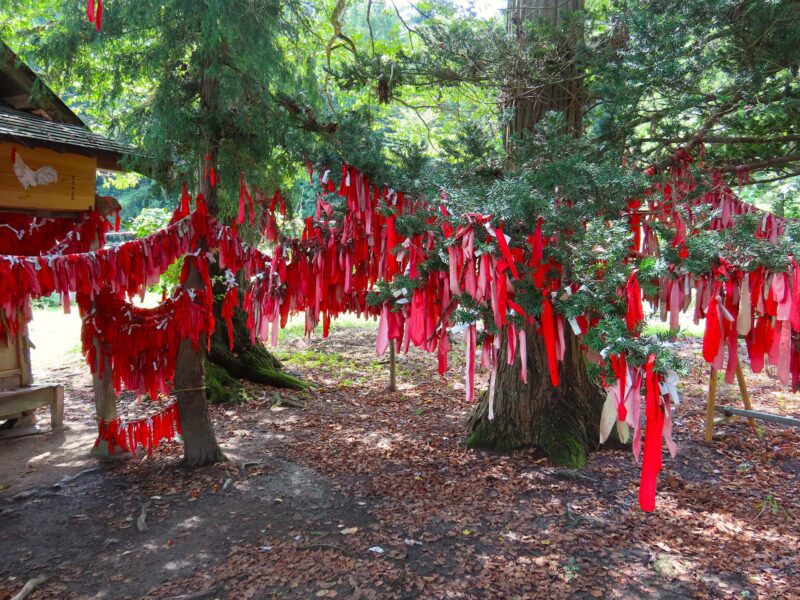
As you can see from the photo above, Unotori Shrine is famous for its somewhat unusual and mysterious scenery
This red cloth is tied to the tree according to a legend that says "if you tie a red cloth imbued with a wish for love to a tree using only your left hand, your wish will come true." It appears to be an imitation of the "one-leaved reed" that also appears in the "Tono Monogatari Shūi" (Supplementary Tales of Tono)
Generally, the plant known as "reed" (ashi/yoshi) has leaves that grow alternately on either side of the stem. When the leaves appear to be growing only on one side, it is called a "one-leaved reed."
Reeds that grow naturally near water
Furthermore, in folklore and legends from various parts of Japan, "one-sided reed" has the following meanings:
1. A sign of a water god's attendant (messenger)
Many legends about "one-sided reeds" across Japan describe them growing in places where water gods, dragon gods, or the vengeful spirits of princesses who suffered tragic love affairs reside
At Unotori Shrine, it was treated as a special plant imbued with the spiritual power of the "Lord of the Abyss."
2. A symbol of "unrequited love"
The way the leaves only point in one direction is reminiscent of unrequited love between a man and a woman
It is believed that tying pieces of paper with the names and wishes of the two people written on them together had a magical meaning (sympathetic magic) of transforming unrequited love into mutual love (matchmaking)
Currently, the pond that once stood on the grounds of Unotori Shrine has dried up, and the "one-sided reeds" that used to grow naturally on the grounds can no longer be seen. As a result, it is said that worshippers now entrust their wishes to "the branches of the trees on the shrine grounds" instead of the reeds
It is believed that the "reed with one leaf" was replaced with " a red cloth that is difficult to tear," and the way of tying it also evolved from "overcoming difficulties and firmly securing the bond " to the modern rule of "tying it with only the non-dominant hand ."
Perhaps the interpretation of the one-leaved reed was similar to the wish for a "four-leaf clover" in modern terms
I actually visited Unotori Shrine
In early autumn of 2025, I actually visited Unotori Shrine
Unotori Shrine is located along Prefectural Road 238, a 5-minute drive southwest from Tono Station. It's easily accessible, with free parking and restrooms right in front of the shrine
Alternatively, if you're not traveling by car, you can rent a bicycle at Tono Station and arrive in about 10-15 minutes
Google Maps – Unotori Shrine
Since I came by car this time, I'll park in the free parking lot right in front of the building
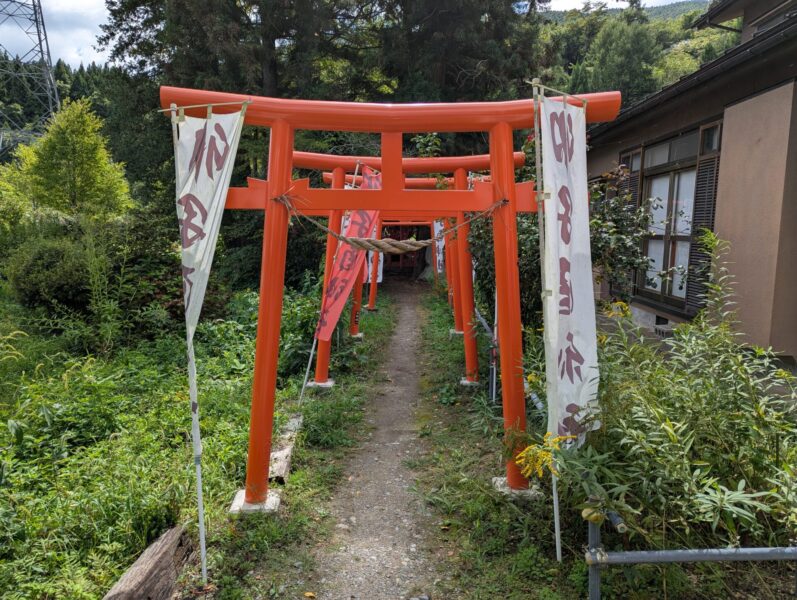
The rows of torii gates are thought to have been donated as a sign that wishes will "come true" or "be granted." This suggests the strong power of Unotori Shrine
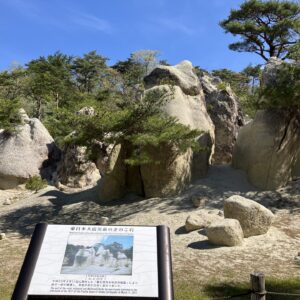
As you pass through the torii gate, countless "red cloths" tied together with wishes will appear before your eyes
Paintings of the animals "Rabbit, Rat, and Rooster" have been dedicated and displayed in the main hall
Having finished my prayers, I am now ready to make the wish I came up with
There's an unmanned stall with a red cloth outside the main hall. The price is as written in the photo, and you put it in the offering box in the center
I borrowed the marker pen from the cup
You write with your non-dominant hand (in my case, my left hand). Incidentally, while "success in love" is a prominent theme, the content can be anything related to forging good relationships, such as family ties, friendships, or work connections
Then, you write your wish on a red cloth and tie it to a tree branch or something similar in the temple grounds using your non-dominant hand
This completes the process
Surrounded by cedar trees, the sight of a large amount of red cloth dancing in the wind made me a little scared, wondering if it was some kind of eerie place...but when I actually visited, the wind blew through the trees and sunlight filtered through, making it a very mystical and pleasant place
Unotori Shrine in Tono is a mystical shrine said to bring good fortune in love . I highly recommend visiting it when you come to Tono.
Unotori Shrine
Name: Unetori Shrine
Address: 11-23 Shimogumi-cho, Tono City, Iwate Prefecture 028-0526
Parking: Free parking available (use the "Sawayaka Toilet Parking" area)
For inquiries, please contact: Tono City Tourism Association (General Incorporated Association) TEL: 0198-62-1333
Warning
Since the property is located near a residential area, please be mindful of your neighbors
I'm a member of the Neft editorial team. I love alcohol, music, and travel, and on weekdays I indulge in drinks after work, and on weekends I travel to nearby places whenever I have free time.
My goal is to one day travel abroad to explore connections with Tohoku for a Neft feature! I work hard every day towards that goal.