


Is Enichiji Temple, founded by the high priest Tokuichi of the Hosso sect, the birthplace of Aizu Buddhist culture? [Bandai Town, Fukushima Prefecture]

Bandai Town, Yama District, Fukushima Prefecture, is located northeast of Aizuwakamatsu City, at the southern foot of Mount Bandai
Here you will find a temple called "Enichiji," which once flourished as a center of Buddhist culture in the Aizu region
This site, where archaeological excavations and restoration work have been carried out, is nowa national historic site, and the restored main hall and middle gate quietly convey the appearance of the past.
Enichiji Temple, a base of Aizu Buddhism established in the early Heian period
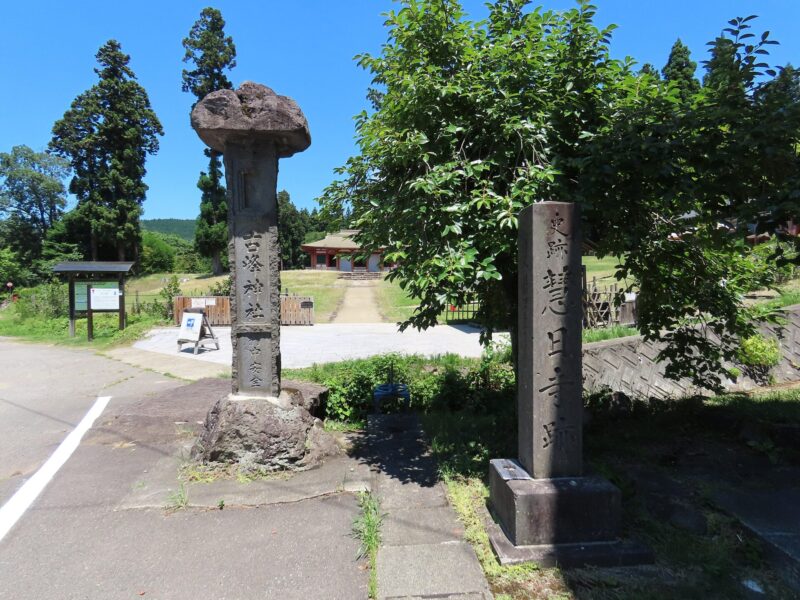
According to legend, Enichi-ji Temple was founded in 807 by Tokuitsu, a monk of the Hossō sect
Tokuichi, who is said to be the founder, was a scholarly monk who is said to have studied Hosso Buddhism in the southern capital of Nara (Kofuku-ji Temple and Todai-ji Temple). In his twenties, he moved to the eastern provinces and is said to have based himself in Aizu, where he devoted himself to the study of doctrine and to spreading the teachings
Although there are no historical records that directly explain the origin of the name Enichiji Temple, the name "Enichi" is said to mean "sun of wisdom" in Buddhist terminology and symbolize the light of enlightenment.
Based on Tokuichi's solid academic knowledge, the temple flourished as the mother temple of Aizu Buddhism

Tokuitsu is also known for his doctrinal debate with Saichō , known as the "San'ichi Kenjitsu Shōron" (The Debate on the Provisional and Realities of Buddhism ) . This debate is considered the first inter-sectarian dispute in the history of Japanese Buddhism, demonstrating that Tokuitsu, despite being in Aizu far from the capital, possessed the scholarship to debate on equal footing with high-ranking priests in the central region.
Furthermore, around 815 AD, a letter arrived from Kobo DaishiKukai, in which Kukai praised Tokuichi Bodhisattva, saying, "Tokuichi Bodhisattva is like a jewel of precepts and an ice jewel, and his wisdom is clear and bright..." (Koya Zappitsushu, Volume 1).
This shows that Tokuitsu was already in Mutsu Province and had established a base for spreading Buddhism, and that Kukai highly valued his activities
Tokuichi had ideological connections with Saicho and Kukai, two of the greatest monks of Heian Buddhism, and it is believed that Enichiji Temple maintained a high standard in both scholarship and missionary work
Decline, abandonment, and rebirth
From the Middle Ages onwards, Enichiji Temple gradually fell into decline
In 1589, during the Sengoku period, Date Masamune defeated the Ashina clan in the Battle of Suriagehara and invaded Aizu. The fires of the war reached Enichiji Temple and most of the temple buildings were burned down, leaving only the main hall
The only remaining main hall was burned down again in 1626 during the early Edo period. Although it was rebuilt afterwards, it is said that it was nowhere near the scale of the former grand temple complex
Furthermore, Enichiji Temple was officially abandoned during the anti-Buddhist and anti-Shrine Movement in 1869, and the temple buildings and pagodas fell into disrepair. Over the years, its existence has remained only in people's memories
Then, after a long period of time, in 1970 (Showa 45), this sitethe "Historic Site of Enichiji Temple Ruins,"and since then, preservation and research efforts have been intensified.
The restored ruins of Enichiji Temple
The "Shinpen Aizu Fudoki" (New Edition of the Topography of Aizu) (1809) states that Enichiji Temple once "had over 3,800 temple buildings and over 300 monks, and was extremely magnificent."
Excavations have revealed that the grounds of Enichiji Temple are extremely vast, and the remains are divided into three areas: the main temple area, the ordination platform area, and the Kannonji area
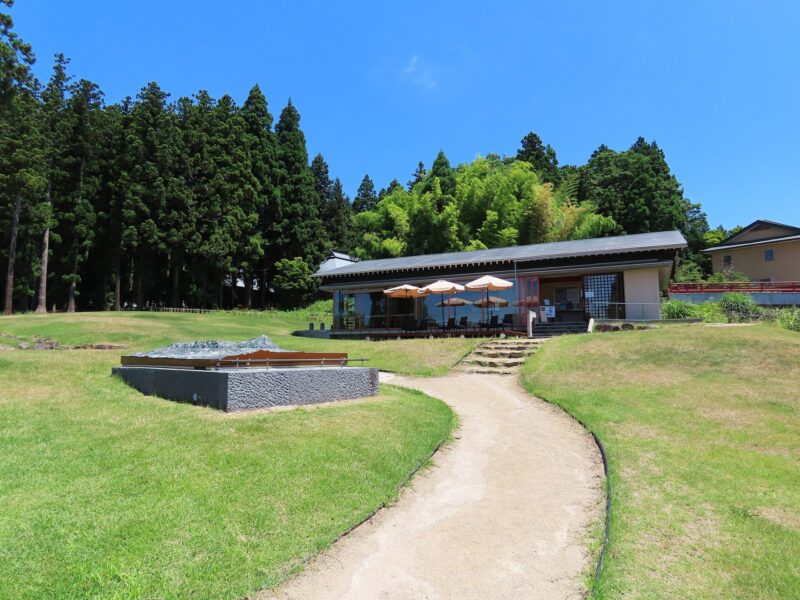
Preservation and maintenance work began in 2003, with the main hall being restored in 2008 and the inner gate in 2009 based on the results of excavations
Since then, the temple has entered the maintenance and utilization phase, and in 2018, a seated statue of Yakushi Nyorai (a restored statue) was enshrined in the main hall
The restored main hall and inner gate

The current site of Enichiji Temple has recreated the main hall and inner gate based on the results of excavations. The main hall is a gabled building with a cypress bark roof, and the interior, lined with vermilion-painted pillars, is truly majestic

Once you pass through the inner gate, you will find a restored stone-paved plaza, and behind the main hall, the foundation stones of the former lecture hall and corridor remain in order, allowing you to get a real feel for the layout of the temple complex from the Heian period

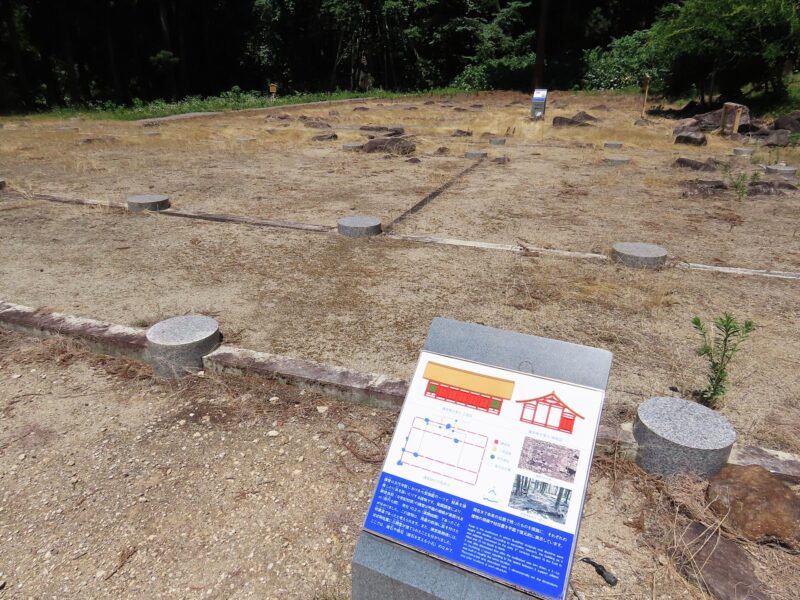
These buildings are not simply tourist facilities, but have been "restored as cultural assets" based on academic documents, faithfully reflecting the positions of the foundation stones found during excavations, and have been maintained to create and allow visitors to experience the spaces of the past
Tokuichi Mausoleum
At the back of the grounds is the "Tokuitsu Mausoleum ," which is said to be the tomb of Bodhisattva Tokuitsu . It was once thought to be the base of a three-story pagoda, but archaeological excavations have revealed that it is the foundation of a five-story pagoda.
Mount Bandai Enichiji Temple Museum
The Bandai Enichiji Temple Museum, located adjacent to the west side of the site, displays roof tiles, fragments of Buddhist statues, metal fittings, and other artifacts unearthed during the excavation. Visitors can also view computer-generated reconstructions and video materials introducing Tokuichi's life
Enichiji Temple Yakushido Hall

This is an old temple of Yakushi faith, whose name appears in the Muryoju Fudoki (1350). It was destroyed by fire in 1879 and rebuilt in 1895 due to the faith of local residents
Niomon Gate
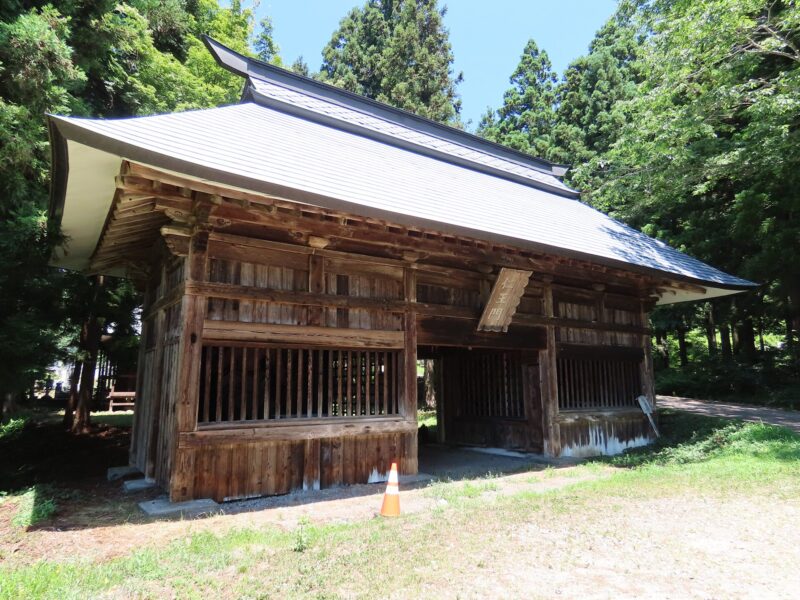
Originally built in the late Edo period as the main gate of Enichiji Temple, it survived the fire in 1879 that destroyed the Yakushido Hall , and has remained in its current location after being relocated three times
summary
Enichiji Temple is one of the oldest temples in the Tohoku region from the early Heian period whose founding date is known, and it is an important historical heritage site as the "birthplace of Aizu Buddhist culture."
For over a thousand years, it has been carefully preserved as a place to convey the history and spiritual culture of the region
Enichiji Temple <Information>
- Name: Mt. Bandai Keijiji Temple
- Address: 4950 Bandai Honjikami, Bandai-machi, Yama-gun, Fukushima Prefecture, 969-3301
- Phone number: 0242-73-2320
- Official URL:Bandai Town Official Website – Historic Site of Enichiji Temple
Google Map

Traveling around the Tohoku region, I enjoy drinking delicious sake and exploring the local history, traditions, and customs. I write articles based on my interests. I'm currently interested in folk performing arts, local toys, and folk beliefs
Please support NEFT's article creation!
NEFT gathers and publishes articles about the history, culture, and tourism information of various regions in Tohoku
If you enjoyed this article, we would be grateful if you would consider supporting our future interviews, article creation, and website management
*Clicking "Tip" will open the tip sending screen for the external service "codoc"
Other articles

[Iwate Prefecture] Choose from hidden hot springs, famous hot springs, and unique spring qualities in Iwate Prefecture...

[Fukushima] Introducing recommended hiking courses for Mt. Bandai based on level!

[Akiu, Miyagi Prefecture] To make the most of your trip to Akiu! Akiu Sato Sen...

The "hinoki stage" made of Aomori cypress is not only fragrant but also water-resistant...

"Saimochi" is a delicious local dish from Tamura City, Fukushima Prefecture. It's an essential ingredient...

What is the "Long-Armed, Long-Legged" yokai of Mount Chokai? The volcano god, Omotsu...

[Fukushima Prefecture] 5 Famous Waters of Fukushima Prefecture! "Beautiful Fukushima"...

[Aomori Prefecture] Let's go on a clay figurine tour! Highlights and spots...

Hot springs bubbling up where there are no volcanoes? Witness the mysteries of the Earth up close...

[Yonezawa City, Yamagata Prefecture] The Yonezawa City Library is wonderful! It's also cozy...
![Koriyama brand vegetables [Green Sweet]](https://jp.neft.asia/wp-content/uploads/2024/09/IMG_8104-300x300.jpg.webp)
Koriyama Brand Vegetables [Green Sweet Edition] Cooking...
