

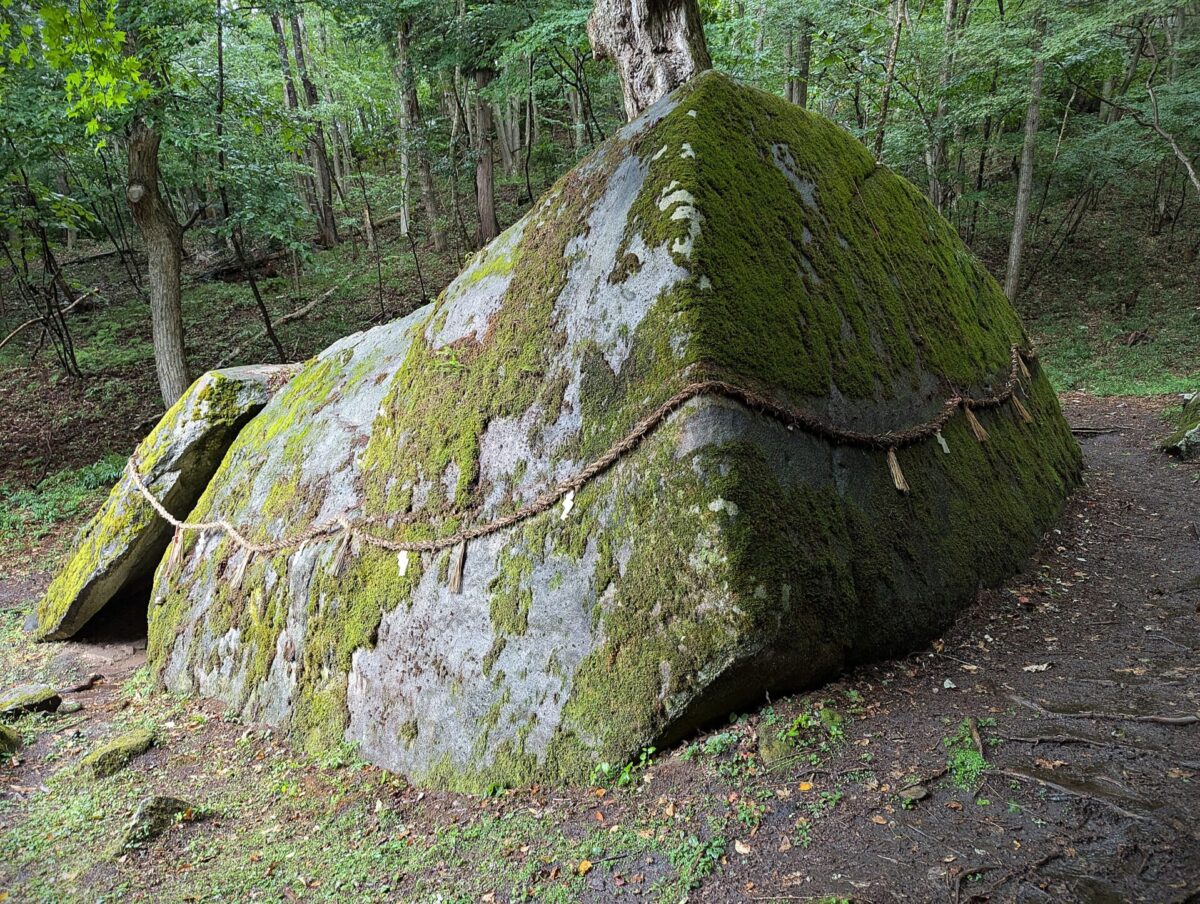
Tannaiyama Shrine | A sacred site of ancient Japanese animism, with a massive rock dedicated to the god Arahaba-ki as its sacred object [Iwate Prefecture]

In Towa-cho, Hanamaki City, Iwate Prefecture, there is a shrine that enshrines a large rock as its sacred object, and also worships a local pioneering deity, a practice not seen in other regions
Incidentally, the titleanimism, a belief or worldview that posits that spirits or souls reside in all living things other than humans (animals and plants) and inanimate objects (rocks, mountains, rivers, tools, etc.). It is a fundamental concept in Shintoism, Japan's ancient religion.
What is Tannaiyama Shrine?

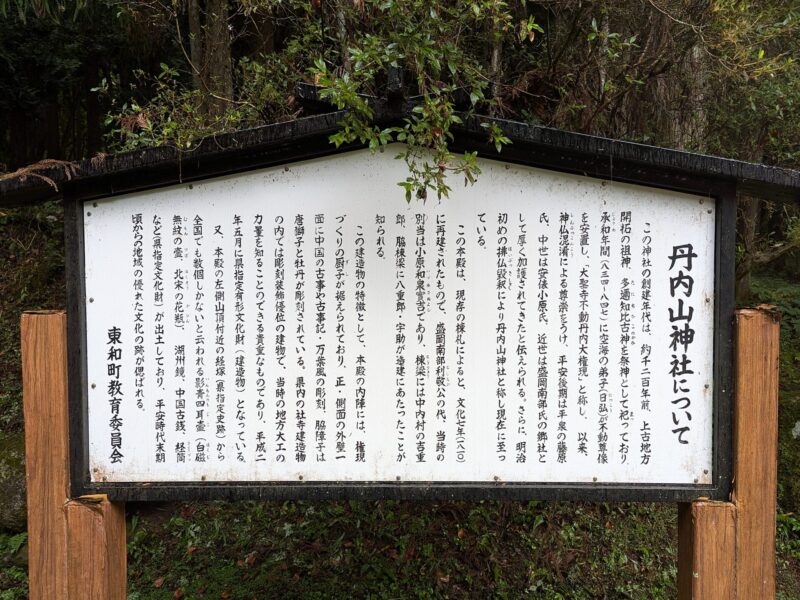
Tannaiyama Shrine , located in Taniuchi, Towa-cho, Hanamaki City, Iwate Prefecture, is said to have been founded about 1,200 years ago, and enshrines Tanichihiko-no-kami, the ancestral deity of the ancient pioneers of the region, as its main deity .
During the Jōwa era (834-848), a disciple of Kūkai (Nichikō) enshrined a statue of Fudō Myōō and"Daishōji Fudō Tan'nai Daigongen,"and since then it has been revered as a place of syncretism between Shinto and Buddhism.
It seems that it was called "Daishoji" at that time
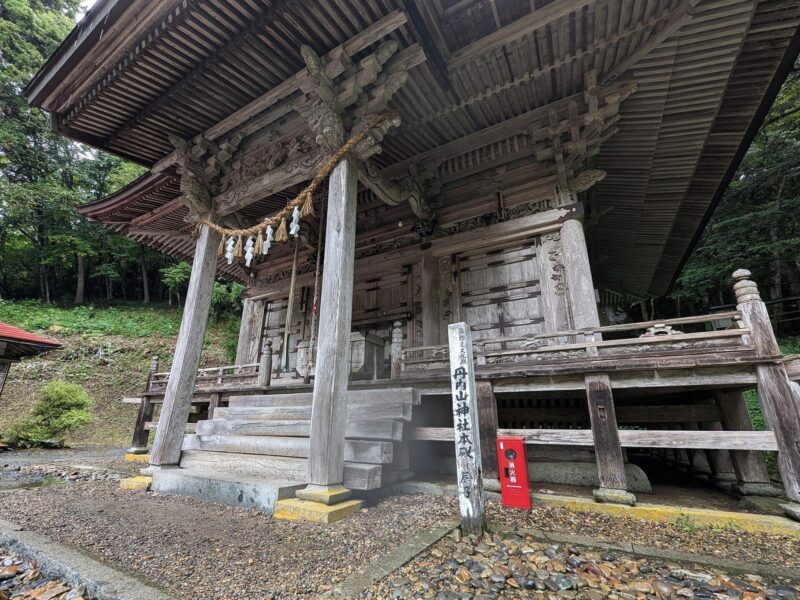
It is said that during the late Heian period, the area received the reverence and generous protection of the Oshu Fujiwara clan of Hiraizumi, during the medieval period the Anbyo Ohara clan, and in the early modern period the Nanbu clan of the Morioka Domain
During the anti-Buddhist movement in the early Meiji period, the shrine was renamed "Tannaiyama Shrine," and it remains so to this day
Currently
- Tani-chi-hiko-no-kami
- Ten no Onakanushi deity
- Takamimusubi-no-Kami
- Kami-Musubi-no-Kami
- Umaashikabihikoji no Kami
- Eighty-eight shrines of the Eternal God
It is enshrined as the deity
The sacred object known as the megalith of Arahabaki-no-Okami
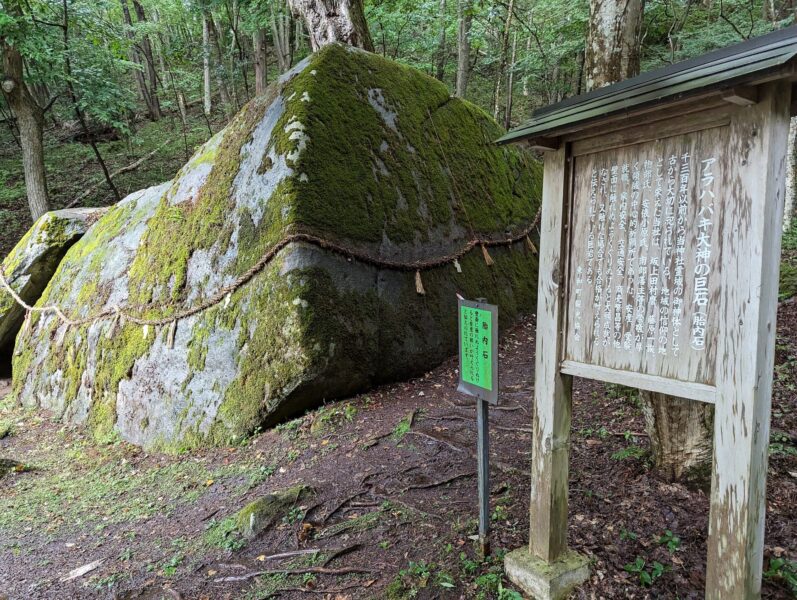
At the very back of the shrine grounds sits a massive rock known as the Arahabaki Great Stone (Tannai Stone) , which appears to have been revered as a sacred object by the local residents even before Tanichihiko-no-kami was enshrined there
"Arahabaki"is a mysterious ancient deity and does not appear in the Japanese chronicles (Kojiki and Nihon Shoki).
Other documents also contain almost no related mentions, and there is an extremely small amount of material that could lead to an explanation, so it is discussed in various theories, such as "a rebellious god (a god who did not obey the imperial court)" or "a guardian deity (a roadside deity)."
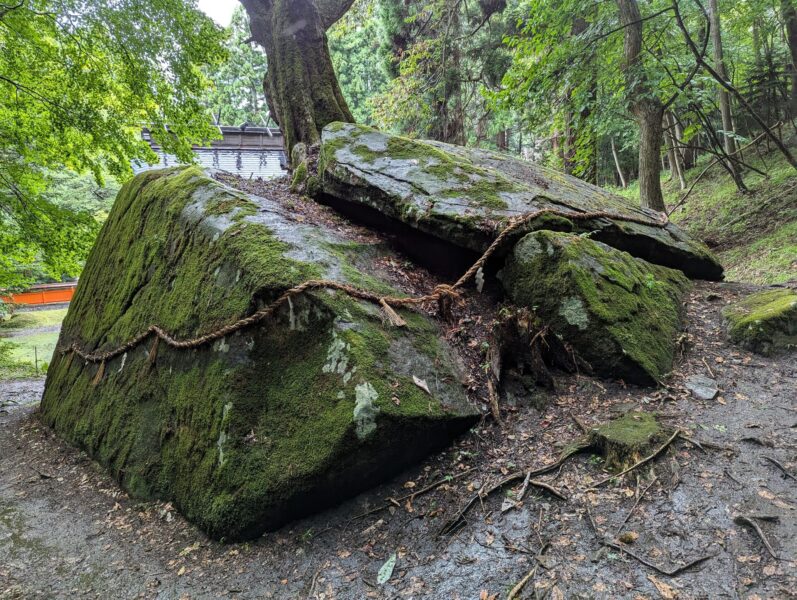
Given the numerous shrines bearing its name in the Tohoku and Kanto regions, there is a theory that it may have been a "god of the Emishi," a group of people who were hostile to the imperial court
If this megalith was known by that name over a thousand years ago, then the possibility becomes much higher, as this area must have been inhabited by the Emishi people
The local pioneering deity, "Tanichihiko-no-kami"
The main deity enshrined here , Tanichihiko-no-kami, is considered the ancestral god of the ancient pioneers of this region , and is an indigenous deity of this area that is not worshipped at other shrines
A heroic figure who greatly contributed to the development of this land may have been deified after his death, buried beside the megalith (Tannai Stone) of Arahabaki-no-Okami, the central deity of this region's worship, due to his achievements
This shrine encapsulates the evolution of beliefs in this region
Several explanatory signs have been installed at the site, and their history can be summarized as follows:
History of Tannaiyama Shrine according to the on-site explanatory sign
- Asuka period (circa 592–710) or earlier: The megalith (Tannai Stone) of Arahabaki-no-Okami was worshipped as an object of ritual.
- Nara period (around 710-794): The shrine enshrines Tanichihiko-no-kami, the ancestral deity of the ancient pioneers of the region.
- Enryaku era (782-806): Sakanoue no Tamuramaro was favored by him during his eastern expedition.
- During the Jōwa era (834-848): Kūkai's disciple (Nichikō) enshrined a statue of Fudo Myoo and named it "Daishōji Fudo Tan'nai Daigongen," and since then it has been revered through the syncretism of Shinto and Buddhism.
- Late Heian period (circa 1086-1185): Respected by the Oshu Fujiwara clan (especially Fujiwara no Kiyohira).
- Medieval period: Anbyo Castle (Anbyo, Towa-cho, Hanamaki City) - Revered by the Ohara clan.
- Early modern period: Receiving the reverence of the Nanbu clan.
The worship of sacred rocks (Tannai Stone), which began with the megalith of Arahabaki-no-Okami , and the worship of Tanichihiko-no- Kami, who is thought to be the deification of a local pioneering hero, are truly representative of Japan's ancient "Shinto" based on nature worship and ancestor worship. The subsequent enshrinement of the Fudō Myōō statue by Kūkai's disciple (Nichikō) reflects the spread and penetration of Buddhism
From this, it can be said that Tannaiyama Shrine is a rare shrine that encapsulates the changes in the beliefs of this region
The current Tannaiyama Shrine

The pilgrimage route to Tannaiyama Shrine is a little unusual; the shrine grounds are divided into upper, middle, and lower sections, and you visit them in order, starting from the upper section at the very back, and then descending
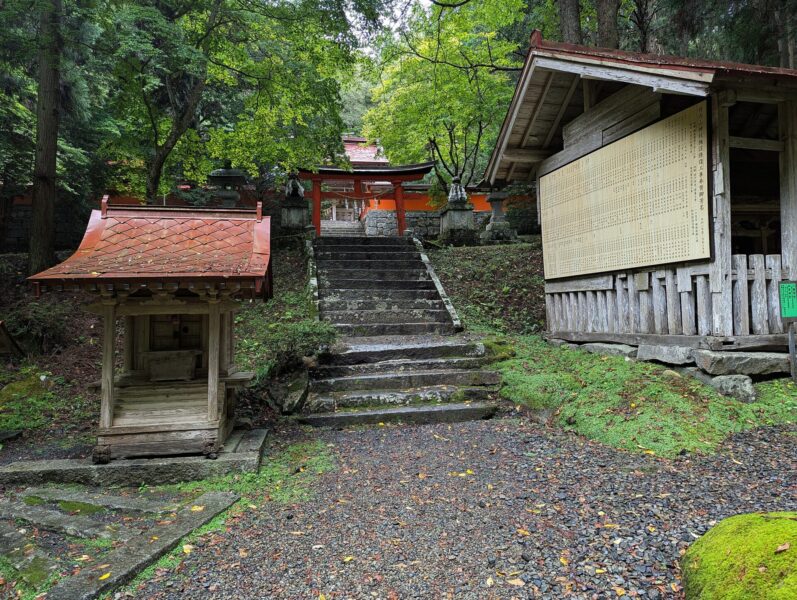
This is the fourth torii gate of Tannaiyama Shrine. The first torii gate is located about 1.5 km away from the shrine, and the length of the approach suggests that it was a shrine of high status and reverence
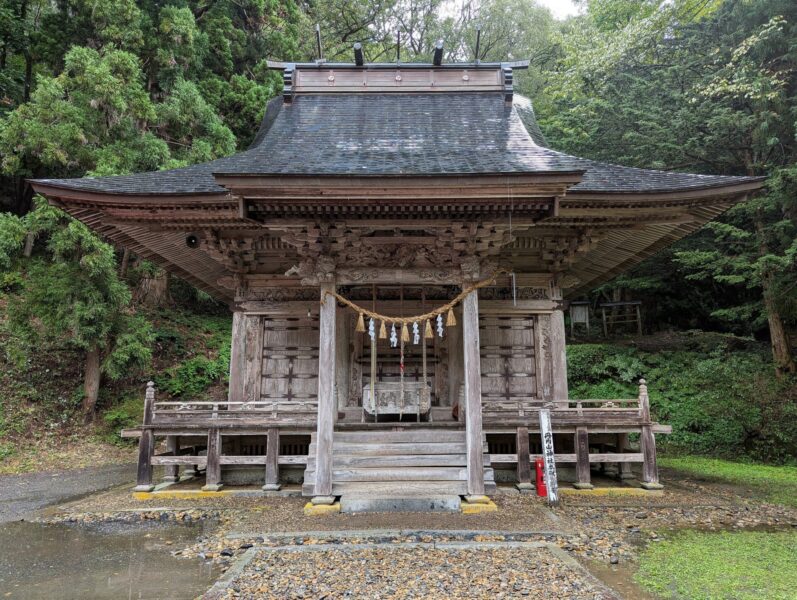
The main hall of Tannaiyama Shrine. A little further up to the right of this main hall is the large stone (Tannai Stone) of the deity Arahabaki-no-Okami, which is the object of worship
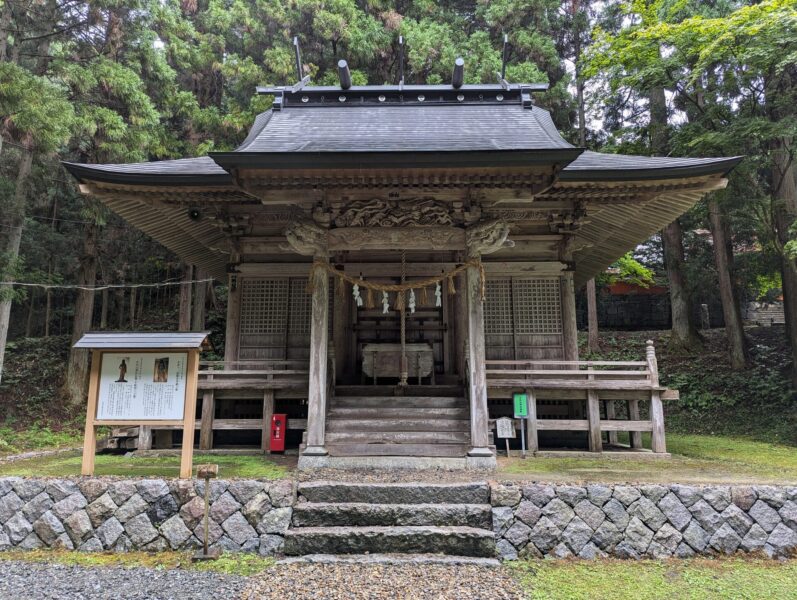
The shrine at Tannaiyama Shrine is also referred to as "Ancestral Spirit Shrine" and "Kannon Hall" on the information board
The temple houses the "Wooden Eleven-Headed Kannon Bodhisattva Standing Statue," which is a designated tangible cultural property of Iwate Prefecture, and the "Tannaiyama Shrine Buddhist Statue (Fudo Myoo Standing Statue)," which is a designated tangible cultural property of Hanamaki City
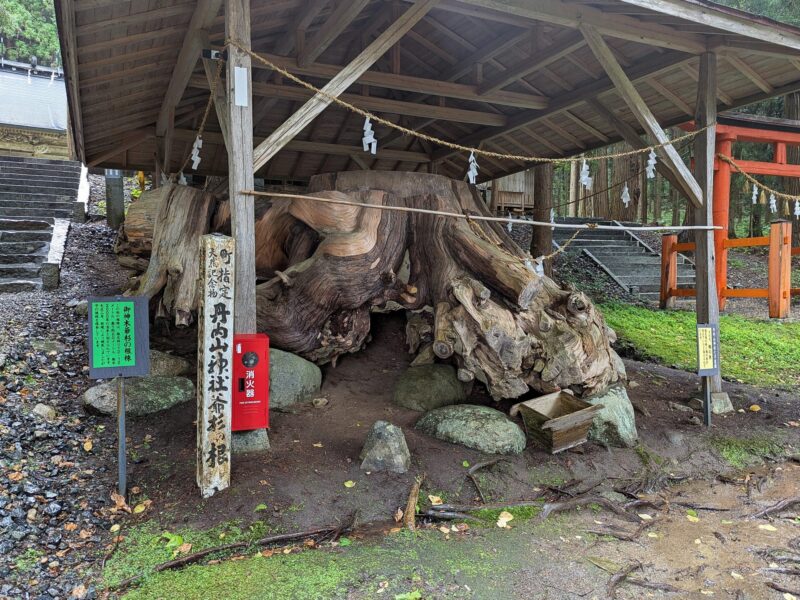
The "Grandfather Cedar Stump," located at the entrance but towards the end of the pilgrimage route, was originally revered as a sacred tree, but it was burned down in a fire that occurred in 1913 (Taisho 2)
summary
Tannaiyama Shrine offers a unique opportunity to experience the history of faith cultivated by the people of this region, encompassing the ancient Japanese concept of "eight million gods" —the belief that gods reside in all things—along with ancestor worship and Buddhist faith
I think it's a very valuable place, so if you have the chance, please do visit it
Tannaiyama Shrine <Information>
- Name: Tannaiyama Shrine
- Address: 303, Taniuchi 2-ku, Towa-cho, Hanamaki City, Iwate Prefecture 028-0122
- Phone number: 0198-44-2623
- Official URL:Hanamaki City Tourism Association – Tannaiyama Shrine
Google Map

Traveling around the Tohoku region, I enjoy drinking delicious sake and exploring the local history, traditions, and customs. I write articles based on my interests. I'm currently interested in folk performing arts, local toys, and folk beliefs
Please support NEFT's article creation!
NEFT gathers and publishes articles about the history, culture, and tourism information of various regions in Tohoku
If you enjoyed this article, we would be grateful if you would consider supporting our future interviews, article creation, and website management
*Clicking "Tip" will open the tip sending screen for the external service "codoc"
Other articles

The history of Kaminoyama, which developed as a castle town and post town with hot springs...

Hiedama Village, a hidden village where the locals pass on the art of kabuki...

[Mogami District, Yamagata Prefecture] Enjoy the Mogami River Boat Ride in a Kotatsu until March...

Learning from large-scale landslides at Mount Kurikoma Geopark [Miya...
![Daito-ryu Aikijujutsu [Part 1]](https://jp.neft.asia/wp-content/uploads/2026/01/aiki_tkd01-300x300.jpg.webp)
Did Aikido originate in Aizu? Daito-ryu Aikijujutsu and Martial Arts...

Oyster-based processed foods such as "Oyster Miso" and "Oysters Boiled in Water" are...

[Akiu Town, Miyagi Prefecture] The hottest gourmet food in Akiu Onsen! Akiu Bread...

Are there many places in Hokkaido that have ties to Miyagi? The migration of Sendai feudal lords...

"Grilled Squid Street" is famous for its squid curtains! A delicious dish packed with flavor...

[Oga City, Akita Prefecture] The popular Godzilla Rock is now in Akita! At dusk...

Sendai's famous temples! What are the "Kitayama Gozan" that the Date clan revered? [...
