


New Year's Cuisine in the Tohoku Region | Preserved Foods for Festivities Developed by Heavy Snowfall

When most people think of New Year's, they probably think of sumptuous meals
However, in the Tohoku region, especially in areas that are hit by heavy snowfall, New Year's meals are not just a "luxury" experience
The role of New Year's cuisine in the Tohoku region as a "preserved food"
In the winter in snowy regions, people's movements were restricted by the accumulation of snow, making fields, mountains, and rivers unusable, and distribution systems were underdeveloped, making it difficult to obtain new food
Winter was not a season for obtaining food, but rather a season for systematically consuming the food that had been prepared by autumn
For these reasons, the dishes served during New Year's in the Tohoku region were made from ingredients that could be preserved and were considered suitable for eating during the New Year . In other words, New Year's dishes required both preservation and auspiciousness .
New Year's Fish Dishes
Sandfish

Hatahata fish are caught in large quantities in the Shonai region of Yamagata Prefecture and along the coast of Akita Prefecture . In Akita Prefecture in particular, they are so deeply rooted in the lives of the people that the folk song " Akita Ondo " sings, "We cannot welcome the New Year without hatahata."

Among themHatahata sushiis a dish made by fermenting and preserving the hatahata fish so that it can be eaten throughout the winter, and it is positioned as a representative celebratory dish of the New Year in Akita.


Salmon

Dishes that utilize salmon caught in early autumn and preserved by methods such as pickling in vinegar, soy sauce, or salting are commonly seen.

" Salmon rice sushi" from Aomori Prefecture , " Hyōzu namasu " from the Sanriku coastal region of Iwate Prefecture , and " Momiji-zuke " from the Abukuma River area of Fukushima Prefecture are all traditional New Year's dishes.
Cod

Cod , a representative winter ingredient of Tohoku, is often used in stews in inland areas as dried cod that can be preserved for a long time , while in coastal areas, freshly caught cod is often used in soups.

In the Tohoku region, " boudara-ni," a dish of dried cod simmered slowly, can be found in various parts of the Tohoku area. In the case of soups, " jappa -jiru " from Aomori Prefecture, "tara-jiru" from Akita Prefecture , and " dongara-jiru " from Yamagata Prefecture remain as local dishes in coastal areas close to the sea.
Tara means "to eat one's fill of cod," and is also considered an auspicious item that brings good fortune and brings peace and security in food supplies throughout the year

Donko

This fish lives along the coast from around Hakodate in Hokkaido to the Hamadori region of Fukushima Prefecture, and its official name is the Ezo Isoainame

It is mainly eaten as a winter delicacy called "donko soup" in the Pacific coastal regions of Iwate, Miyagi, and Fukushima prefectures
Shark

Excavations of ruins have revealed that sharks have been eaten in the Tsugaru region of Aomori Prefecture since the Jomon period, and they are an inseparable part of the local food culture

It is eaten in various ways, such as in sushi rice, sashimi, soup, pickled vegetables, and simmered dishes, but during the New Year,"same no sukume"is eaten, in which the shark's head is boiled, the meat is shredded while still hot, and seasoned with vinegared miso.
ray

In the Tohoku region, along the Sea of Japan coast, there was a tradition of eating dried stingrays , which were brought in by Kitamae ships, as a preserved seafood product.

In Akita Prefecture, "kasube-ni," a dish of dried stingray simmered in a sweet and savory sauce, and in Yamagata Prefecture, "karakai-ni," made from dried cartilage of stingray fins , have long been popular as celebratory dishes for special occasions such as New Year's and Obon.
Koi (carp)

Carpis a popular food ingredient mainly in Yonezawa City, Yamagata Prefecture and Koriyama City, Fukushima Prefecture. In Yonezawa, it is said that in the Edo period, Uesugi Yozan, the 9th lord of the Yonezawa domain, began carp farming as a fishery resource to secure a valuable source of protein in the inland area. In Koriyama, it is said that carp farming began in the Meiji era as a way to utilize reservoirs that became unnecessary after the completion of the Asaka Canal.

"Koi-koku" (carp,"Koi no Arai" (sashimi of carp), and"Koi no Umani" (simmered carp)were served at weddings, funerals, and as part of New Year's osechi (traditional New Year's food) and as hospitality dishes.

New Year's dishes made with vegetables, fruits, and beans
persimmon

In times when sugar was a precious commodity,persimmons. Drying them allowed for long-term storage, making them a valuable source of nutrition during the harsh winter months.

"Anpo-gaki no namasu," a dish eaten in Fukushima Prefecture during New Year's and other celebrations , is made by mixing sun-dried persimmons (after peeling) with drained daikon radish and carrots, then dressing them with vinegar and sugar. The red and white colors symbolize "family safety" and "good fortune."

Japanese white radish
Radishes were dried in the sun immediately after harvesting to"dried radishes," or they were preserved for a long time using a natural freeze-drying method that utilized the cold to produce"frozen radishes," making them a valuable food source during the winter months.

However, in the southern inland areas of Akita Prefecture, there is a lot of rain and snowfall from late autumn to winter, and the hours of sunlight decrease, so the sun-dried radishes often do not dry sufficiently before the temperature drops below freezing

In this environment, the practice of drying daikon radish over an indoor hearth, using heat and smoke to preserve it, led to the creation of"iburigakko" (smoked pickled radish). It can be said to be a local dish born out of necessity due to the environment surrounding the region.

Carrots
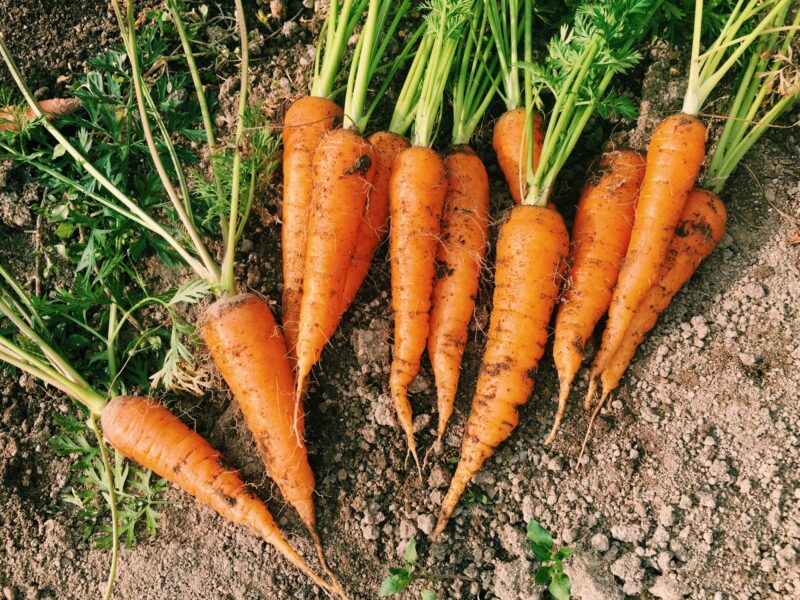
Like radishes, carrots can be dried to preserve them for long periods of time, making them a valuable food source during the winter

"Ika Ninjin," a dish from Fukushima Prefecture that is now sold year-round , was originally made as a preserved food in winter and is a beloved local dish that is indispensable during the New Year. Similarly, "Tara no Ko Ae," a dish from Aomori Prefecture that is indispensable during the New Year , is made by mixing cod roe with carrots.

beans
Drying beans also made it possible to store them for long periods of time, and they were used as ingredients in miso soup and in simmered dishes

"Uchimame," dried soybeans that have been flattened by crushing them with a wooden mallet , is a preservation method that is widespread in the Hokuriku and Tohoku regions (especially along the Sea of Japan). Because they are crushed beforehand, they absorb water and heat quickly, and the broth is easily extracted , making them a wise and ingenious local dish.

"Mame Kazunoko," a dish served on New Year's tables in the Aizu region of Fukushima Prefecture , is a combination of dried green soybeans and desalted herring roe. The beans symbolize the wish to "work diligently" and "live a healthy life," while the herring roe is considered an auspicious symbol of "prosperity of descendants."
Other New Year's dishes
Kenojiru (Aomori Prefecture)

In the Aomori dialect, "kayu" (rice porridge) is pronounced as "ke," so it is said that "kayu no shiru" (rice porridge soup) is corrupted to "ke no jiru."
There are various theories about its origins, such as that in the days when rice was a precious commodity, vegetables and other ingredients were finely chopped and eaten as if they were stewed rice, but it has come to be treasured as a nutritious preserved food for winter, and continues to be enjoyed to this day

Mamebu soup (Iwate Prefecture)

"Mamebu-jiru"is a local dish from the area around Kuji City, Iwate Prefecture. It is made by adding burdock root, carrots, fried tofu, shimeji mushrooms, dried gourd strips, and grilled tofu to a broth made from dried sardines and kelp, seasoning it with soy sauce, and then"mamebu,"which are dumplings made from wheat flour filled with walnuts and brown sugar, and simmering them in the soup.
It has a unique flavor that allows you to enjoy the saltiness of the soup and the sweetness of the brown sugar at the same time, and is eaten as a special occasion food such as weddings, funerals, and New Year's

Sendai Zoni (Miyagi Prefecture)

"Sendai Zoni"has been eaten in the Sendai domain since the end of the Edo period. It is a colorful and luxurious zoni (rice cake soup) that includes large grilled goby fish, salmon roe, Sendai celery, and "ohikina" made from daikon radish, carrots, and burdock root. It is said to be common to eat this zoni during the first three days of the New Year in and around downtown Sendai.
Ohira (Fukushima Prefecture)

This is a local dish from the area around Tadami Town in Minamiaizu District, Fukushima Prefecture. It is a stew made with dried and grilled minnows, along with ingredients such as yam, burdock root, maitake mushrooms, kelp, and fried tofu. It is said to have gotten its name "ohira" because it is served in a flat bowl
This is a visually gorgeous New Year's dish made in Tadami Town, one of Japan's snowiest areas, using ingredients that can be stored for a long time during the snow-covered period
Boiled dried fish

"Hyo-boshi" is a preserved food traditionally found in the Okitama and Murayama regions of Yamagata Prefecture .
Hyo is another name for the slippery grass, and is a plant that is often treated as a weed in other parts of Japan, but it is also listed in "Katemono," an illustrated guide to famine relief crops compiled by Lord Uesugi Yozan, the 9th lord of the Yonezawa domain in the late Edo period, which suggests that it has long been recognized as a food ingredient in Yamagata prefecture
"Hyōboshi-ni," a dish made by stir-frying and simmering such"hyōboshi" (dried gourd), is an indispensable dish for New Year's celebrations.

Braised flounder

The nametagarei is a type of flounder known as babagarei in other regions , and its name comes from the fact that it is very slimy, hence the name nametagarei (written as滑多鰈)
They migrate south from their habitat in Hokkaido to the Sendai Bay area from around December, and have become a New Year's Eve tradition in Miyagi Prefecture, Iwate Prefecture, and parts of Hachinohe City, Aomori Prefecture
In Miyagi Prefecture,the flathead flounderand simmer it, and it is served with seaweed and finely shredded ginger as a side dish.

Reference site:Ministry of Agriculture, Forestry and Fisheries – Our Local Cuisine

This is the NEFT editorial team.
Articles written by our editorial team and articles by anonymous writers are published here.
Please support NEFT's article creation!
NEFT gathers and publishes articles about the history, culture, and tourism information of various regions in Tohoku
If you enjoyed this article, we would be grateful if you would consider supporting our future interviews, article creation, and website management
*Clicking "Tip" will open the tip sending screen for the external service "codoc"
Other articles

[Fukushima City, Fukushima Prefecture] A list of tourist spots to visit along with Hanamiyama...

Is Torai Hebrew? Visiting the "Tomb of Christ" in Shingo Village...

[Miyagi Prefecture] What is the "Zunda" in Zunda Mochi? The origin of the word...
Christian? Monster? God? The mysterious grave marker "Po...

What is Miyagi Shirome, a high-quality soybean grown in Miyagi Prefecture? Tasting...

[Mount Chokai-Tobishima Geopark: Yuza and Sakata] From Mount Chokai...

What is Mount Kuromata? Academic research has revealed that an urban legend has been...

Yawatauma – One of the three major horse breeds in Japan, passed down in the southern horse breeding areas...

The missing link in the birth of the Japanese sword? The "fern" wielded by the Emishi...

What is "ego"? It's a low-calorie, healthy ingredient made from seaweed...

[Part 2] The Mogami Eight Shields, a coalition of local lords in Dewa Province...
