


[Aomori Prefecture] Introducing the origins and recipes of two Aomori Prefecture local dishes you'll want to eat in winter: "Keno-jiru" and "Tara no roe salad."

Aomori Prefecture has many local dishes, but did you know that two winter dishes are "Keno-jiru" and "Tara no roe salad"? We will introduce the origins and recipes of each local dish
The origin of Kenojiru
The name is said to have come from the fact that in the Aomori dialect, "kayu" (rice porridge) is pronounced "ke," and the name "ke no jiru" is a corrupted version of "kayu no shiru" (rice porridge soup)
There are various theories about the origin of this dish, including that during the time when rice was a precious commodity, vegetables and other ingredients were finely chopped and simmered to resemble rice, and that during the Warring States period, soldiers added mashed soybeans to whatever vegetables they had on hand and simmered them to eat
Originally a dish for the Little New Year (Koshogatsu), it is said that brides who were busy attending to guests and taking care of their families during the New Year would prepare it in advance for their families when they returned to their parents' home for the Little New Year, and it was highly valued as a nutritious preserved food. It
is also sometimes called "Tsugaru no Nanakusa-gayu" (Tsugaru's Seven Herb Rice Porridge), a vegetarian dish eaten in Tsugaru during the Little New Year, and in some regions, it is made with only seven ingredients.
In 2003, the Tsugaru Kenojiru Preservation Society was established with the aim of spreading awareness of Kenojiru locally

What kind of dish is kenojiru?
is a soup made by simmering finely diced vegetables such as daikon radish, carrots, burdock root, bracken, butterbur, freeze-dried tofu, and fried tofu until tender, then adding zunda (mashed soybeans) and seasoning with miso.
A characteristic of Keno-jiru is the generous use of ingredients, but the ingredients, seasoning, and cutting methods vary from region to region and household to household, resulting in each having its own "family taste." The charm of Keno-jiru lies in
the fact that a large amount of ingredients are simmered in a large pot, then transferred to smaller pots and reheated repeatedly over several days, with the flavor deepening each time it is reheated.
Boiled packs for kenojiru are sold at supermarkets
Keno-jiru is a time-consuming dish to make because it requires finely chopping many ingredients, so fewer families make it at home.
However, in recent years, pre-cut, boiled packs of finely chopped vegetables and wild plants for Keno-jiru have become available in supermarkets.
Using this boiled rice pack, you can easily make soup without any hassle

Kenojiru recipe
We will introduce the ingredients and how to make Kenojiru
material
- Japanese white radish
- carrot
- Burdock
- Boiled bracken
- Boiled butterbur
- Shiitake mushrooms
- Koya tofu (rehydrated in water)
- fried tofu
- Miso or soy sauce
- Kelp for dashi
- Zunda (crushed boiled soybeans)
How to make it
- Dice the vegetables, wild vegetables, freeze-dried tofu, and fried tofu into 5-7mm cubes
- Put the kelp stock and 1 into a pot and boil until soft. (Granulated stock is also fine.)
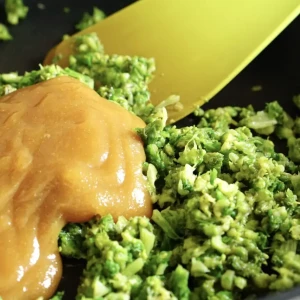
- Add the softened zundan, season with miso or soy sauce, bring to a boil and it's done

Add the root vegetables first and skim off any scum that appears

In the photo, I used miso paste

It's packed with ingredients and is good for your body
The origin of cod roe salad
Cod is a fish that is in season during the winter, and cod fishing has been thriving in Mutsu Bay since ancient times. For this reason, cod was an indispensable part of New Year's celebrations in Aomori Prefecture. Until around 1945, it was common to see people buying a whole large cod at the end of the year and dragging it along the road.
At that time, cod was a valuable winter food and was eaten as a New Year's delicacy.
Not only the flesh, but also the head and bones were used to make "jappa-jiru," a soup simmered with daikon radish, and the cod roe was cooked with carrots and other ingredients to make "tarako-ae," or preserved with a little salt, so every part of the fish was eaten without waste.
Cod roe salad has been popular since ancient times, as the bright orange color of the carrots is considered to be a lucky charm
What kind of dish is cod roe salad?
This dish consists of stir-fried cod roe, carrots, and freeze-dried tofu, then mixed together.
While traditionally considered a New Year's dish, it's a common home-style dish enjoyed during the winter months.
Salted cod roe (from Alaska pollock) can be used instead of true cod roe.
Cod roe salad recipe
We will introduce the ingredients and how to make cod roe salad
material
- carrot
- Frozen tofu
- Konjac noodles
- green onions
- Alcohol
- soy sauce
- Dashi stock
- salad oil
How to make it
- Julienne the carrots or slice them. Rehydrate the freeze-dried tofu in water and cut into thin strips. Parboil the konnyaku noodles, drain them in a colander, and cut them into bite-sized pieces
- Chop the green onions into small pieces
- Fry 1 in salad oil
- Add the sake and dashi stock
- Once boiling, add the cod roe and break it up with chopsticks
- Mix everything well, add soy sauce to adjust the flavor, and finally add green onions and it's done

Make sure the carrots are not too soft

Loosen the cod roe with chopsticks and remove the skin

The flavor will become stronger as it cools, so be careful not to add too much soy sauce

It goes perfectly with rice
summary
Keno-jiru is a healthy dish packed with ingredients, providing plenty of fiber and protein in one serving. It warms the body and soothes the soul.
Tarako-ae (cod roe salad) is a dish that lets you savor the flavors of winter and pairs well with alcohol. Even people who don't like carrots will likely enjoy it.
Both dishes are easy to make, so why not try making them this winter?

I'm a housewife and writer born and raised in Aomori Prefecture.
I grew up on delicious rice and apples.
I'd love to share delicious food and fun things from Tohoku.
Please support NEFT's article creation!
NEFT gathers and publishes articles about the history, culture, and tourism information of various regions in Tohoku
If you enjoyed this article, we would be grateful if you would consider supporting our future interviews, article creation, and website management
*Clicking "Tip" will open the tip sending screen for the external service "codoc"
Other articles

[Iwate Prefecture] What is Asakai? A Japanese sake brewery from Iwate...

[Craft beer in Sendai City and southern Miyagi Prefecture] More and more...

[Part 1] The World of Itako, Traditional Female Shamans of Tohoku |...

[Iwate Prefecture] Iwate Prefecture, the birthplace of Yusei Kikuchi, Shohei Ohtani, and Roki Sasaki...

[Morioka City, Iwate Prefecture] 5 Morioka Souvenirs! For those visiting Morioka...

[Fukushima Prefecture] Choose from hidden hot springs, famous hot springs, and unique spring qualities in Fukushima Prefecture...

Morioka Liquor Stores: Enjoying a Kakuuchi Drink! 2026 Edition [Morioka City, Iwate Prefecture]

[Iwate Prefecture] What is Walnut Tofu? The reason it's loved locally...

A delicious soft-serve ice cream made with locally sourced ingredients from Yamagata's "Roadside Station"...

[Miyagi Prefecture] What is the "Zunda" in Zunda Mochi? The origin of the word...
What kind of ingredient is "bakke"? Learn about the origin of the name and how to cook it...
