


Ioji Temple, the family temple of the Sato brothers Tsugunobu and Tadanobu, two of Yoshitsune's four heavenly kings, and their families [Fukushima Prefecture]

If you take the Fukushima Kotsu Iizaka Line on your way from Fukushima Station to Iizaka Onsen, you will get off at a station called "Ioji-mae" where you will find a temple where Sato Tsugunobu, Sato Tadanobu , and their family are enshrined, as they were counted among Minamoto no Yoshitsune's Four Heavenly Kings (although there are various theories)

Rurikozan Ioji Temple
Iōji Templeis a Shingon Buddhist temple located in Iizaka-machi, Fukushima City, very close to the Fukushima Iizaka Onsen hot spring resort. According to the temple's history, it was founded in 826 by Kōbō Daishi Kūkai.
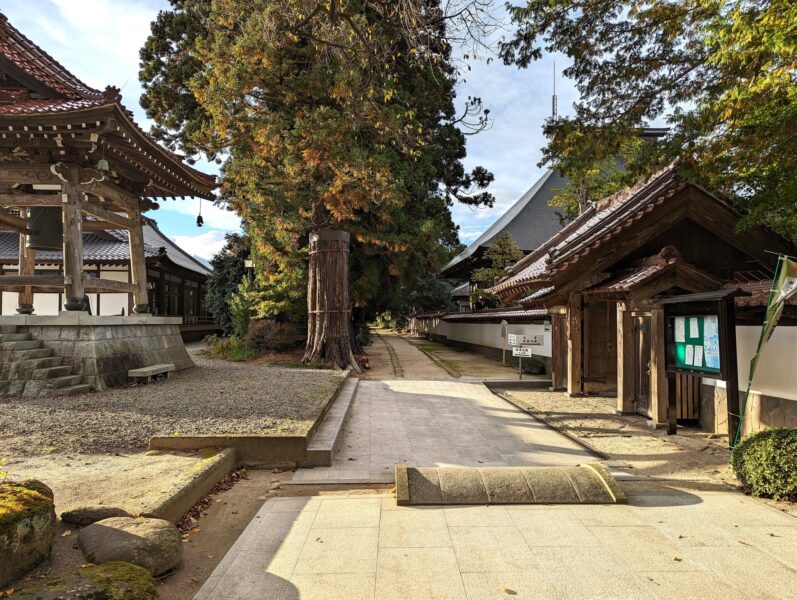
It is the family temple of the Sato clan, a branch of the Oshu Fujiwara clan who ruled the Shinobu region (present-day Fukushima City to Date City area) , and is also one of the 33 special sacred sites of Oshu Kannon
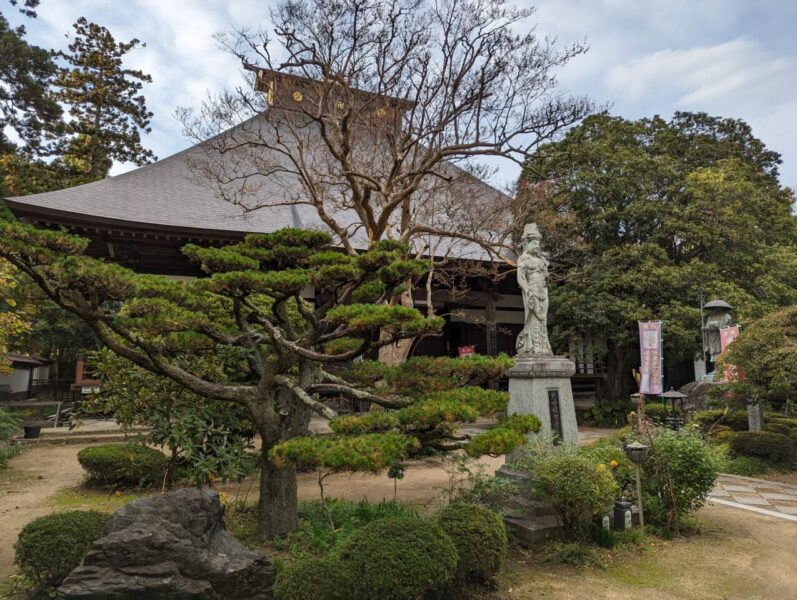
The temple's mountain name is Rurikōzan,and the "Iō" in Iōji is another name for Yakushi Nyorai (the Medicine Buddha. In addition to the main hall,Yakushi-dō (Yakushi Buddha hall)called "Sabano Yakushidō" as an inner sanctuary, which houses the principal image of Yakushi Nyorai.
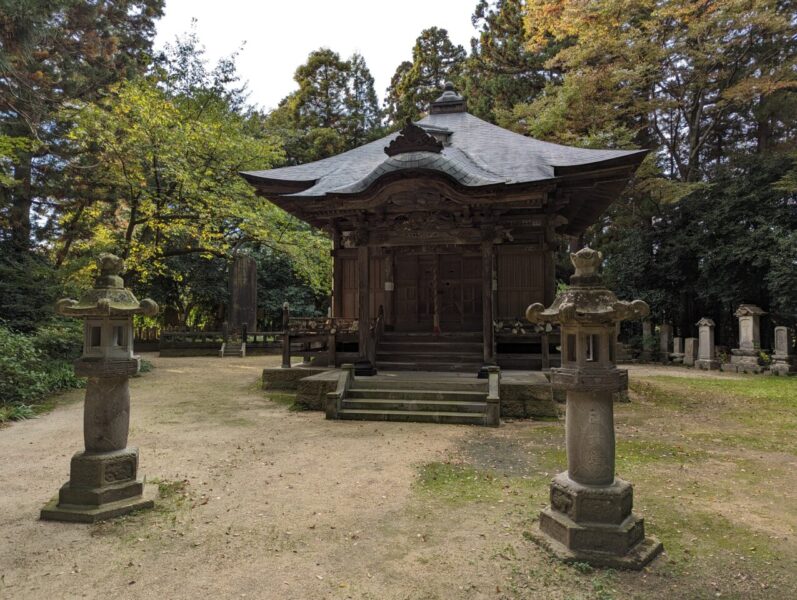
Here, there is a group of stone steles surrounding the Yakushi-do (hall dedicated to the healing Buddha), which is said to be the burial ground of the Shinobu Shoji family (the Sato family)
In addition to the tombstones of the brothers Sato Tsugunobu and Tadanobu, there are also tombstones for their father, Sato Motoharu, and their mother, Otowa. An old camellia tree located very close to Otowa's tombstone is"Otowa's Camellia,"and it is said that some of its flowers fall off without opening, symbolizing the grief of a mother who lost her two sons.
The Sato brothers' gravestone is currently protected by a fence, but in the past, people believed that carving the stone and drinking its contents would cure illnesses, in honour of the two brave samurai, and there are traces of carving that remain
Matsuo Basho also stopped here during his journey on the Oku-no-Hosomichi
In 1689, Matsuo Basho also visited this place on his journey to Oku-no-Hosomichi
The poem reads, "In May, decorate your pack and sword with paper banners."


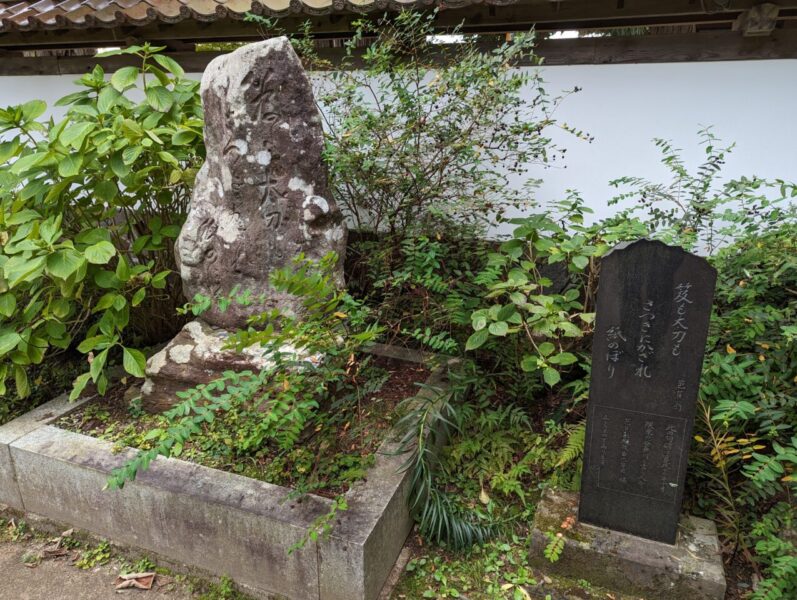
It is said that Basho shed tears a total of four times during his journey along the Oku-no-Hosomichi, and one of those times was at Ioji Temple, when he heard the tragic story of his mother and her two wives who had lost the Sato brothers in battle
The Sato Brothers, the Four Heavenly Kings of Yoshitsune, and the Sato Clan that Ruled Shinobu for Generations

The Sato clan is said to have originated with Fujiwara no Chizune, the second son of Fujiwara no Hidesato, who was a descendant of Fujiwara no Kamatari, who played an active role in the Taika Reforms. They ruled the Shinobu region (present-day Fukushima City to Date City) and are therefore known as the Shinobu Sato clan
It is said that Eisaku Sato, the Prime Minister of the Showa era, was also a descendant of Nobuo Sato
The Sato brothers Tsugunobu and Tadanobu, who were active as one of Yoshitsune's four heavenly kings
In 1180, Minamoto no Yoshitsune, the younger brother of Minamoto no Yoritomo, fled to Hiraizumi with a small number of retainers . Fujiwara no Hidehira of the Oshu Fujiwara clan took refuge with him, and Hidehira also had the brothers Sato Tsugunobu and Sato Tadanobu, relatives of the Hiraizumi Fujiwara clan , accompany Yoshitsune as his "assistants."

The Sato brothers assisted Minamoto no Yoshitsune and played a major role in the Genpei War, and are counted among Yoshitsune's "Four Heavenly Kings" in "Genpei Seisui Ki," one of the variant versions of the war chronicle "Heike Monogatari."
The tragic story of Basho's mother and two wives that brought him to tears
The Sato brothers continued to be active, but in 1185,the Battle of Yashimathe elder brother Tsugunobu was killed by an arrow while shielding Yoshitsune. In 1186, the younger brother Tadanobu was attacked while hiding in Kyoto and, despite his valiant efforts, was no match for the enemy's numbers and committed suicide.

The Sato brothers were never able to see the land of Shinobu again. And their mother,Lady Otowa,grieved deeply upon learning of the deaths of her two sons.
It is said that when Tsugunobu's wife, Wakazakura, and Tadanobu's wife, Kaede, saw this , they suppressed their own grief, donned their husbands' armor, dressed as warriors, and appeared before Otowa, saying, "Tsugunobu and Tadanobu have returned in triumph," to cheer her up.
When Matsuo Basho heard this story, he was moved to tears, saying, "How can such a brave name have become known to the world?" Dolls of Wakasakura and Kaede dressed as warriors from this time are enshrined in the main hall of Ioji Temple
summary
Iouji Temple is not only historic, but also a very beautiful temple that is well maintained and well-maintained, and is one of the places you should definitely visit if you have the opportunity to visit Iizaka Onsen
In addition, the temple grounds alsoRurikōden, where you can see treasures such as important cultural properties designated by the prefecture and tangible cultural properties designated by the city, related to the Sato brothers, Tsugunobu and Tadanobu, and Musashibō Benkei.
Especially for Satos all over the country, this may be a place that becomes their roots!
Ioji Temple <Information>
- Name: Rurikozan Iouji Temple
- Address: 45 Hiranojimae, Iizaka-cho, Fukushima City, Fukushima Prefecture, 960-0231
- Phone number: 024-542-3797
- Official URL:https://www.iou-ji.or.jp/
Google Map
Traveling around the Tohoku region, I enjoy drinking delicious sake and exploring the local history, traditions, and customs. I write articles based on my interests. I'm currently interested in folk performing arts, local toys, and folk beliefs
Please support NEFT's article creation!
NEFT gathers and publishes articles about the history, culture, and tourism information of various regions in Tohoku
If you enjoyed this article, we would be grateful if you would consider supporting our future interviews, article creation, and website management
*Clicking "Tip" will open the tip sending screen for the external service "codoc"
Other articles

Kandachi horses are grazing at the foot of Shiriyazaki Lighthouse, the northernmost point of Honshu...

Discover the original Japanese landscape! Tono in Iwate Prefecture has many attractions...

Let's go see the natural Akita cedars [2] A forest of giant trees over 200 years old...

Not just rice paddy art! "Winter rice paddy art" drawn with footprints in the snow...

[Tendo City, Yamagata Prefecture] "Tendo Soba" made with 100% buckwheat flour grown at an altitude of 600 meters...

Oyasukyo Great Fountain | The spectacle of steam spewing out from everywhere...

The legendary silent film "Reimei no Sato" was produced in 1925...

[Part 1] What is Mochi Honzen in Ichinoseki and Hiraizumi? | Everything is made with mochi...
The pride of the six Tohoku prefectures: "A magnificent castle worthy of being a symbol of the vast southern territory...".

Iwate Prefecture's newest spot is packed with great people, baseball, and famous restaurants!.

Akutsu is home to the only three-story pagoda in the Okitama region, but its history is shrouded in mystery.
