


It's fun to learn about accents and local words! A dialect dictionary you can use starting today [Fukushima Prefecture]

Fukushima Prefecture is divided into three regions (Aizu, Nakadori, and Hamadori) by the Ou Mountains and the Abukuma Highlands, and each has developed its own unique culture and history. These differences are also reflected in the language, to the point that even people from the same prefecture sometimes find themselves asking each other, "Huh?"
This time, we will explain the Fukushima dialect and introduce it with example sentences
Fukushima Prefecture Dialect Dictionary: Aizu Edition

The Aizu region in the inland area of Fukushima Prefecture is an area with a wide range of heavy snowfall and harsh winters. Here we will introduce some dialects from the Aizu region, where history and tradition remain strong
Q. "Goseyakeru"
"Goseyakeru" is a word that describes a state of being very angry. In some regions, it may be pronounced "goseeyakeru" or "gosheyakeru." The level of anger is quite intense. It is used when you feel such intense anger that you can't stand it, such as feeling nauseous or irritated.
According to one theory, the origin of the word is said to be a variation of the expression "Gosei-hara ga yakeru" (Gosei-hara ga yakeru) which appeared in a Japanese dictionary. The word is used not only in Fukushima Prefecture, but also in some areas of Tochigi Prefecture
Example: If you say that, I'll be angry
Q: "What did you do?"
"Najoshita" is mainly used in question form, meaning "How was it?" or "What happened?" It's often used when you're worried about the other person. Therefore, it's a word that warms the heart of the person who hears "Najoshita."
"Najoshita" is a word that is used not only in the Aizu region, but throughout the prefecture and Tohoku. Words spread as people move, so it's interesting to imagine how it spread
Example: Soda ga mo ma najo shita? (What's wrong with you making that face?)
Q. "~kunansho"
Adding " -kunansho " to the end of a sentence creates a polite request meaning " please do... ". It's polite without being overly formal, so you can use it when inviting someone to a place or encouraging them to do something without sounding condescending.
Example: If you're ever in the neighborhood, please come over to my house
Q. "Agasuke"
"Agasuke" is a very distinctive dialect mainly used in the Aizu region, and it refers to a mischievous, playful, and restless child . Sometimes it is used with a nuance similar to "naughty brat" or "mischievous boy," but basically it is a gentle scolding that has a touch of affection .
Example: You're doing that again!kid.
Fukushima Prefecture Dialect Dictionary: Nakadori Edition

Nakadori is located in the center of Fukushima Prefecture and is a region with a lot of traffic from outside the prefecture. As a result, the dialect here is a mix of words from multiple areas both inside and outside the prefecture
Q: "Gaoru"
"Gaoru" is a word that refers to a state of being unwell and lacking energy due to illness or fatigue. One theory suggests that it is derived from the expression "to lie down (or be bedridden) due to illness." It often describes a state of being so weak that one is staggering.
"Gaoru" is a word that is used not only in Fukushima Prefecture, but also in Miyagi Prefecture, Yamagata Prefecture, and parts of Hokkaido. It is difficult to pinpoint where it originated, but it is thought to be one of the words that spread through the movement of people
Example: My wife collapsed due to heat stroke
Q. "Throw"
The word " nageru " is sometimes used to mean " to throw away " in standard Japanese . Since "throwing away garbage" is sometimes expressed as "gominage," those hearing it for the first time might be momentarily confused.
Example: Throw away that trash
Q. "Easy"
"Harakucchii" means "full stomach." It seems to be a word commonly used in the northern part of the Nakadori region.
The feeling of fullness is quite high. It is a typical Fukushima scene to hear people say "I'm so full" when they are so full they can't eat anything else
Example: Harakutchiku, mou kuwanniwa (I'm full, I can't eat anymore)
Q. "Gonbohoru"
"Gonbohoru" is a dialect commonly used in Nakadori, and it expresses feelings such as "being stubborn, sulking, or being perverse."
It's especially used when a child becomes silent because things don't go their way, or when an adult is upset and unwilling to engage in conversation. While it sounds a bit strong, it's also a warm, ingrained form of reprimand because it's commonly used within families and among neighbors
Example:
soごんぼほってstubborn, just say it properly.
Furthermore, while "gonbohoru" is used not only in the Aizu region of Fukushima Prefecture but also in Hokkaido and Aomori Prefecture, it is believed that the "gonbohoru" used in the Aizu region may have originated in northern Kanto.
Fukushima Prefecture Dialect Dictionary: Hamadori Edition

The Hamadori region faces the Pacific Ocean and has many areas with a warm climate. In this area, where many cities and towns are thriving fishing industries, the words and intonations differ slightly between the northern Soma side and the southern Iwaki side
Q. "Odazu"
"Odazu" means "to get carried away" or "to be overconfident." It can sometimes carry the nuance of being pushy or intrusive, and is a word you might hear when someone is admonishing or warning someone.
This word has a harsh nuance, so you may want to be careful not to use it too much
Example: Don't get too cocky!
Q. "Shaanme"
"Shaanme" means "there's nothing we can do about it." It seems to be a word used in Ibaraki Prefecture as well, and it is thought to have spread mainly from Iwaki City due to its connection with the Joban region.
At first glance, it seems like a word that expresses giving up, but it also seems to be used to mean compromise or affirmation, without taking the negative too seriously
Example: It's an old machine, so it can't be helped if it breaks down
Q. "Bunzu"
"Bunzu" refers to a dull, bluish-purple color. It is mainly used in the southern Hamadori region, but also in some areas of Nakadori. There are several theories about its origin, including that it is a corrupted form of "budou-iro" (grape color), or that it is the color of a bruise that appears when you "bump" your body.
Example: I fell and got bruised. (I fell and my bruise is blue-purple.)
Q. "Kugasu"
"Kugasu" is a dialect commonly used in the Hamadori region of Fukushima Prefecture, and it's a word used to tease or make fun of someone . It's especially likely to appear in conversations with people you know well, and it has a somewhat friendly and light nuance. It's not meant to be dismissive or look down on the other person, but rather to mean "You're being a little too silly" or "You don't have to go that far," and is used as a gentle warning or a humorous remark
Example: Don't say things like that and tease me
Fukushima has many interesting dialects!
This time we introduced some Fukushima dialects
It is precisely because of the harsh natural environment that people are able to form strong bonds and that unique communities have developed in each region. The language of Fukushima is a mirror that reflects the history of the region. If you visit Fukushima and talk to someone from Fukushima Prefecture, be sure to listen carefully to the language they use; you may make some fresh discoveries
I would be happy if you could come to love Fukushima, a place with so many warm words

Woman in her 30s / Resident of Koriyama City, Fukushima Prefecture / Writer who handles local gourmet information / Favorite phrase is coexistence and co-prosperity
Please support NEFT's article creation!
NEFT gathers and publishes articles about the history, culture, and tourism information of various regions in Tohoku
If you enjoyed this article, we would be grateful if you would consider supporting our future interviews, article creation, and website management
*Clicking "Tip" will open the tip sending screen for the external service "codoc"
Other articles

[Tome City, Miyagi Prefecture] A thousand-year-old history of worshipping Hachiman...

How was the Tohoku region sung about in the third volume of the Railway Songs? (1) Ueno (...

[Around Koriyama City, Fukushima Prefecture] The delicious season for beer has arrived!.

[Fukushima] A spa resort with an area the size of six Tokyo Domes...

Speaking of yakiniku, it's "mutton" right?! Mutton cuisine in Tadami town...

The new tourist train "SATONO" runs smoothly through Fukushima and Yamagata prefectures!

[Part 2] A stone monument related to Suishinshi Masahide in Akayu! | Yamagata Prefecture...

[Series: Following the Narrow Road to the Deep North ⑥] Rafting the Mogami River and Japan's Three Great...
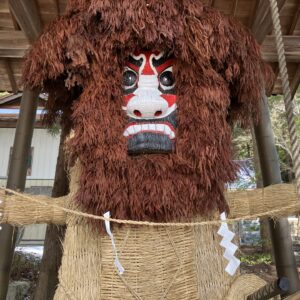
A large guardian deity imbued with the wish for good health and protection from illness. It is responsible for warding off evil spirits...

[Koriyama City, Fukushima Prefecture] Enjoy fresh fruit! Fruit...

[Christianity Spreads in Tohoku: Part 2] Hidden Christian Village...
