


The Golden Legend of Mutsu Province | The Koganeyama Gold Mining Site in Wakuya Town, said to be Japan's first gold-producing region [Miyagi Prefecture]

The official history of Japan, "Shoku Nihongi," records that in 749 AD, during the Nara period, gold dust was presented to the imperial court from Mutsu Province. The site believed to be the source of this goldthe Kogane-yama gold mining site.
In this article, based on the descriptions in the Shoku Nihongi and the results of archaeological surveys, we will introduce how the Koganeyama gold mining site fits into the history of gold mining in Japan, and how that history has been passed down to the present day.
Gold dust from Mutsu Province was the first domestically produced gold to be presented to the Imperial Court
In the mid-Nara period, the culture of donating gold to Buddhist temples and statues was spreading in Japan, but at the time gold was mainly imported from the continent.
Since there were no stable gold producing areas identified within the country, "securing domestic gold" was considered an important issue for the Imperial Court. Meanwhile, in February 749, a report of gold dust offerings arrived from Mutsu Province (present-day Tohoku region) to the Imperial Court.
The Shoku Nihongi states the following:
Mutsu Province's first tribute of 900 ryo of gold
The "900 ryo" mentioned here is equivalent to around 13 kg in today's weight.

It is said that the donated gold was used for gilding the Great Buddha (Vairocana Buddha) of Todai-ji Temple , and this event led to a change in the era name from "Tenpyo" to "Tenpyo Kanpo," which became the first four-character era name
The Tenpyo Kanpo served its purpose in an extremely short period of about three months, and the era name was changed again to Tenpyo Shoho within the same year, so only the first year exists. This is thought to be because it was a temporary era name change to express gratitude to the gods and Buddha for the first gold mined in Japan.
The person who presented this gold dustKudara no Konikishi Keifuku, the governor of.
King Gyeongbok of Baekje is said to be a descendant of the royal family of Baekje, Korea, who discovered a mineral vein in the Tohoku region and reported it to the capital. The historical fact that an official of foreign descent ushered in Japan's "golden age" makes this story even more grandiose.
Traces of gold mining and religious beliefs lies dormant at the Koganeyama gold mining site.

The site believed to be the origin of Japan's first tribute goldthe Kogane-yama gold mining site(a nationally designated historic site). Located on a hilly area at an altitude of approximately 200m, it is surrounded by streams believed to contain gold dust, one of which is called "Kogane-zawa" (Golden Stream).
Excavations have been carried out at Mt. Kogane several times, and as a result, remains of buildings from the Nara period, tile fragments, and tiles inscribed with the characters "Tenpyo" have been discovered.
Furthermore, remains of waterways that appear to have been artificially constructed have been found in the mountains. These remains suggest that gold mining in this area was not just a temporary process, but was carried out in a fairly organized manner.
Koganeyama Gold Ruins<Information>
- Name: Koganeyama Gold Ruins
- Address: Wakuya, Wakuya-cho, Toda-gun, Miyagi Prefecture
- Phone number:
- Official URL:Wakuya Town Official Website – Designated Cultural Property (Historic Site) Kogane-yama Gold Mining Site
Google Map
Koganeyama Shrine, located near the top of the hill

While the exact founding date of Kogane-yama Shrine , situated near the top of a hill, cannot be definitively determined, it is presumed to be a Buddhist hall built out of gratitude to the gods and Buddhas for the gold produced in this area.
Furthermore, this led to Kogane-yama Shrine being listed as an "Engishiki-nai-sha" (Engishiki Shrine) in the "Engishiki Jinmyocho," a list of official shrines (shrines under the protection of the state) at the time
Koganeyama Shrine (Wakuya) <Information>
- Name: Koganeyama Shrine (Wakuya)
- Address: 23 Wakuya Golden Palace, Wakuya-cho, Toda-gun, Miyagi Prefecture, 987-0121
- Phone number: 0229-42-2619
- Official URL:Kogane-yama Shrine Official Website
Google Map
The legacy of the "gold panning experience" continues to this day

Approximately 1,300 years have passed since gold dust was donated to the Imperial Court, and Wakuya Town continues to preserve its golden history as part of its local culture.
At "Wakuya Manyo no Sato Tenpyo Romankan," located in the town center , you can experience gold panning year-round. Although the amount of gold you can find is small, you can actually experience the process of separating the gold by shaking it, just like in the past.
Inside the museum, there are excavated artifacts and panel displays from that time, and you can learn about the gold mining process and historical background. Gold leaf-decorated sweets and amulets are also sold, making it a space where you can enjoy "seeing, learning, and tasting."
Tenpyo Roman Museum <Information>
- Name: Wakuya Manyo Village Tenpyo Roman Museum
- Address: 1-3 Wakuya Koganeyama, Wakuya-cho, Toda-gun, Miyagi Prefecture
- Phone number: 0229-43-2100
- Official URL:Wakuya Manyo no Sato Tenpyo Romankan
Google Map
The cultural development of "gold" inherited in Tohoku
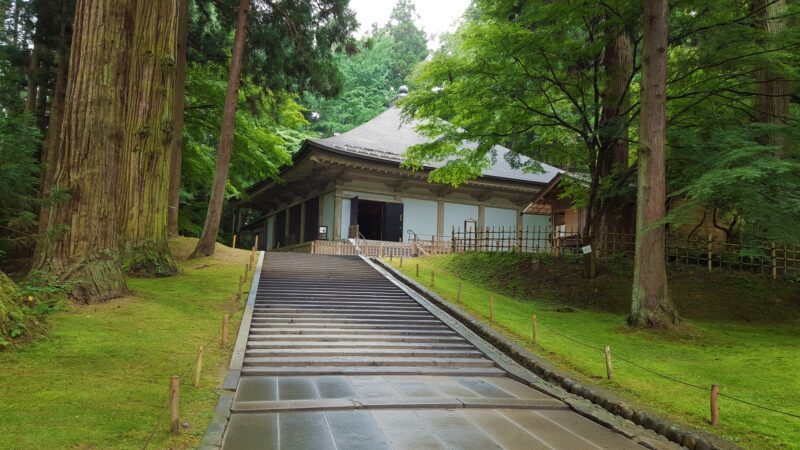
The gold mining in Wakuya during the Nara period is considered to be an early example of the Tohoku region being recognized as a gold-producing region. This recognition has been passed down through the ages and has influenced subsequent cultures.
When the Fujiwara clan of Oshu built the Golden Hall of Chusonji Temple in Hiraizumi at the end of the Heian period, gold was used inside and outside the hall.


While there are no records confirming that the gold used in the Konjikido (Golden Hall) came from Wakuya, it is believed that the regional understanding that Tohoku is a gold-producing region, as indicated by the Agency for Cultural Affairs in "Japan Heritage: Michinoku GOLD Romance," was a prerequisite for supporting this golden culture.
A clue to tracing the history of gold mining in Tohoku
At the Koganeyama Gold Mining Site, you can see traces of gold mining during the Nara period in the form of topography and remains. At Wakuya Manyo no Sato Tenpyo Romankan, you can see exhibits of excavated materials and try gold panning, learning about the gold mining process.
By visiting both sites, you can understand the recorded gold mining process in terms of the topography and the flow of work. It might be interesting to actually visit and see for yourself the "origins of gold" that have been passed down for over a thousand years.
[List of sources]
- Agency for Cultural Affairs |Japan Heritage "Michinoku GOLD Romance"
- Miyagi Prefectural Board of Education |National Historic Site: Kogane-yama Gold Mining Site
- Wakuya Town Official Website |Kogane-yama Gold Mining Site (Japan's First Gold Mining Site)

A freelance writer who loves delicious food and history. Traveling around the towns and people of Tohoku is her life's work
Please support NEFT's article creation!
NEFT gathers and publishes articles about the history, culture, and tourism information of various regions in Tohoku
If you enjoyed this article, we would be grateful if you would consider supporting our future interviews, article creation, and website management
*Clicking "Tip" will open the tip sending screen for the external service "codoc"
Other articles

The 2017 SENDAI Pageant of Starlight is here! A detailed explanation of this year's highlights!

Miyazawa Kenji and the Landscapes of Iwate — Stories of his Hometown Reflected in His Works

Boasting Ekiben from the 6 Tohoku Prefectures! Top 5 Recommended Ekiben in Fukushima Prefecture...

The Ise Dodai Ruins are a mysterious site registered as a World Heritage Site...

The bygone days of the Seikan Ferry, Hakkoda Maru, are brought back to life! Enjoy a relaxing time on board...

[Ten'ei Village, Fukushima Prefecture] Is it England in Fukushima Prefecture? A British village...

[Yamagata City, Yamagata Prefecture] Yamagata's soul food "Dondonyaki"...

Enjoy a blissful drink at Takahata Winery! Carefully selected wines...

The Sannai-Maruyama Ruins is Japan's largest archaeological site, located in the northernmost part of Honshu.

What is the Soma Daisaku Incident? The Nanbu samurai, also known as the Chushingura of Michinoku...

A strange twist of fate led to Sendai becoming the first Japanese person to circumnavigate the globe...
