


[Miyagi Prefecture during the Boshin War] What decision did the powerful Sendai domain of Oshu make?

The Sendai Domain became the leader of the Oshu-Uetsu Alliance and played a central role in the battle against the Imperial Army, but little is known about its actions during the Boshin War
The reality of this powerful domain, the largest in the Tohoku region and said to have a total military strength of 35,000, was that it was constantly torn between the shogunate and the new Meiji government
The Sendai domain had the highest kokudaka and family status in Oshu
Although the Sendai domain at the end of the Edo period was an outside daimyo, it controlled the entire Miyagi prefecture and southern Iwate prefecture, including its branch domains. Its official kokudaka of 620,000 koku was the third highest at the time, but it is said that its actual kokudaka exceeded 1 million koku due to the development of the Sendai Plain
Furthermore, the lord of the domain, Date Yoshikuni, was the 13th generation from the founder of the domain, Masamune, and the 29th head of the Date clan. He was given the high rank of Junior Fourth Rank Upper Left Middle Captain of the Imperial Guard and the official title of "Mutsu no Kami", and was allowed to use the Matsudaira name by the Shogun family, making it an extremely large domain that was treated differently from other domains in Oshu
The family wavered between reverence for the Emperor and expulsion of foreigners and support for the shogunate and the opening of the country
Before the war, the domain was in conflict between the pro-imperial, anti-foreign faction led by Endo Sanenobu, who sought to get closer to the Imperial Court and intervene in central politics, and the faction led by Tadaki Tosa, who opposed the new government and advocated supporting the shogunate and opening the country to the outside world
However, when Endo lost the political struggle and Tadaki Tosa took control of the domain, the Sendai domain turned towards supporting the shogunate
Lord Yoshikuni works hard to avoid war
After the Battle of Toba-Fushimi in 1868, the Aizu clan was declared an enemy of the imperial court, and its lord, Matsudaira Katamori, returned to Aizu
The Sendai domain was ordered by the new government to attack Aizu, and the Aizu domain was asked to intercede with the Imperial Court
Yoshikuni requested that the expedition be stopped and sent his retainers to Tokyo to propose to the new government that the Aizu and Shonai domains be pardoned, but the expeditionary force had already departed and it was too late
He then sent a proposal to other domains in the Oshu region, requesting cooperation from the Aizu and Shonai domains in petitioning for pardon, and held a meeting in Shiroishi, within the Sendai domain
On the other hand, Yoshikuni only went to war in response to the order to carry out the expedition, and instead urged the Aizu clan to surrender
However, although the Aizu clan initially agreed to surrender, they ultimately refused, and Yoshikuni gave up trying to persuade them
The Oshu Pacification General Headquarters and Imperial Army Enter Sendai
In March 1868, the Oshu Pacification General Headquarters (Governor General Kujo Michitaka) and 500 government troops entered Sendai to invade Aizu and Shonai
The government forces were counting on the military strength of the various Oshu domains, but becoming impatient with the domains' slow response, they attacked the Shonai domain alone, only to be repelled
As calls grew within the domain for them to fight against the government forces together with the Aizu and Shonai domains, the Shiraishi Conference was held, bringing together 14 domains from the Oshu region and submitting a joint petition for pardon
However, this was rejected by the Governor-General's Office, and the various feudal domains became enraged and withdrew their troops from the pursuit
The assassination of the Imperial Army's lower staff officer and the establishment of the Oshu-Uetsu Alliance
While the government forces in Sendai were attacking the Shonai domain, an incident occurred in which Sera Shuzo, a staff officer at the Governor-General's Office, was captured and beheaded in Fukushima City by Sendai domain samurai

Sera's arrogant behavior mocked the Sendai domain for not taking action to attack Aizu, earning him the resentment of the Sendai domain's samurai
This incident and the rejection of the petition prompted the establishment of the Oshu-Uetsu Alliance, which was further joined by six other domains from Hokuetsu, including the Nagaoka Domain, and the Oshu-Uetsu Alliance was established
Sera Shuzo Official Tomb <Information>
- Name: Sera Shuzo Official Tomb
- Address: 5-10 Miyamachi, Fukushima City, Fukushima Prefecture, 960-8106
- URL:Fukushima Inari Shrine Website
Google Map
The Sendai clan marches out to battle at the Battle of Shirakawaguchi
The Sendai domain, which had become the leader, placed Governor Kujo and others under house arrest in Sendai Castle, and in cooperation with the Aizu domain, recaptured Komine Castle in Shirakawa City, Fukushima Prefecture, which had been in the hands of the government forces, but it was soon recaptured by the government forces

The Aizu-Sendai allied forces subsequently attacked Komine Castle seven times, but were unable to take it
Shirakawa-Komine Castle Ruins <Information>
- Name: Shirakawa-Komine Castle Ruins
- Address: Shirakawa City, Fukushima Prefecture, 961-0074
- URL:Shirakawa City HP
Google Map
Fukushima's Hamadori region is being pushed back by the government forces
In July 1868, 750 government troops landed at Hiragata in Hitachi (Ibaraki Prefecture). The Alliance of the Feudal Clans, led by the Sendai Domain, tried to stop them but was defeated. The government army, now swelled to 1,500 with reinforcements, headed north

In the Battle of Iwaki, Iwakihira Castle fell, and the government forces suffered further defeats at the hands of reinforcements. When the Nakamura Domain of Soma showed signs of surrendering, the Sendai Domain retreated to Komagamine, on the border with the Nakamura Domain
Iwakidaira Castle Main Keep Site <Information>
- Name: Iwakidaira Castle Main Keep Site
- Address: 28 Taira Castle Ruins, Iwaki City, Fukushima Prefecture, 970-8026
- URL:Iwaki-Taira Castle Main Enclosure Site Website
Google Map
The Battle of Komagamine and Hatamaki Pass, which determined the fate of the Sendai Domain
The Sendai domain stationed 2,000 soldiers at Komagamine, a fortress on the domain border, and 1,200 at Hatamaki Pass to the west, to face off against the 3,000-strong government army, which included soldiers from the Soma Nakamura domain
In fact, the Sendai domain, which was said to have a military strength of 35,000, could only mobilize around 7,000 troops, with only 3,200 stationed at strongholds on the domain border. Eventually, Komagamine was taken by the government forces, allowing them to invade the domain's territory
After repeatedly failing to recapture Komagamine and the fall of Hatamaki Pass, the government forces, now with no worries about their future, attacked Aizu, but the Sendai domain was unable to act
Hatamaki Pass <Information>
- Name: Hatamaki Pass
- Address: Hatsunouchizawa, Soma City, Fukushima Prefecture, 976-0051
- URL:
Google Map
The Sendai Domain's stance shifts to submission, as determined by the decision of its lord, Yoshikuni
As defeats continued in every battle, calls for surrender gradually grew within the Sendai domain
Then he received news that the Yonezawa domain, which he had relied on, was planning to surrender, and Yoshikuni, who was bedridden at the time, finally decided to surrender
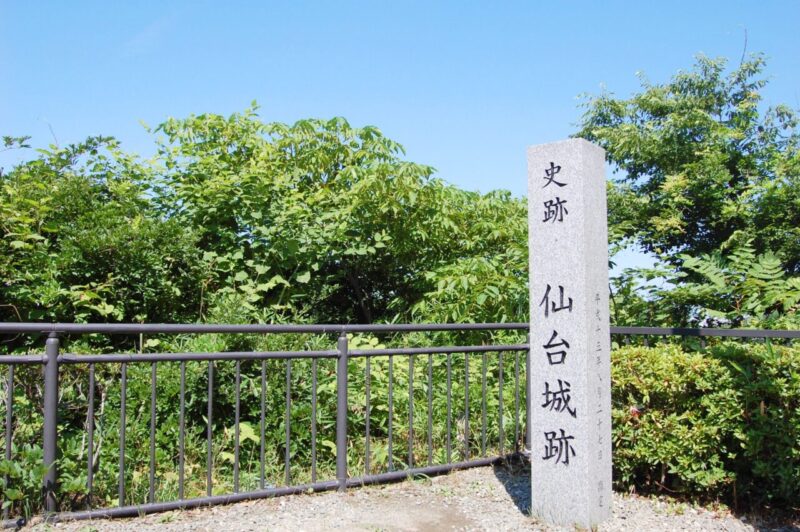
Sendai Castle Ruins <Information>
- Name: Sendai Castle Ruins (Aoba Castle Ruins)
- Address: 1 Kawauchi, Aoba-ku, Sendai City, Miyagi Prefecture, 980-0862
- URL:Aoba Castle Honmaru Hall Website
Google Map
summary
After the war, the Sendai domain ordered the lord, Yoshikuni, to be placed under house arrest and his territory confiscated, but his eldest son, Munemoto, was allowed to inherit the domain, although his fief was later reduced to 280,000 koku
However, the domain's economy was strained due to the reduction in its fief, and the vassals returned to farming. In addition, the Date clan's lord of Watari, Kunishige, and his vassals migrated en masse to Hokkaido, where they developed the present-day city of Date
Articles from other prefectures on the Boshin War and the Oshu-Uetsu Alliance



I'm a former Edoite (Tokyoite) who loves Morioka and the six prefectures of Tohoku, and I'm a big fan of history, gourmet food, travel, sports, alcohol, and choral singing.
I'll introduce you to interesting things, delicious food, and great places in Tohoku!
Please support NEFT's article creation!
NEFT gathers and publishes articles about the history, culture, and tourism information of various regions in Tohoku
If you enjoyed this article, we would be grateful if you would consider supporting our future interviews, article creation, and website management
*Clicking "Tip" will open the tip sending screen for the external service "codoc"
Other articles

Why was the Yamagata Shinkansen "Tsubasa" mini-shinkansen created?.

[Morioka City, Iwate Prefecture] "Morioka's talisman rock" Eboshi Rock is a...
![The Ancient Emishi Hero Aterui and the 38-Year Tohoku War [Part 2] | Did Aterui End His Life in Present-Day Osaka Prefecture?](https://jp.neft.asia/wp-content/uploads/2026/02/eeb260cc73c18309bc819a9df185f46e-300x300.jpg.webp)
What is the story of the ancient Emishi hero Aterui and the 38-year war in Tohoku?.

Innai Silver Mine supported the finances of the Akita Domain. The mining town had a population of 15,000 people.

[Sakata City, Yamagata Prefecture] Yamagata Prefecture's only inhabited remote island, Tobishima...
Hear about the appeal of Akiu Village, Akiu's new tourist facility...

Ouchi-juku, a post town in Fukushima Prefecture where the history and scenery of Aizu live on

Experience the romance of the Taisho era! 5 popular gourmet foods at Ginzan Onsen, Yamagata Prefecture

If you want to enjoy a slightly more luxurious trip to Sendai, then you should definitely...

[Morioka City, Iwate Prefecture] Have fun at a zoo surrounded by nature! Morioka City...

Fireworks blooming in the summer night sky! 7 fireworks festivals that will brighten up Miyagi's summer! [...
