

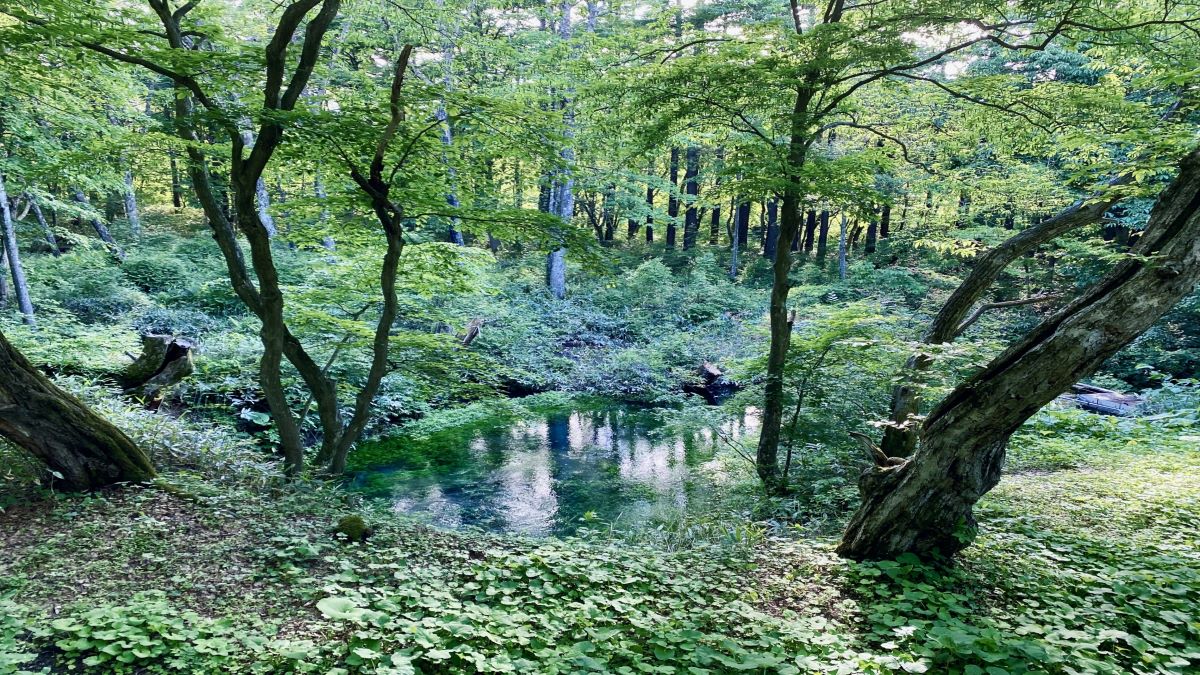
[Iwate Prefecture] 7 Famous Waters in Iwate Prefecture! Sweetfish and salmon swim upstream in the famous waters that flow through the city!

Iwate Prefecture is home to the Kitakami River system, which has the largest watershed area in Tohoku and is rich in water, and there are also many mountain forests that serve as water sources, making it an abundant source of water
In particular, Morioka City, the prefectural capital, is known as the "city of forests and water," where you can enjoy fishing for sweetfish and watch salmon swim upstream in the Nakatsugawa River, known for its "famous water," and where refreshing water springs up all over the city
What is a "famous water"?

Japan has many springs, rivers, and groundwater with good quality and abundant water, which supports people's lives by providing drinking water, water for daily use, and water for agriculture
Among these, the particularly refreshing water sources are called "famous water sources."
There is no clear definition or standard for what constitutes a famous spring, but what all of these springs have in common is that they are carefully protected by the local community to ensure that they remain pure water
"Top 100 Famous Waters" and "Top 100 Famous Waters of the Heisei Era" selected by the Ministry of the Environment
In 1985, the Environment Agency at the time selected the "100 Famous Waters" with the aim of selecting particularly excellent water environments from rivers and springs across the country and preserving them for the future
In 2008, the "100 Best Waters of the Heisei Era" was released, which included rivers, springs, irrigation water, and groundwater, and a total of 200 water sources were selected, with 12 in each of the Tohoku regions making up a total of 24 water sources
Official website of the Ministry of the Environment's Top 100 Waters

A famous water source from Iwate Prefecture that was selected as one of the "100 Famous Waters Selected by the Ministry of the Environment"
It was selected from two of the prefecture's most popular tourist spots, Ryusendo Cave and Hachimantai
Water from the Ryusendo underground lake: Iwaizumi Town, Shimohei District
Ryusendo Cave, one of Japan's three largest limestone caves, is a huge cavern with a total length of over 4km and is a national natural monument
There are several mysterious underground lakes with deep, clear water and an abundance of slightly alkaline water rich in calcium, and three of these lakes are currently open to the public for tourism
The spring water is used as tap water in Iwaizumi Town and is sold as "Ryusendo Water." Canned coffee made with this water, "Ryusendo Coffee," is also available for purchase at stores in Iwate Prefecture and online shops
INFORMATION
- Facility name: Ryusendo Cave
- Address: 1-1 Iwaizumi Kannari, Iwaizumi-cho, Shimohei-gun, Iwate Prefecture
- Phone number: 0194-22-2566
- URL:Iwaizumi Town/Ryusendo Cave Website (Ryusendo Cave Office)
GOOGLE MAP
Kanazawa Shimizu: Matsuo Yosegi in Hachimantai City
It is the general term for the seven springs that gush forth in Hachimantai City at the foot of Mount Iwate
The spring water, which is protected as a water source for Hachimantai City's water supply, is kept at a temperature of 9 to 13 degrees Celsius throughout the year and is also used for farming rainbow trout, yamame trout, and sweetfish
Because it contains a lot of vanadium, which has recently been attracting attention, it is sold as mineral water in online shops under the name "Iwate Hachimantai's Great Spring Water."
INFORMATION
- Facility name: Kanazawa Shimizu Springs
- Address: 1 Kanazawa Matsuo Yoriki, Hachimantai City, Iwate Prefecture
- Phone number: 0195-78-3500 (Hachimantai City Tourism Association)
- URL:Iwate Prefecture Tourism Portal Site (Iwate Prefecture Tourism Association)
GOOGLE MAP
A famous water source from Iwate Prefecture, selected as one of the "Top 100 Water Sources of the Heisei Era" by the Environment Agency
There are three locations in the prefecture, including a spring and a river in Morioka City and one spring in Ichinoseki City
Daijishimizu and Seiryusui: Morioka City
Located in Natayacho, Morioka City, this public well has been in use since the Edo period and draws water from springs in the grounds of Daijiji Temple, known as the grave of former Prime Minister Hara Takashi, and the nearby Gidaji Temple
Both wells are constructed in the same way, and their uses are determined in order from the well with the water discharge: well number one is for drinking, well number two is for washing rice, well number three is for washing dishes, and well number four is for washing feet
Although both wells occasionally run dry, they are managed by local residents and regularly cleaned
INFORMATION
- Facility name: Daijishimizu
- Address: 3-15 Natayacho, Morioka City, Iwate Prefecture
- Facility name: Seiryusui
- Address: 1 Daijijicho, Morioka City, Iwate Prefecture
- Phone number: 019-604-3305 (Morioka Tourism and Convention Association)
- URL:Tohoku Tourism Promotion Organization Official Website
GOOGLE MAP
Downstream of the Nakatsugawa Tsunatori Dam: Morioka City
The Nakatsugawa River, which originates in the Kitakami Mountains, is a tributary of the Kitakami River, and the approximately 7km stretch from Tsunatori Dam in Morioka City to where it joins the Kitakami River has been selected as a famous water source
It is a clear stream that flows through the center of Morioka city, including the government district and the ruins of Morioka Castle, and in the summer you can see anglers fishing for sweetfish, and in late autumn you can see salmon swimming upstream
In midsummer, children enjoy splashing around in the shallow waters, which provide ample footing, and the river is beloved by the people of Morioka as a source of excellent water that is essential to their lives
INFORMATION
- Facility name: Nakatsugawa Tsunatori Dam downstream
- Location: Morioka City, Iwate Prefecture
- Phone number: 019-604-3305 (Morioka Tourism and Convention Association)
- URL:Morioka Tourism Convention Association Official Website
GOOGLE MAP
The blessings of the beech trees at the secret waters of Mt. Sugawa: Ichinoseki City
There has been a hot spring resort at the foot of Mt. Sugawa (Mount Kurikoma) for over 300 years, and it is said that the spring water "Hyakko Water" used by the men who carried the luggage of the hot spring visitors long ago quenched their thirst
Over the years, its existence had become legendary, but when the development of the beech forest prompted a local search, the source was discovered in 2000 (Heisei 12), and it was named "Buna no Blessing" through a public contest
Although it was damaged in the 2008 Iwate-Miyagi Inland Earthquake, it has been rebuilt in its current location and is now a famous spring where residents and tourists can be seen constantly drawing water
INFORMATION
- Facility name: Sugawadake Hidden Water of Buna no Megumi
- Location: Genbicho, Ichinoseki City, Iwate Prefecture
- Phone number: 0191-21-8413 (Tourism Section, Tourism and Local Products Division, Commerce, Industry and Labor Department, Ichinoseki City Hall)
- URL:Official website of the 100 Famous Waters of the Heisei Era
GOOGLE MAP
Morioka City is a treasure trove of drinkable "famous water"
Morioka City is located in a basin where tributaries such as the Kitakami River, Nakatsu River, and Shizukuishi River flow, and where underground water flows from the mountains on all sides, and is home to many springs of water called "clear water."
Some of these springs are no longer maintained or have dried up, but the clean water we will introduce next is a delicious spring water that is still drinkable today
Morioka Sanshimizu
In addition to the previously introduced "Daiji-shimizu" and "Seiryu-sui," there is another famous spring called "Otaya-shimizu," located near Morioka Castle Ruins Park on the main street in Morioka's downtown area. This famous spring is known locally as an "urban oasis."
INFORMATION
- Facility name: Otaya Shimizu
- Address: 1-3-4 Odori, Morioka City, Iwate Prefecture
- Phone number: 019-651-4111 (Morioka City Hall)
- URL:Morioka City Official Facebook
GOOGLE MAP
Kenji Shimizu
This famous spring is located at the foot of Shimonobashi Bridge over the Nakatsu River, and the famous Miyazawa Kenji lived nearby while he was a student
The water was named after the famous spring that gushed forth when a well used by Kenji was drilled
INFORMATION
- Facility name: Kenji Spring
- Address: 1-1-12 Osawakawahara, Morioka City, Iwate Prefecture
- Phone number: 019-604-3305 (Morioka Tourism and Convention Association)
- URL:Iwate Prefecture Tourism Portal Site (Iwate Prefecture Tourism Association)
GOOGLE MAP
summary
Morioka City was selected as the second of the "52 places to visit in 2023" featured in the January 12, 2023 edition of the New York Times, and is currently a hot topic
The secret to the deliciousness of Morioka's three famous noodles and coffee is said to be the presence of good quality water, and Morioka is a city where not only is the water famous, but the tap water is also delicious
Did you know that Morioka City has the highest consumption of tofu in Japan, a product whose deliciousness is determined by its water?
There are many shops in the city that make delicious tofu, and this is also thanks to the high quality water
Tohoku Famous Water Series



I'm a former Edoite (Tokyoite) who loves Morioka and the six prefectures of Tohoku, and I'm a big fan of history, gourmet food, travel, sports, alcohol, and choral singing.
I'll introduce you to interesting things, delicious food, and great places in Tohoku!
Please support NEFT's article creation!
NEFT gathers and publishes articles about the history, culture, and tourism information of various regions in Tohoku
If you enjoyed this article, we would be grateful if you would consider supporting our future interviews, article creation, and website management
*Clicking "Tip" will open the tip sending screen for the external service "codoc"
Other articles

[Aomori] From famous hot springs to hidden hot springs! Recommended hot springs in Aomori Prefecture...

The "Yonekawa Water Splash" ritual, a traditional visitation ceremony for gods on the border between Miyagi and Iwate prefectures...
30 Surnames with Roots in Iwate Prefecture's Prestigious Families

[Hachimantai City, Iwate Prefecture] The "Yakehashiri lava flow" dyed the earth black...

[Part 2] What is "Mochi Honzen" from Ichinoseki and Hiraizumi? | Other books...

Including local license plates, there are a total of 16 types! Tohoku region license plates...

[Gassan, Nishimurayama District, Yamagata Prefecture] Can you ski in midsummer? Gassan Ski...

Enjoy the charm of Iwate at Ogal Shiwa!

[Yonezawa City, Yamagata Prefecture] Visit the hot springs associated with the Uesugi clan of the Yonezawa domain

A nationally famous mountain worship site that symbolizes life, death, and rebirth...

Who are the Yokote Yakisoba Four Heavenly Kings? The four restaurants that became the final Four Heavenly Kings...
