This site is an online media that delivers all sorts of trivia about the six Tohoku prefectures, from sightseeing and gourmet spots to local customs, history, and more
While many electric trains currently operate on Japanese railways, these trains are basically vehicles that continuously draw power from an external source, so they cannot run on lines without power facilities. However, on such lines, there are a small number of trains that run on power from batteries installed on the vehicle, similar to electric vehicles. One of the lines where battery-powered trains run is the Oga Line in Akita Prefecture .
What is the Oga Line?
The Oga Line is a JR East railway line connecting Oiwake Station in Akita City, Akita Prefecture, to Oga Station in Oga City. It has a total length of 26.4 km and nine stations. As its name suggests, the line runs through the Oga Peninsula.
The final stop, Oga Station, is located in the heart of Oga City. From Oga Station, youthe "Namahage Shuttle," a shared taxi service that requires advance reservations, to visit various spots in Oga, such as the Namahage Museum, Oga Shinzan Folklore Museum, Shinzan Shrine, Oga Onsenkyo (hot spring resort area), and Oga Aquarium GAO.
As of the revised timetable in March 2025, there are 15 round trips of local trains (trains that stop at all stations) operating daily on both weekdays and holidays. No trains are scheduled to start or end at Oiwake Station, the starting point of the Oga Line; all trains operate on the Akita Station to Oiwake Station section of the Ou Main Line. The section from Akita Station to Oga Station, including the Ou Main Line, is nicknamed the " Oga Namahage Line ."
A train running on the Oga Namahage Line
There was once a night express train called " Oga " that ran from the Tokyo metropolitan area and extended its service to Oga Station via the Oga Line. For more details, please see the article explaining "Oga".
The Oga Line is a non-electrified line that lacks the necessary power infrastructure (such as overhead power lines) for electric trains to run. Therefore,conventional electric trains cannot operate on it, and diesel railcars that run on diesel fuel must be used. Until the timetable revision in March 2021, diesel railcars of the KiHa 40 series were in operation on the Oga Line.
What is the EV-E801 series battery-powered train ACCUM?
The KiHa 40 series diesel railcars were showing signs of aging after about 40 years since their manufacture, so new trains were introduced on the Oga Line starting in 2017. These new trains are the EV-E801 series battery-powered electric trains , nicknamed ACCUM
Storage battery train EV-E801 series ACCUM
These trains consist of two cars per set and operate in two-car or four-car formations. Currently, they are rare trains operating only on the Oga Line and the Ou Main Line (although other types of battery-powered trains operate on other lines, these battery-powered trains also operate on a limited number of lines).
The design is based on the image of Namahage , an important intangible folk cultural property of the Oga region , and Namahage are also depicted next to the entrance/exit.
On the electrified Ou Main Line (between Akita Station and Oiwake Station), the ACCUM runs like a regular train with its roof-mounted pantograph (current collector) raised. On the non-electrified Oga Line, however, it cannot run as a regular train, so it runs using electricity stored in its onboard battery, just like an electric vehicle.
Upon arriving at the final stop, Oga Station, the train raises its pantograph to the overhead wires (electrical wires) installed only on the platform, and charges its batteries during the stop. Then, it returns to Oiwake Station, running on battery power once again. The electricity used for charging at Oga Station is generated at a wind power plant operated by JR East.
ACCUM stopped at Oga Station, where there are charging facilities
One two-car ACCUM train was introduced in 2017, and five more were added in March 2021. As a result, the KiHa 40 series was retired, and the ACCUM is now the only train running on the Oga Line. Some of the retired KiHa 40 series trains were transferred to the Kominato Railway, a private railway in Chiba Prefecture.
Tourist spots accessible via the Oga Line and the Namahage Shuttle
Generally, traveling in rural areas is inconvenient without a car (your own car or a rental car), but you cannot drive yourself without a driver's license, and even if you can drive yourself, some people may find the cost of renting a car to be a heavy burden
However, by using the Oga Line and the "Namahage Shuttle," which requires advance reservations and which we have already introduced, you can enjoy sightseeing in Oga without driving your own car (please note that reservations must be made by 9 PM the day before, and you may have to share a ride if there are other passengers). Here, we will introduce some spots you can reach using the Oga Line and the Namahage Shuttle.
Roadside Station Oga Namahage Village Ogare
Michi-no-Eki Oga Namahage no Sato Ogare is a roadside station located a 3-minute walk south from Oga Station, the terminal station of the Oga Line. It sells seafood and agricultural products from Oga City, and offers opportunities to interact with Akita dogs (mainly on weekends).
Information <Oga Roadside Station>
Name Roadside Station Oga Namahage Village Ogare
Address: 1-19 Shinhamacho, Funakawa Port, Oga City, Akita Prefecture
Phone number: 0185-47-7515
Closed on January 1st and 2nd, and on other special closures during the winter
The Mayama area is home to the Namahage Museum, the Oga Mayama Folklore Museum, and the Mayama Shrine. The Namahage Museum displays over 150 Namahage masks and costumes, and screens the film "A Night of Namahage" on a large screen. The Oga Mayama Folklore Museum, housed in a traditional curved-roof farmhouse, offers educational workshops where visitors can experience Namahage through demonstrations.
According to legend, Oga Onsenkyo is the place where the Shogun Sakanoue no Tamuramaro discovered the hot springs and allowed his troops to rest during his eastern campaign. It is also said that the head of the Satake family, who ruled the Akita domain during the Edo period, was fond of bathing there.
The hot spring water at Oga Onsen contains salt, and the salt that remains on the skin after bathing prevents sweat from evaporating, making it popular as a beauty-enhancing hot spring with high moisturizing effects. As of April 2025, there are six inns operating there.
Information<Oga Onsenkyo>
Name: Oga Onsenkyo
Location: Kusakihara, Yumoto, Kitaura, Oga City, Akita Prefecture
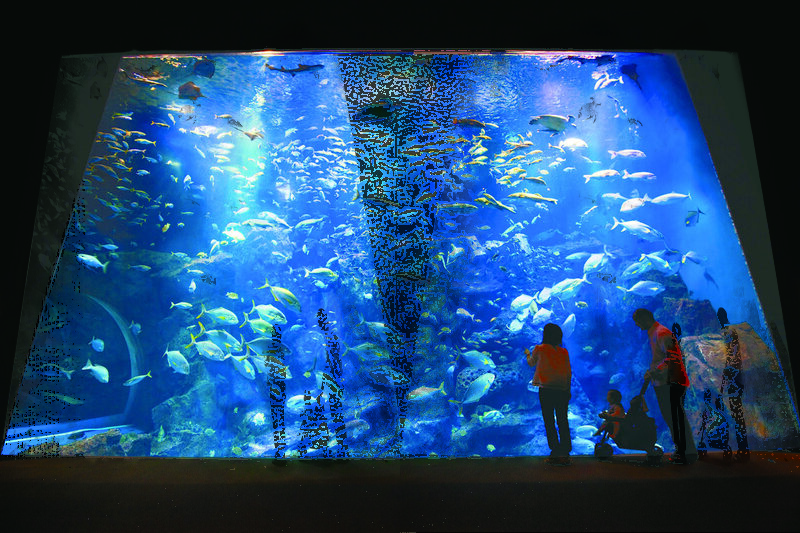
Oga Aquarium GAO exhibits approximately 400 species of marine life, including the Akita Prefecture's official fish, the sandfish (hatahata), as well as polar bears and penguins. The large tank, which recreates the sea off Oga from spring to summer, is a must-see. With a dedicated exhibit area for sandfish and unique displays of fish that inhabit the forests, rivers, and fields of Akita, it is one of Akita Prefecture's leading aquariums.
Tohoku Rokken Trivia Media NEFT
Tohoku Rokken Trivia Media NEFT
https://jp.neft.asia/archives/3810
This site is an online media that delivers all sorts of trivia about the six Tohoku prefectures, from sightseeing and gourmet spots to local customs, history, and more
read more
Information<Oga Aquarium GAO>
Name: Oga Aquarium GAO
Location: Toga Shiohama, Oga City, Akita Prefecture
Opening hours: 9:00-17:00 (last entry 16:00) From November to February of the following year, 9:00-16:00 (last entry 15:00)
Closed on the third Thursday of every month, etc. (please check)
Using the Namahage Shuttle, you can visit scenic spots such as Nyudozaki, Unshoji Temple (famous for its hydrangeas), and the Kanpuzan Rotating Observatory, depending on the season. Please note that the Namahage Shuttle only operates during certain periods, so be sure to check the schedule in advance when planning your visit.
The Oga Line not only serves as a vital mode of transportation for local residents, but its unique trains also attract tourists to Oga. Take a ride on the Oga Line and explore its tourist attractions for an experience you can only have in Oga.