This site is an online media that delivers all sorts of trivia about the six Tohoku prefectures, from sightseeing and gourmet spots to local customs, history, and more
Aomori Prefecture suffered extensive damage from heavy snowfall in the winter of 2026. The average winter temperature is around 2°C even during the day, making it extremely cold
It is estimated that during the Jomon period, 6,000 years ago, the average temperature was around 2°C even during the coldest winters, with daytime temperatures of 5-6°C. This is equivalent to the average temperature in present-day Sendai City, Miyagi Prefecture, or Niigata City, Niigata Prefecture
The Jomon period was a time when the last ice age ended and temperatures rose. A winter temperature of 5-6°C represents the highest temperature recorded during the Jomon period, which suggests that Aomori Prefecture was much more livable than it is today
The average temperature in July was 24-26°C, which was about 3°C higher than it is now
Eight archaeological sites in Aomori Prefecture are registered as UNESCO World Cultural Heritage sites
Archaeological sites in northern Japan, primarily from the Jomon period, have attracted worldwide attention. Eight sites in Aomori Prefecture, along with six sites in Hokkaido, one in Iwate Prefecture, and two in Akita Prefecture, were registered as a UNESCO World Cultural Heritage site, "Jomon Archaeological Sites in Hokkaido and Northern Tohoku."
Part of the Jomon Archaeological Sites in Hokkaido and Northern Tohoku
Hokkaido
Kakinoshima Ruins
Kitakogane Shell Mound
Ofune Ruins
Irie Shell Mound
Takasago Shell Mound
The Chiusu Circular Embankment Tombs
Washinoki Site (Associated with the Jomon Archaeological Sites of Hokkaido and Northern Tohoku)
Aomori Prefecture
Odaiyamamoto Ruins
Tagoyano Shell Mound
Sannai-Maruyama Ruins
Futatsumori Shell Mound
Omakino Ruins
Omori Katsuyama Ruins
Kamegaoka Stone Age Site
Korekawa Stone Age Site
Chōshichiyachi Shell Mound (Associated with the Jomon Archaeological Sites of Hokkaido and Northern Tohoku)
In addition to its World Heritage sites, Aomori Prefecture has numerous archaeological sites dating from the Paleolithic period to the Heian period. There are 4,893 such sites in total, of which 3,581 are Jomon period sites (as of April 2023, according to the Aomori Prefectural Board of Education)
The definition of an archaeological site is a trace of human activity
Before moving on to Jomon period archaeological sites, I'd like to organize the information on earlier sites based on the latest data and theories
supplement
This article is based on research results and dating up to February 2026. However, please note that the results of archaeological surveys and the dating of artifacts are updated daily, so the information in this article may differ from the latest research findings
Main references for this paper
This includes the Aomori Prefectural History, the Aomori Prefectural Museum of Local History, the National Museum of Japanese History, and the Gunma Prefectural Museum of Natural History. It also includes interviews with archaeological site management facilities, related local government documents and facilities (in the case of Aomori Prefecture), National Geographic (in the case of overseas locations), the Department of Ethnology and Archaeology, Faculty of Letters, Keio University (investigation of the Shiri-Ro-Abe Cave), the Graduate University for Advanced Studies, the Ministry of Land, Infrastructure, Transport and Tourism, and press releases
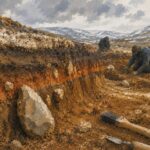
First, let's confirm the definition of a site (or archaeological site) . A site is a place where tools used by human ancestors have been found .
There are many different kinds of tools, but the very first tool used was the stone tool, and therefore,archaeological sitesare limited to the Paleolithic period.
Even if fossils of animals or fish are found, if no tools used by humans are found, it is not considered an archaeological site. In such cases, it is often simply referred to as a fossil locality (or just a locality)
The world's oldest archaeological site is the Lomekwi site in Kenya, dating back approximately 3.3 million years
From the perspective of ape history, the oldest archaeological site in the world isthe Lomekwi 3 site. Stone tools unearthed there in 2011 were dated to approximately 3.3 million years ago.
The astonishing fact has come to light that early hominids who made stone tools existed 3 million years before the appearance of humans (Homo sapiens) (approximately 300,000 years ago). This 3.3 million year ago is considered the beginning of the Paleolithic period
As for human remains, stone tools and skull fragments unearthed from the Jebel Irhoud site in Morocco (Africa) were announced in 2017 to be approximately 310,000 years old, making it the world's oldest known human habitation site
the Ice AgeAomori Prefecture!?
The Paleolithic period in the Northern Hemisphere lasted from approximately 3.3 million years ago to about 11,700 years ago. During that time, the Earth was in an ice age, experiencing cycles of warming and cooling.
Ice ages are climate periods that have occurred intermittently from about 2.9 billion years ago to the present.It is believed that around 110,000 years ago, we entered what is considered the last ice age (the Last Glacial Period), which is still ongoing (we are currently in an interglacial period (a warm period) that began around 117,000 years ago).
The coldest period of the last glacial age was the Last Glacial Maximum (LGM), which began about 70,000 years ago and peaked around 20,000 years ago. At that time, high-latitude regions such as central and northern Europe and North America were covered in ice, and sea levels were about 120 meters lower than they are today because the water had turned to ice
In northern Honshu, including Aomori Prefecture, temperatures were about 10°C lower than they are now, the distance to the continent was shorter, and the sea was shallower. It is also thought that the Sea of Japan was covered in ice
It is estimated that the Tsugaru Strait, which is now about 140 meters deep, was once only about 20 meters deep at its deepest point, connecting Aomori Prefecture and Hokkaido. It is also thought that there may have been times when the strait was frozen over, and that parts of it were connected by ice bridges
Mutsu Bay is still relatively shallow, with a maximum depth of only about 60 meters, and was land during the Ice Age. However, it is said that the plains south of Honshu, including Aomori Prefecture, were never covered in ice due to the influence of the Kuroshio Current (a warm current)
The Paleolithic and Neolithic periods are globally standardized names. The Jomon and Yayoi periods, on the other hand, are unique to Japan
The Earth began to warm up rapidly around 11,700 years ago. This period is generally defined as the end of the Paleolithic era
During the Paleolithic era, people used rocks as sharp objects by striking or banging them. However, humans used their ingenuity to devise a method of polishing stones by hand. This marked the beginning of the next era, theNeolithic period.
The Paleolithic and Neolithic periods were defined by the British archaeologist John Lubbock (1834-1913) in 1865
Paleolithic: The term "Paleolithic"is a compound word from the Greek words "Paleos" (old) and "lithos" (stone), meaning "the era in which chipped stone tools were used."
This period spans from 3.3 million years ago to 11,700 years ago, coinciding with the final ice age. No pottery has been found at archaeological sites in Europe or North America during this time
In Japan, the term "Paleolithic period" refers to this time period
However, in 1999, pottery discovered at the Odaiyamamoto Site in Aomori Prefecture (Sotogahama Town, World Cultural Heritage Site, Nationally Designated Important Cultural Property, and Nationally Designated Historic Site) was found to have been made approximately 16,500 years ago. This revealed that the Jomon period began 5,000 years earlier than the end of the Paleolithic period (approximately 11,700 years ago).
Jomon period and Paleolithic period sites are classified based on whether or not pottery has been discovered
However, pottery has not been found at all Paleolithic sites excavated in Japan. It is found not only at sites before the "Ohirayama-moto site," but also in many sites after it. For this reason, we distinguish between Paleolithic and Jomon period sites in our classification
Jomon period sites: Sites where pottery has been unearthed, beginning around 16,500 years ago during the Paleolithic period.
Paleolithic sites: Sites dating up to around 11,700 years ago, when the Paleolithic period ended, where only stone tools showing traces of the Paleolithic era have been unearthed.
For example, at the Ohirayamamoto site, pottery was unearthed from the first excavation site. Excavation work was then carried out in the surrounding areas, but so far no pottery has been found
Therefore, the first site was named [Ōhirayama-moto I Site] and classified as a Jomon period (initial stage) site, while the [Ōhirayama-moto II Site] and [Ōhirayama-moto III Site] , which were excavated later, were conveniently classified as Paleolithic sites.
If pottery is found at a site other than the I site, that site will also be classified as belonging to the Jomon period (initial stage)
Archaeological sites with "Stone Age" in their name are actually "Jomon period sites."
There's another source of confusion within Japan. In Aomori Prefecture, among the World Heritage sites,the "Kamegaoka Stone Age Siteandthe "Korekawa Stone Age Site." What period exactly is this Stone Age?
This is a uniquely Japanese expression that was used before the term "Jomon period" became widespread
The term "Jomon period" became widely used as a substitute for "Stone Age" after World War II, when it began to be used in textbooks
The "Kamegaoka Stone Age Site" (discovered during the Edo period) and the "Korekawa Stone Age Site" (discovered during the Taisho period) are actually Jomon period sites, but the names given to them before the term "Jomon period" existed are still used as their official names, which has led to confusion
In early 2026, a surprising announcement was made: "There were lions in Japan." There are also lions in Aomori Prefecture
A historic paper claiming that "it was not tigers but lions that inhabited Japan" was published on January 26, 2026 (New York time) in the prestigious American scientific journal, the Proceedings of the National Academy of Sciences
The announcement was made by a joint international team from Japan's Graduate University for Advanced Studies and countries such as China and Denmark, and it received significant media attention in Japan
Moreover, of the 26 samples collected from all over Japan that were previously thought to be tiger fossils and used as samples for this study, one of the five fossils that were ultimately selected to determine that the animal was a lion was unearthed from Shiriyazaki on the Shimokita Peninsula in Aomori Prefecture
It has now become clear that there were lions in Aomori as well
Despite the discovery of 3,581 Jomon period archaeological sites in Aomori Prefecture, there are only a little over 30 Paleolithic sites
Despite more than 10,000 Paleolithic sites being excavated throughout Japan, the number in Aomori Prefecture is extremely low
Even among such a small number of sites, there are some that have attracted worldwide attention, such as the "Ohirayamamoto Site.""Paleolithic Sites in Aomori Prefecture: Part 2,"we will explain "why there are so few Paleolithic sites in Aomori Prefecture" and summarize the overview of Paleolithic sites in Aomori Prefecture.
My love of travel led me to work for a travel magazine some time ago, and now I work as a travel writer for an online publication. I have visited all 47 prefectures in Japan, focusing on the Tohoku region, and I enjoy soaking in hot springs and experiencing traditional Japanese culture, including old townscapes, lifestyles, and performing arts and crafts