This site is an online media that delivers all sorts of trivia about the six Tohoku prefectures, from sightseeing and gourmet spots to local customs, history, and more
Akita Inu Designation as a Natural Monument (Akita Prefecture)
On July 31, 1931 , nine Akita dogs were designated as a national natural monument under the name "Akita Inu ." This was the first time a Japanese dog breed had received such designation, and its purpose is to preserve and protect the Akita dog
The ancestors of this breed are believed to be a dog called "Odate Inu," which was kept as a guard dog and fighting dog by samurai and wealthy farmers in the Odate region of Akita Prefecture
The Hachinohe Sansha Taisai is a summer festival held annually in Hachinohe City, Aomori Prefecture, from July 31st to August 4th, and originates from the festival of Ogami Shrine
The "three shrines" of the Sansha Festival refer to Ogami Shrine, Silla Shrine, and Shinmei Shrine, all located within Hachinohe City. In 2004, the festival was designated an Important Intangible Folk Cultural Property as the "Hachinohe Sansha Festival Float Event," and in 2016 it was designated a UNESCO Intangible Cultural Heritage
Hayachine Shrine Annual Festival and Yoimiya (Iwate Prefecture)
The annual festival of Hayachine Shrine in Osakocho, Hanamaki City, Iwate Prefecture
The eve of the festival is held on July 31st and the main festival on August 1st. On both days, the Hayachine Kagura (Daisho Kagura and Take Kagura), which has a tradition of over 500 years and is registered as an important intangible folk cultural property of Japan and a UNESCO intangible cultural heritage, will be performed.
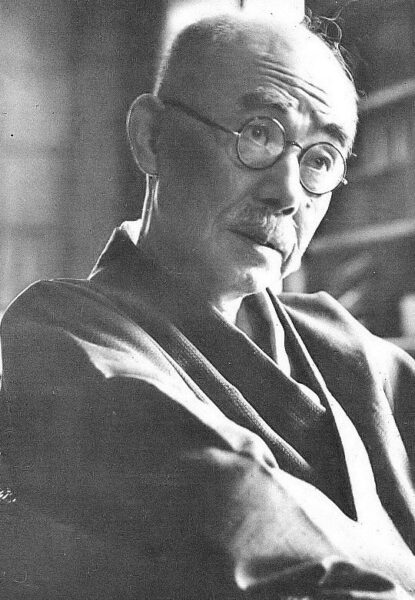
Kunio Yanagita, a folklorist often called the father of Japanese folklore studies , was born on July 31, 1875 , in Tsujikawa Village, Shinto District, Shikama Prefecture (present-day Tsujikawa, Fukusaki Town, Kanzaki District, Hyogo Prefecture)
While working as a bureaucrat, he investigated rural areas throughout Japan to answer his own question of "what it means to be Japanese." He researched and studied the lives, customs, and traditions of ordinary people that do not appear in historical records, and established them as a systematic field of study called "folklore studies."
In 1908 (Meiji 41), Yanagita met Sasaki Kizen, a then-up-and-coming writer, and became interested in Tono, Iwate Prefecture. The following year, in 1909, he actually went to Tono
He conducted interviews on-site, collecting various traditions and legends passed down in Tono, and in 1910 published a collection of these tales called "Tono Monogatari" (Tales of Tono)


![What day is it today? Tohoku Edition [0731]](https://jp.neft.asia/wp-content/uploads/2026/02/0731-1-1200x800.png.webp)




![What day is it today? Tohoku Edition [0829]](https://jp.neft.asia/wp-content/uploads/2026/03/0829-150x150.png.webp "[What day is it today? | Tohoku Edition] What day is August 29th?")
![What day is it today? Tohoku Edition [0526]](https://jp.neft.asia/wp-content/uploads/2026/02/0526-150x150.png.webp "[What day is it today? | Tohoku Edition] What day is May 26th?")
![What day is it today? Tohoku Edition [1130]](https://jp.neft.asia/wp-content/uploads/2026/03/1130-150x150.png.webp "[What day is it today? | Tohoku Edition] What day is November 30th?")
![What day is it today? Tohoku Edition [0913]](https://jp.neft.asia/wp-content/uploads/2026/03/0913-300x300.png.webp)
![What day is it today? Tohoku Edition [0821]](https://jp.neft.asia/wp-content/uploads/2026/03/0821-300x300.png.webp)
![What day is it today? Tohoku Edition [0923]](https://jp.neft.asia/wp-content/uploads/2026/03/0923-300x300.png.webp)
![What day is it today? Tohoku Edition [1127]](https://jp.neft.asia/wp-content/uploads/2026/02/1127-300x300.png.webp)
![What day is it today? Tohoku Edition [0101]](https://jp.neft.asia/wp-content/uploads/2026/02/0101-300x300.png.webp)
![What day is it today? Tohoku Edition [1203]](https://jp.neft.asia/wp-content/uploads/2026/03/1203-300x300.png.webp)
![What day is it today? Tohoku Edition [0720]](https://jp.neft.asia/wp-content/uploads/2026/02/0720-300x300.png.webp)
![What day is it today? Tohoku Edition [1229]](https://jp.neft.asia/wp-content/uploads/2026/02/1229-300x300.png.webp)
![What day is it today? Tohoku Edition [0429]](https://jp.neft.asia/wp-content/uploads/2026/02/0429-300x300.png.webp)
![What day is it today? Tohoku Edition [0422]](https://jp.neft.asia/wp-content/uploads/2026/02/0422-300x300.png.webp)
![What day is it today? Tohoku Edition [0804]](https://jp.neft.asia/wp-content/uploads/2026/02/0804-300x300.png.webp)
![What day is it today? Tohoku Edition [0506]](https://jp.neft.asia/wp-content/uploads/2026/05/0506-300x300.png.webp)