


Hirosaki Castle: The entire castle tower was moved | The cutting edge of cultural property restoration on display at the moving shop [Hirosaki City, Aomori Prefecture]

At Hirosaki Castle in Hirosaki City, Aomori Prefecture, a "hikiya" (building relocation) project was carried out from 2015 to move the castle tower approximately 70 meters from its original location
This construction method of moving a building as is without dismantling it is rare even in Japan, and it attracted attention as an initiative that combines cultural property preservation, architecture, and civil engineering technology
Currently, the castle tower is on a temporary base , and a " relocation " project to move it back to its original base is scheduled to begin around July 2026. After that, seismic reinforcement and preservation repairs will be carried out, and the interior will be closed to the public until fiscal year 2032.
In other words, this is the only time you can see the castle tower in its relocated state
Why was a "Hikiya" necessary? The background to the bulging stone wall and repairs

Hirosaki Castle was built in the early Edo period (1611), and the current castle tower was rebuilt in 1811
While it is an important historical site for understanding the castle's history, in recent years, a bulge in the stone wall on the east side of the main enclosurehas been observed. This is believed to be caused by soil pressure, ground movement, and deterioration over time, and it has been pointed out that there is a risk of collapse if left untreated.

Repairing the stone walls requires dismantling and rebuilding the stone walls of the castle tower base that support it, but dismantling the castle tower could damage the building's structural history and its value as a cultural asset
The method adopted"hikiya"technique, which involves moving the castle tower without dismantling it.
Highlights of the Hikiya technique and construction
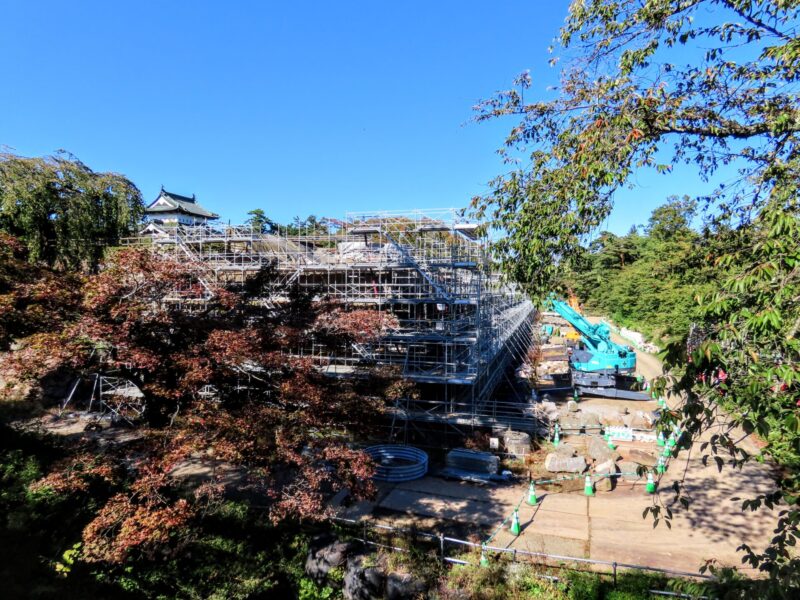
According to documents published by Hirosaki City, the castle tower has been confirmed to be of the following size:
- Height: Approximately 14.4 m
- Weight: Approximately 400 tons (estimated)
- Distance traveled: Approximately 70-77 meters (northwest)
The castle tower was first lifted several tens of centimeters to one meter using a hydraulic jack, and a cart and rails were placed underneath. It was then carefully towed, with its position adjusted in increments of several tens of centimeters. The horizontal and vertical precision of the building is constantly measured and managed to prevent any distortion
A temporary castle tower base was set up at the new location, and an observation deck and explanatory panels were installed so that visitors could observe the progress of the work even during the repair period. Another major feature was that the repairs were not carried out behind closed doors, but rather as an open project
Each stone is numbered and re-stacked
The stone walls on the east and south sides of the Honmaru citadel, which were the subject of repairs, were dismantled and re-laid over an area of approximately 100m + 17m. A total of 2,185 stones were dismantled, and records were kept of the relative positions of the stones, processing marks, and differences in lamination methods over different eras
In the re-stacking, techniques similar to those used when the castle was first built (e.g., uchikomi-tsugi) were used, and care was taken to not damage its characteristics as a cultural asset
Upcoming schedule (based on official announcements)
- Tours of the inside of the castle tower (open to the public on the temporary castle tower base): Until Sunday, November 23, 2025 (national holiday)
- Returning the castle tower to its original base: July to November 2026
- Earthquake reinforcement and preservation repair of the castle tower: Until 2023
- Planned reopening of the castle tower's interior: 2032 or later
(Source:Hirosaki Park Management Office / Hirosaki City)
Important points to keep in mind when visiting

When you visit the site, we will organize the points that will help you realize, ``Ah, these are traces of the Hikiya.''
- Comparison of the temporary castle tower base location and distance moved:
According to official documents, the current location of the castle tower has moved approximately 70 meters northwest from the original castle tower base. Let's compare it with the "original location" using the information boards and display diagrams. - Searching for signs of repair to the "bulging" of the stone wall,
the east-facing stone wall has had some of its stones rearranged for repairs, and numbered tags and explanatory signs have been installed. Upon closer inspection, you can see that the way the stones are stacked differs slightly from other sections. - Best photo spots:
During cherry blossom season (e.g., late April to early May), the composition of the castle tower with Mount Iwaki in the background is popular. Also, the illuminated main keep and castle walls at dusk are atmospheric and highly recommended. - Important Notes for Visitors:
Some areas of the main keep may be restricted during repairs. Please check the official website for the latest information. - Technical explanation panels and exhibits
within the castle grounds and nearby museums display models and panels illustrating the mechanisms of building relocation (jacks, trolleys, and rails), making it a worthwhile visit for anyone interested in the technology.
A "moving castle" where culture, tourism, and preservation intersect

The Hirosaki Castle relocation project is not just about moving a building. It is about reusing the castle, a cultural asset, as a local tourist resource, and by making the physical task of repairs visible, it has been elevated into a social project that involves local residents and tourists
By adopting a public construction approach, we broke the image that "repairs = no entry" and instead transformed it into " repairs that can be viewed ."
Additionally, the stone walls are engraved with a history of alterations made to the castle from the time it was built up until the Genroku period, as well as details of repairs made during the Meiji and Showa periods. Another fascinating feature is that by looking at the stones, you can determine in what era the castle was altered
Traditionally, Hirosaki Castle was visited primarily to enjoy the scenery of cherry blossoms and the castle, but with the relocation of the castle tower, the reasons for visiting have diversified, including those interested in construction and repair techniques, history buffs who want to understand the structure of the castle and stone walls, and tourists who want to see the repair site open to the public
The legacy of history seen through the "moving castle"
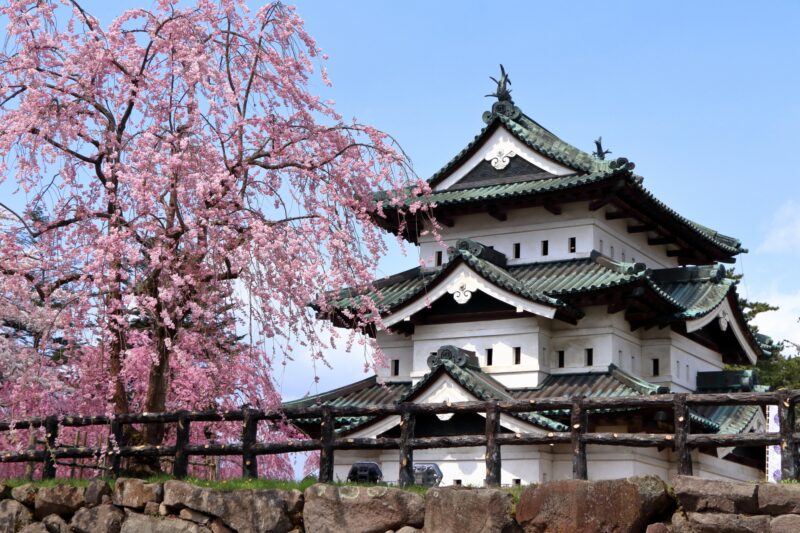
The current Hirosaki Castle tower is not in its final form, but rather is in the process of being passed on to future generations. The fact that the repair process is open to the public and records of the changes are kept is itself what makes the castle valuable
Hirosaki Castle is not just something that has been "left behind," but a cultural asset that is constantly being protected. Come and experience its ongoing history on-site
Hirosaki Castle <Information>
- Name: Hirosaki Castle
- Address: 1-1-1 Shimoshiroganecho, Hirosaki City, Aomori Prefecture, 036-8356 (inside Hirosaki Park)
- Phone number: 0172-33-8739
- Official URL:Hirosaki Park Official Website
Google Map
Source
- Hirosaki City | Hirosaki Castle Honmaru Stone Wall Repair Project
- Hirosaki Park Official "About Touring the Inside of Hirosaki Castle Tower"
- Hirosaki Tourism and Convention Association | "Main Castle Stone Wall Repair"
- Hirosaki City (PDF) "Hirosaki Castle Tower to be moved approximately 70 meters (publicity materials)"
- Hirosaki City (PDF) "Finally moving! Hirosaki Castle 8/1 (Hirosaki Public Relations)"
- Hirosaki City (PDF) "Honmaru Excavation Survey Summary Report I (2016)"

A freelance writer who loves delicious food and history. Traveling around the towns and people of Tohoku is her life's work
Please support NEFT's article creation!
NEFT gathers and publishes articles about the history, culture, and tourism information of various regions in Tohoku
If you enjoyed this article, we would be grateful if you would consider supporting our future interviews, article creation, and website management
*Clicking "Tip" will open the tip sending screen for the external service "codoc"
Other articles
Oshio Natural Carbonated Water Spring | Natural carbonated water gushes forth! One of the few in the country...

[Yamagata Prefecture] Tokamachi and Nanakamachi in Yamagata City, where the atmosphere of the Edo period remains...

The foundation of Akita City was the castle town of Kubota Castle, built by Satake Yoshinobu.

[Towada City, Aomori Prefecture] An oasis of art that resonates with the future!.
Iwadeyama's Arahagihaba Shrine | Has it been enshrined here for 2,000 years? (Referring to the place name...).

Hiraizumi folktale "Yamabushi Stone" - details of the setting...

The submerged forest of Lake Akiogi can only be seen from May to June! The trees in the lake...
Red cloth covering the trees... The mysterious matchmaking shrine remaining in Tono...

[Semboku City, Akita Prefecture] A hot topic of craft beer! It's called...

Skipping both Aquamarine and Marine Tower? Onahama, Iwaki City...

Delicious grilled fish from Japan's largest fishing boat and Ayu Chaya! [Yamagata Prefecture...
