

![Daito-ryu Aikijujutsu [Part 2]](https://jp.neft.asia/wp-content/uploads/2026/01/aiki_tkd03-1200x800.jpg.webp)
Did Aikido originate in Aizu? Daito-ryu Aikijujutsu and Takeda Sokaku [Part 2] | Was Sokaku the founder of Aikijujutsu? His lineage and ties to Kii

A reorganization or birth of "Daito-ryu"?
As mentioned in the previous chapter, the traditional story of how Daito-ryu Aikijujutsu was passed down is that it was inherited and spread throughout the country by Saigo Tanomo, a former chief retainer of the Aizu domain. However, this story has now been largely refuted by comparison with historical facts and various records
There is little evidence that Saigo Tanomo himself had handed down the Goshikinai, and it is believed that Sokaku learned it from his grandfather-in-law, Sato Kin'emon, and moreover the Reisanji Shugendo Dojo where Sokaku received training from Tanomo did not yet exist at the time
It is said that Sokaku reorganized techniques dating back to the Heian period and the secret techniques of the Imperial Court in Aizu, and named it Daito-ryu, but it is now thought that he actually founded the school by integrating the martial arts he had studied himself
It has also been pointed out that Saigo Tanomo may have been the person who gave advice on the history and name of the school at that time
It is common in old martial arts to attribute the history of a school to famous military commanders of the past, and it is not uncommon for the founder to have legendary achievements, such as receiving divine revelation and attaining enlightenment after extensive training
If Daito-ryu Aikijujutsu was created by Sokaku based on various schools and techniques, then he would be the founder rather than the founder of a new style, and there is now a growing movement to reevaluate him as a great man of Aizu
In fact, in the local history textbook of Aizubange Town, his birthplace , the description of "Takeda Sokaku" has been revised to introduce him as a figure who had a great influence on modern Japanese martial arts.
In any case, Takeda Sokaku's achievements in presenting the world with exquisite and unparalleled Aikido techniques will likely continue to assume an increasingly important position in the history of martial arts
A wandering teaching method without a specific dojo
As mentioned earlier, Takeda Sokaku is said to have traveled around the country in 1897 to spread Daito-ryu Aikijujutsu to the world, but he actually stayed at his destinations for a while to teach the art
In other words, it can be said that the tradition began in a unique format, with no specific base dojo, and practitioners traveling or in response to invitations to teach their techniques
To do this, he naturally had to demonstrate the usefulness of Daito-ryu, a martial art unknown to society at the time, and it is said that he built up his reputation as a warrior by competing in a variety of matches with other schools and in outdoor matches along the way
Although Sokaku did not have his own dojo, he left behind detailed records in the "Eimeiroku" which lists the people who taught him, and the "Shareiroku" which details the fees he received
This gives us a glimpse into Sokaku's relationships and some of the management of the Daito-ryu organization
In this respect, it can be said that there was a clear management perspective, and it can also be seen as an early success story for a martial artist making a living
Sokaku's teaching methods were not as systematic as they are today, but rather involved showing various techniques based on his feelings in the moment, or slightly changing what he taught depending on the opponent
For this reason, there are said to be differences depending on the lineage, and it is not known whether all of the scrolls seen today have existed from the beginning
Sokaku traveled all over the country spreading Daito-ryu, but strangely enough, there is no evidence that he ever enjoyed the techniques in his hometown of Aizu
It is unclear whether he had some special considerations or whether he wanted to avoid any association with those involved in martial arts within the Imperial Court or the Aizu domain, but currently Sokaku's great-great-grandson, Takeda Munemitsu, is teaching Daito-ryu from his base in Aizubange Town, his great-grandfather's hometown
The encounter between Morihei Ueshiba and Sokaku Takeda
According to one theory, the number of students who received instruction from Sokaku was as high as 30,000, including some who would go on to make their mark on the history of martial arts
A prime example is Morihei Ueshiba , the founder of Aikido, who was born in Tanabe City, Wakayama Prefecture .

It is well known that Morihei eventually developed Aikido through Daito-ryu Aikijujutsu, the various martial arts he had studied up until that point, as well as the religious training and combat of Omotokyo, but his encounter with Sokaku was truly dramatic
The two men, born in far-flung hometowns of Aizu and Kii, met in Engaru, Hokkaido, at the northernmost point of the country
This is because Morihei Ueshiba, who was 29 years old at the time, was the head of the Hokkaido Development Group and led 54 households to settle in the Shirataki Plains in Monbetsu-gun, Jōyubetsu Village in 1912 (Meiji 45/Taisho 1)
When Morihei visited an inn in Engaru on business in February 1915, he found Takeda Sokaku there, who was on a journey at the time
Morihei was small at about 156cm, but boasted muscular strength from his military career, martial arts training, and daily work on the frontier. However, it was impressive that he was powerless to resist Sokaku, who was less than 150cm tall
He extended his stay at the inn by a month and asked for instruction, and the following year he built a dojo in Shirataki, invited Sokaku to come and teach him, and was eventually given a Daito-ryu license
Morihei accompanied Sokaku on his teaching tours and eventually took on the role of assistant instructor, becoming one of his most important disciples in both name and reality
However, in 1919, upon hearing that his father was critically ill, Morihei decided to return home, ceding all of Shirataki's assets to Sokaku and leaving Hokkaido
I will not go into the details of the subsequent history of the founding of Aikido, but this miraculous encounter between two unprecedented masters as master and disciple left a huge mark on the history of martial arts
Aizu and Kii: A surprising connection dating back to the Meiji Restoration
Aizu, where Takeda Sokaku was born, and Kii, the hometown of Ueshiba Morihei, are quite far apart, so much so that it seems as though they would never have met if they had not met in Hokkaido
However, the two countries actually have a deep historical connection
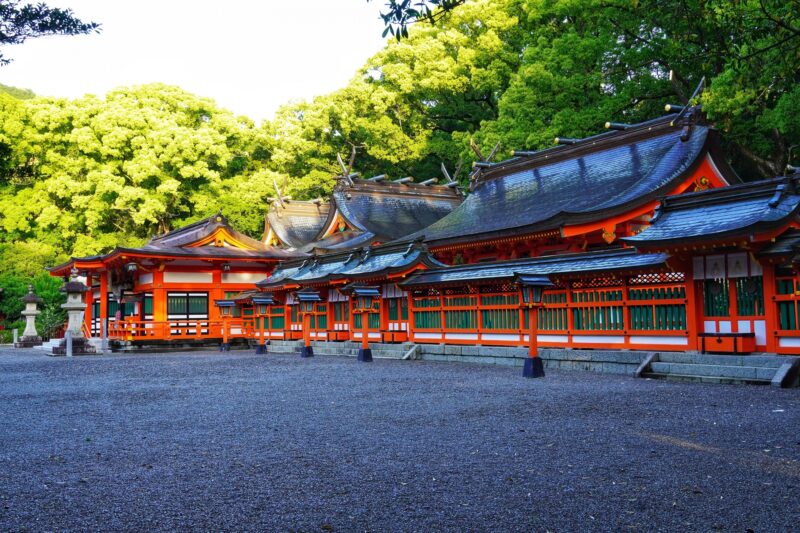
Belief in the Kumano gods has existed in Kii since ancient times and has spread throughout the country, but it is particularly popular in the Tohoku region, with Fukushima Prefecture having the largest number of Kumano deities enshrined there
In the Kumano region of Wakayama, you can see monuments to pilgrims engraved with "Oshu," which once included Fukushima Prefecture. In the mid-Edo period, it was said that it took about two months to travel round trip between Oshu, for example, Kuji in Iwate Prefecture, and Kumano, and there were many devoted pilgrims who made this journey multiple times
Furthermore, the Matsudaira clan of Aizu was naturally related to the Tokugawa clan, and could be considered distant relatives of the Kii clan, one of the three main branches of the Tokugawa family
Furthermore, during the Battle of Toba-Fushimi , which broke out in January 1861 , the defeated Aizu domain soldiers fled to Kii Province. The Kii domain maintained a policy of non-aggression and did not send out any counterattacking forces, but it rescued the wounded Aizu soldiers, evading orders from the imperial court. It even chartered American merchant ships to help them escape by sea.
At the time, Kii was prohibited by the Imperial Court from hiding Aizu soldiers, but it is said that they took action by issuing a formal order to pursue them when they escaped by boat
Sasaki Tadasaburo , renowned as the captain of the Kyoto Patrol, was also present at this time . He died in the area from battle wounds and was buried at Kimii-dera Temple in Wakayama.

Furthermore, it is known that Hiroshi Yamakawa , the grandson of an Aizu chief retainer who later served as a Major General in the Army and a member of the House of Peers, received attentive care at a traveler's inn called "Nakaya" in what is now Gobo City, Wakayama Prefecture, and that he continued to maintain contact with the Aizu family, later sending them Aizu lacquerware bowls.
It is entirely possible that Sokaku, who was from Aizu, was aware of these anecdotes showing connections with Kii, and it is possible that he may have thought about the bond between the two countries when he met Ueshiba Morihei, who was from Wakayama, in Hokkaido
Conclusion
Takeda Sokaku of Aizu, who popularized Daito-ryu Aikijujutsu, the origin of Aikido, to the world, has a mysterious background and it can be said that the full details of his training period are shrouded in mystery
Through careful research, many things have been learned, including the fact that Sokaku actually had a twin sister
She lost her sight at a young age, and it is said that Sokaku developed a keen ability to sense things that cannot be seen through caring for his sister
This can also be described as the insight to detect a crisis before it occurs, or the observational ability to deeply read the information contained in the other person's slightest movements
The main focus of both Aikijujutsu and Aikido is to subdue the opponent without injuring them, and they can be described as martial arts that save both the opponent and the individual
This is a paradoxical kindness, and it makes one think that Takeda Sokaku was also seeking the state of compassion and harmony that lies at the very end of strength
Reference sites
- Daito-ryu Aikijujutsu Shinbukan:http://www.daito-ryu.org/
- Aikikai Foundation:https://aikikai.or.jp/
- Hidaka Shinpo, "Bowl Donated by Aizu Domain Samurai Found in Gobo," October 19, 2017:https://hidakashimpo.co.jp/?p=28685

- Author of the original text for Seibido Publishing's "Illustrated Dictionary of the Heian Period: A Visual Guide to Enjoying Life. " - Honorable Mention for "The Land of Star Readings" at the 3rd Misato Western Treasury Literary Awards. - Honorable Mention for "Io-san's Bride's Meals" at Everystar's "Delicious Time" competition. - "Swordsman's Communications" at the 9th Historical and Period Novel Grand Prizes, "Exhilarating! Entertainment Swordsman Award" (book publication project in progress). - 5th Dan in Iaido, 4th Dan in Jodo.
Please support NEFT's article creation!
NEFT gathers and publishes articles about the history, culture, and tourism information of various regions in Tohoku
If you enjoyed this article, we would be grateful if you would consider supporting our future interviews, article creation, and website management
*Clicking "Tip" will open the tip sending screen for the external service "codoc"
Other articles

Enjoy these 3 local sakes with a rich aroma that go perfectly with your hot pot!

Nansho-so, a Meiji era mansion remaining in Morioka [Morioka City, Iwate Prefecture]

[Date City, Fukushima Prefecture] A journey around the sacred mountain of power spots...

From 1 to 9, "Place names with 'to' in them" [Shichinohe Edition] As a horse breeding area...

[Series: Following the Narrow Road to the Deep North ⑥] Rafting the Mogami River and Japan's Three Great...

Two famous Kitakata ramen restaurants recommended by Kitakata natives!

[Part 2] What is the Oshu "Maikusa Blacksmith" group, one of the oldest swordsmith groups?.

An express train that ran under overhead wires despite being a diesel train (...

[Iwate Prefecture] The charm of Nanbu ironware and gourmet food made with Nanbu ironware...

The first place in Japan to connect to space: the Mizusawa Campus of the National Astronomical Observatory...

Follow in the footsteps of Hideyo Noguchi! Recommended spots scattered throughout Fukushima prefecture...
