


[Part 2] What was the "Mogami Yatsudate" alliance of local lords in Dewa Province? | The allies of the Yatsudate and the trigger for the Tensho Mogami Rebellion

Other forces that joined forces with the Mogami Eight Shields
We've looked at an overview of the alliance of local lords in Dewa Province known as the Mogami Eight Shields, but these were not the only forces that allied with Mogami Yoshimori and Date Terumune

Other factions also took a stance of cooperating with the Eight Shields, and it would not be an exaggeration to say that this was more of a war involving Dewa and Mutsu provinces than simply an internal conflict within the Mogami clan
In this section, let's take a look at some of the main forces that joined forces with the Eight Shields
Hosokawa Naomoto
First, there is Hosokawa Naomoto, the lord ofOguni. Oguni Castle was a mountain castle located in what is now Honjo, Mogami-cho, Mogami-gun, and the presence of place names such as "Omote-koji," "Samurai Yashiki," and "Shoya Yashiki" at the foot of the mountain suggests that it formed a kind of castle town.

Naomoto had married his daughter to Tendō Yorizumi (Yorihisa), the leader of the Mogami Eight Shields, and in that sense, he could be considered an ally of the Eight Shields
As their surname suggests, they are believed to be related to the Hosokawa clan, one of the three families that held the position of Kanrei (deputy shogun) during the Muromachi period, but it is not precisely known which branch they belong to
Hosokawa Naomoto had been in conflict with Mogami Yoshiaki from an early stage, but then an even more decisive event occurred
In 1581, Yoshiaki Mogami, who was strengthening his influence in the area, held a military parade at Tendōgahara, which is now Obanazawa City. This was a military review, and participating in it was tantamount to demonstrating one's loyalty to Yoshiaki
Naomoto refused to participate in this horse parade, which led to an attack andthe Battle of Mankigahara, invaded the small country.
Hosokawa Naomoto's forces numbered only 350. However, Naomoto chose to fight a decisive battle on the plains rather than defend his castle. Naturally, he could not overcome the tenfold difference in troop numbers, and Naomoto's Hosokawa clan was destroyed
This victory allowed Mogami Yoshiaki's army to gain control of the water transport routes to the Sea of Japan, successfully expanding their sphere of influence. As a reward for this achievement, Kuramasu Mitsutada was given Oguni Castle, which he had captured, further enhancing his reputation as a skilled strategist
As I have repeatedly mentioned, Yoshiaki Mogami struggled to capture the Eight Shields of Mogami, but undermining the surrounding forces supporting the Eight Shields in this way was also an important strategy
Hosokawa Naomoto's defeat can be seen as evidence of such military strategy
Oguni Castle Ruins <Information>
- Name: Oguni Castle Ruins (Iwabe Tate Ruins)
- Address: Honjo, Mogami-cho, Mogami-gun, Yamagata Prefecture 999-6104
- Phone number:
- Official URL:
Bukkoji Temple
Butsukōji Temple , a Jōdo sect temple located in what is now Tendo City , was also a force that allied itself with the Mogami Eight Shields.
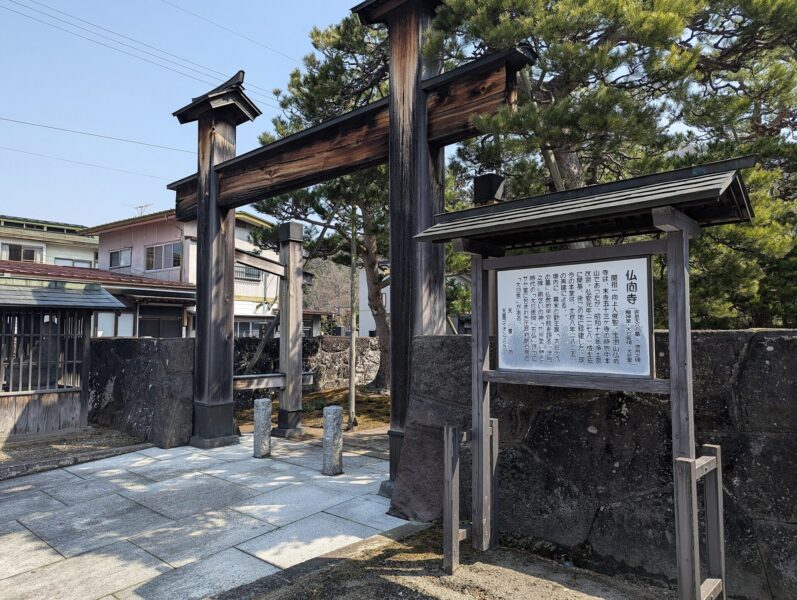
You might wonder why temples would cooperate in the Sengoku period conflicts, but at that time, it wasn't uncommon for temples to possess armed forces such as warrior monks
Under the patronage of the Satomi clan, the origin of the Tendō clan, Bukkōji Temple expanded its influence and eventually grew into a large temple complex in the Murayama region, boasting as many as 24 branch temples
In terms of location, it was positioned to protect the western side of Tendō Castle, belonging to the Tendō clan, and it is said that many temples at the time boasted fortress-like defensive capabilities
When the Tendō clan, as the leader of the Eight Shields, clashed with Mogami Yoshiaki, Bukkōji Temple sided with the Tendō clan, and it is said that when the Tendō clan was destroyed, the temple buildings of Bukkōji Temple were also burned down
In other words, it could be seen as evidence that the temple was recognized as a target for attack, and conversely, it could also be seen as demonstrating the strength of the temple as an armed force
Bukkoji Temple <Information>
- Name: Butsukouji Temple
- Address: 1-8-16 Shoji, Tendo City, Yamagata Prefecture 994-0032
- Phone number: 023-653-2276
- Official URL:https://tendobukkouji.web.fc2.com/
Mr. Kaminoyama
The Kaminoyama clan , whose base was Kaminoyama Castle located in what is now Kaminoyama City , was a clan that branched off from the Tendo clan, which was related to the Shiba clan.

The head of the family during the time when they allied with the Mogami Eight ShieldsMitsukaneUeyama. His ancestors, the Shiba clan, had been appointed as commanders or assistants of the Hyōefu (military guard) for generations, so he adopted the Chinese name "Buwei" as his surname.
Therefore, his initial name was "Takee Yoshimasa," and later he also went by the name "Satomi Mitsukane."
Mitsukane had married the sister of Yoshimori, the father of Mogami Yoshiaki, thus establishing a direct marital relationship with the Mogami clan
He troubled Mogami Yoshiaki by forming an alliance with Date Terumune, who was Yoshimori's adopted son, but he was eventually betrayed by his senior retainers, Satomi Yoshichika and his son Minbu, through stratagem, and was defeated and killed
These facts suggest that Yoshiaki Mogami was desperately trying to undermine the Eight Shields and their supporting forces from within through divisive tactics
Kamiyama Castle Ruins <Information>
- Name: Kaminoyama Castle Local History Museum
- Address: 3-7 Motojonai, Kaminoyama City, Yamagata Prefecture 999-3154
- Phone number: 023-673-3660
- Official URL:https://kaminoyama-castle.info/
Mr. Higashine
The Higashine clan was a branch of the Tendō clan, who were the leaders of the Mogami Eight Shields. The head of the clan at the time was the seventh generation,Higashine Yorikage,who was the younger brother of Tendō Yorizumi (Yorihisa).
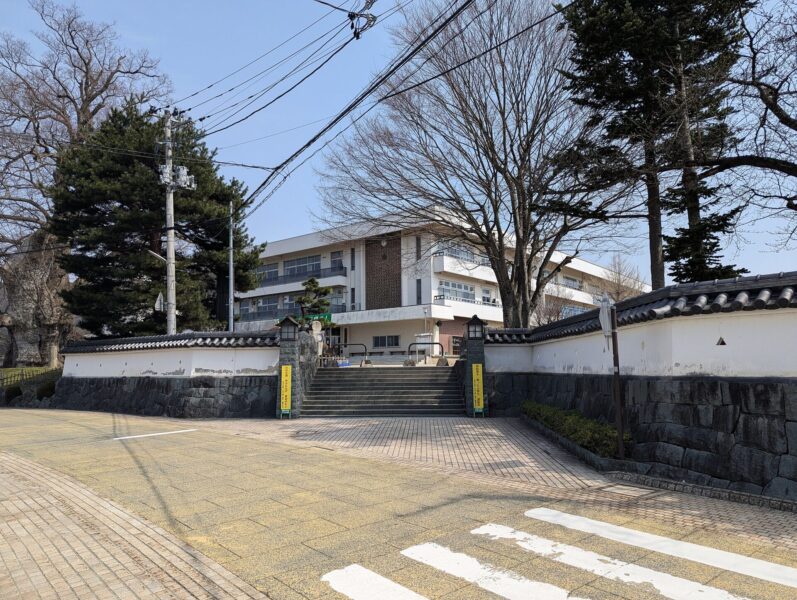
He was adopted by Yorisoku Higashine, inherited the family headship, and supported his brother as the lord of Higashine Castle
As I have repeatedly stated, the Eight Shields gradually fell apart due to the machinations of Mogami Yoshiaki, and their collapse became inevitable with the defection of the brave general Nobusawa Mitsunobu
However, it is said that Higashine Yorikage remained loyal to the Tendo clan and resisted Yoshimitsu until the very end, ultimately dying in battle along with only a few dozen of his retainers
Much about Yorikage's achievements remains unclear, and there are conflicting accounts. However, Yorikage, who never wavered from his principles until the very end, is remembered for his strength and resilience, along with the other members of the Eight Shields who also remained loyal
Higashine Castle Ruins <Information>
- Name: Higashine Castle Ruins
- Address: 1-1 Honmaru Minami, Higashine City, Yamagata Prefecture 999-3783
- Phone number:
- Official URL:
What caused the outbreak of the "Tensho Mogami Rebellion"?
It can be broadly summarized that the emergence of the Mogami Eight Shields, a confederation of local lords in Dewa Province, was triggered by the unstable security and political situation in the region
It appears that the situation became even more tense when the Date clan, who were related to the Mogami clan, became involved in the internal conflict within the Mogami clan. But what exactly was the background of the "Tensho Mogami Rebellion," a conflict between Mogami Yoshimori and his son Yoshimitsu?
Let's conclude this article by examining the causes of this battle, in which the Mogami Eight Shields were undoubtedly most deeply involved
Traditional traditions regarding the cause of the conflict between father and son Yoshimori and Yoshimitsu

The cause of the conflict between Yoshimori and Yoshimitsu Mogami, who were actually father and son, has traditionally been explained simply as a "succession dispute."
In other words, in 1570, Yoshimori tried to pass on the family headship to his second son, Nakano Yoshitoki, instead of his eldest son, Yoshimitsu , which led to a skirmish between father and son
At this time, a reconciliation was reached through the mediation of Ujiie Sadao, a senior retainer of the Mogami clan, and Yoshimitsu, who inherited the family headship, became the lord of Yamagata Castle. However, local lords who opposed the policies of the new regime once again supported the previous lord, Yoshimori, and plotted to oust Yoshimitsu
Then, in 1574, Yoshimori sent a letter to his son-in-law, Date Terumune, requesting reinforcements, and it is believed that the Tensho Mogami Rebellion broke out when Terumune dispatched troops to the Mogami territory
The mystery of the existence of "Nakano Yoshitoki"
However, it has been pointed out that Yoshimori's second son, Nakano Yoshitoki, who was the cause of the succession dispute, is a person whose existence is questionable
This is because the first document in which Yoshitoki's name appears, "Keiho Dewa no Kuni Fudoki," was compiled in 1792, more than 200 years after the incident
While the possibility that Yoshimitsu had a younger brother cannot be ruled out, some are questioning the credibility of the story that Yoshimori clashed with the eldest son, Yoshimitsu, out of favoritism towards Yoshitoki
Although the name "Nakano" appears in the genealogies of the Mogami clan and in contemporary documents of the Date clan, this does not necessarily prove the existence of Nakano Yoshitoki. Some studies (※) even question the possibility that the Tensho Mogami Rebellion itself did not exist in the form it is known today
(*) Kanzaburo Hase, "Historical Museum Newsletter No. 12 / Research Musings 5," Mogami Yoshiaki Historical Museum
Furthermore, there is a theory that the Tensho Mogami Rebellion was not a succession dispute, but rather a conflict triggered by resistance to the rule of Yoshimitsu after he inherited the family headship. Given that the name of Nakano Yoshitoki cannot be found in historical records from that time, it is not unreasonable to consider it a fabrication
(Toshiyuki Awano, "The Formation Process of the Sengoku Daimyo Mogami Clan - Focusing on the Internal Conflicts in the Genki and Early Tensho Periods," *Shigaku Ronshu* (Collection of Historical Studies), No. 10 (Komazawa University, 1980))
Conclusion
How the local lords of the Tohoku region confronted the challenges of the Sengoku period is not widely known
However, it is no exaggeration to say that these powerful local samurai always held the key to influencing the course of events, and their actions were a matter of great importance that even powerful Sengoku warlords had to pay close attention to
While it's generally considered taboo to speculate about "what ifs" in history, if fate and the flow of the times had been favorable, it wouldn't have been surprising if any of the Mogami Eight Shields had risen to prominence on the historical stage
Reflecting on such things is also part of the enjoyment of history
reference
[Series] What was the "Mogami Yatsudate," a coalition of local lords in Dewa Province?


- Author of the original text for Seibido Publishing's "Illustrated Dictionary of the Heian Period: A Visual Guide to Enjoying Life. " - Honorable Mention for "The Land of Star Readings" at the 3rd Misato Western Treasury Literary Awards. - Honorable Mention for "Io-san's Bride's Meals" at Everystar's "Delicious Time" competition. - "Swordsman's Communications" at the 9th Historical and Period Novel Grand Prizes, "Exhilarating! Entertainment Swordsman Award" (book publication project in progress). - 5th Dan in Iaido, 4th Dan in Jodo.
Please support NEFT's article creation!
NEFT gathers and publishes articles about the history, culture, and tourism information of various regions in Tohoku
If you enjoyed this article, we would be grateful if you would consider supporting our future interviews, article creation, and website management
*Clicking "Tip" will open the tip sending screen for the external service "codoc"
Other articles

Sake, miso, wasabi flavors... soft serve ice cream available at roadside stations in central Iwate Prefecture...

Enjoy folk performing arts in Hirosaki City! 3 izakayas where you can hear the Tsugaru shamisen...

Have you ever crossed the Fukuura Bridge in Matsushima? From today, I'll be introducing...

Yamagata Castle is so vast that the main enclosure is obscured by haze!.

[Kitakata, Fukushima Prefecture] Kitakata, with its delicious water, is not just famous for ramen...

An evolving city! The East Exit of Sendai Station is hot right now! Recommended spots...

[Yonezawa City, Yamagata Prefecture] The Yonezawa City Library is wonderful! It's also cozy...

A god splits the cape in half, along with the whale! The legend of "Kamiwari" remains...

Top 10 wineries in Iwate Prefecture! Unique wineries...

Urabandai, with its numerous lakes and marshes created by volcanic eruptions during the Meiji era, is a truly captivating place...

[Akita Prefecture] What is the Ogata Village Reclamation Museum? Learn about the history of Ogata Village...
