This site is an online media that delivers all sorts of trivia about the six Tohoku prefectures, from sightseeing and gourmet spots to local customs, history, and more
[Part 1] What was the "Mogami Yatsudate," a coalition of local lords in Dewa Province? | The rivalry between the Mogami and Date clans, powerful figures in Tohoku during the Sengoku period
[Part 1] What was the "Mogami Yatsudate," a coalition of local lords in Dewa Province? | The rivalry between the Mogami and Date clans, powerful figures in Tohoku during the Sengoku period
"warlords from the Tohoku region during the Sengoku period,"who comes to mind?
While there are countless stories of brave and fierce generals, the most famous is undoubtedly Date Masamune , the first lord of the Sendai domain, known by the nickname "One-Eyed Dragon ."
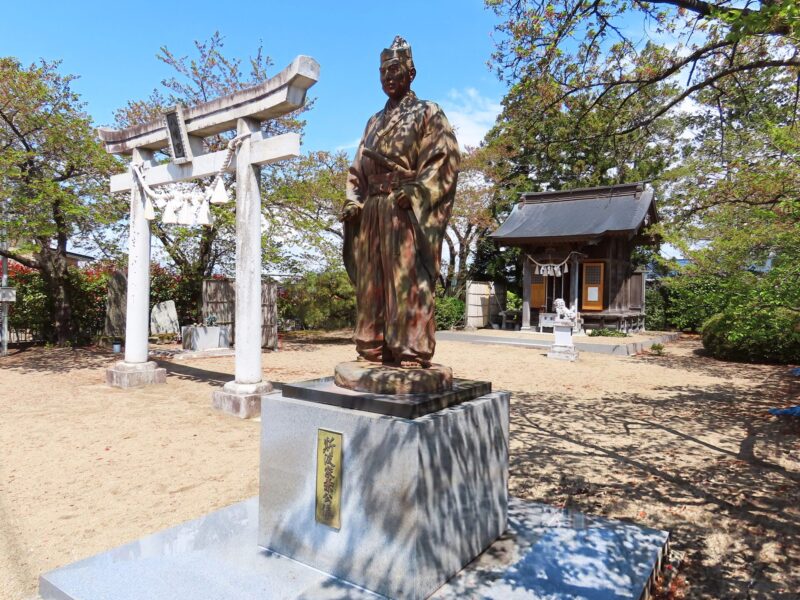
Statue of Mogami Yoshiaki in Kajo Park (Yamagata City, Yamagata Prefecture)
However, Masamune had to endure fierce struggles before he could make a name for himself as a powerful figure in Tohoku, and in particular, his maternal uncle,Mogami Yoshiaki,, remained a formidable obstacle.
In the Tohoku region, not only were there powerful warlords like the Date and Mogami clans, but also numerous local lords vying for power, making it extremely difficult to unite them as a unified force
However, they not only fiercely defended their respective territories, but sometimes joined forces to oppose larger forces
Among these alliances of local lords, it was the "Mogami Eight Shields" of Dewa Province (present-day Yamagata and Akita prefectures) that cornered Mogami Yoshiaki, who had troubled Date Masamune .
Through internal conflicts within the Mogami clan and clashes with the Date clan, the members of the Mogami Eight Shields sometimes joined the ranks of other clans and sometimes chose to fight to the bitter end, but ultimately they submitted to the Mogami clan and the Sengoku period came to an end
This time, let's take a look at the Mogami Eight Shields, which could be described as the strongest alliance of local lords in Dewa Province
What are the Mogami Eight Shields?
First,"Mogami Eight Shields"were.
As already mentioned, it was a coalition of powerful local lords scattered throughout Dewa Province, with the"Tendo clan"as its leader.
Therefore, it has been pointed out that the name "Tendo Hachitate" is more accurate to the historical facts
The families of the members are all believed to be branches of either the Mogami or Tendo clans, suggesting that they were a close-knit group connected by geographical and kinship ties
Diagram showing the positions of the Mogami Eight Shields and Mogami Yoshiaki
As the name "Hachitate" suggests, it was a coalition of eight clans, but to be precise, there were other forces that joined them, so it is merely a common name that lists the most representative clans
The word "shield" might conjure up images of a royal guard united to protect their lord, but in this context, "shield" can be considered almost synonymous with "castle" at that time
The term "castle" here doesn't refer to the modern castles with keeps that people generally imagine, but rather to fortresses that served as bases for offense and defense, such as mountain castles and plains castles
The representatives of each clan were also the lords of their military strongholds, and it is thought that this meaning is embedded in the "eight shields."
Incidentally, castles from roughly the Sengoku period onward were generally what are commonly known as "mountain castles," which were defensive structures that utilized steep natural terrain and were fortified through civil engineering work
Various defensive structures can be seen, such as "horikiri" (V-shaped trenches) that dig ridges to prevent enemy incursions, "tatebori" (vertical trenches) and "yokobori" (horizontal trenches) that dig long trenches vertically or horizontally along slopes to limit routes or delay movement, and "dorui" (earthen ramparts) that are made by piling up excavated soil to form defensive walls
Mountain castles are extremely strong defensive strongholds, and it is sometimes said that capturing one if it is armed and holed up inside would require deploying several times the number of troops
During the Sengoku period, as the scale of large-scale battles increased, tactics such as cutting off supply lines and surrounding the enemy for annihilation also came into use. In any case, it is no exaggeration to say that mountain castles were one of the symbols of military power
The fact that the name of the Mogami Eight Shields, a confederation of local lords, uses the word "shield" (fortress) to represent the power of each clan suggests that it silently represented the strength of each family
What kind of clan was the Mogami clan?
As mentioned earlier, the Mogami Eight Shields were actually a coalition centered around the Tendō clan, but what kind of clan was the "Mogami clan" that gave rise to that name and is involved in various historical conflicts?
Before we delve into the details of each of the eight clans, let's first review the basics of Mogami Yoshiaki and the Mogami clan, who are central to this article
Who was Mogami Yoshiaki?
First, let's take a brief look at what kind of warlord Mogami Yoshiaki was
As already mentioned, he was the older brother of Date Masamune's mother, making him Masamune's real uncle, and he is one of the key figures who cannot be overlooked when discussing the history of the Tohoku region during the Sengoku period
Mogami Yoshiaki in the Hasegawa Battle Screen. Source:Wikipedia
Mogami Yoshiaki was a samurai from Dewa Province (present-day Yamagata and Akita prefectures), born on New Year's Day of Tenbun 15 (1546) as the eldest son of the tenth head of the Mogami clan , Mogami Yoshimori
His father, Yoshimori, was born in 1521 as the second son of Nakano Yoshikiyo, a branch of the Mogami clan. Although the Nakano clan was a branch, it frequently produced heads of the Mogami clan. In other words, Yoshimitsu was a person who was very close to the main family line
The relationship with the Date clan dates back to the time of Yoshimitsu's great-grandfather's brother, Mogami Yoshisada, who was the brother-in-law of Date Tanemune, the 14th head of the Date clan, and thus the great-grandfather of Date Masamune
However, the two families were at war, and since Yoshisada, who had been defeated by Tanemune, had no successor, the Mogami clan came under the control of the Date clan
However, taking advantage of the "Tenbun Rebellion (1542-1548)," an internal conflict between Date Tanemune and his eldest son Harumune, the Mogami clan attempted to gain independence from the Date clan.
In 1563, Yoshimori and his son Yoshimitsu traveled to Kyoto and had an audience with Ashikaga Yoshiteru, the thirteenth Shogun of the Muromachi period
It is believed that the "Yoshi" in Yoshimitsu's name was a character bestowed upon him by Yoshiteru, meaning it was part of his given name
At this time, the father and son were granted the title of "Gosho," a title bestowed upon nobles by the shogunate, and their political activities in securing their status within the public power structure are noteworthy
The following year, Yoshimitsu's sister, Yoshihime, married Terumune, the second son of Date Harumune and the 16th head of the Date clan. Their son was the future Masamune, and this illustrates the complex relationship between the Mogami and Date clans, marked by repeated conflicts and marital alliances
Furthermore, around 1570, Mogami Yoshiaki came into conflict with his father, Yoshimori, and eventually, in 1574, the"Tensho Mogami Rebellion,", broke out.
discussed in this article,were brought to the forefront of history by this event, and this force joined forces with the allied army of Yoshimitsu's father, Yoshimori, and the Date clan, who were in conflict with Yoshimitsu.
Ultimately, it was Yoshimitsu who quelled the internal conflict within the Mogami clan, and thereafter, while repeatedly clashing with and reconciling with the Mogami Eight Shields, he gained control of the entire Mogami district
Although he was a vassal of Hideyoshi under the Toyotomi regime, he sided with the Eastern Army in the Battle of Sekigahara and became the first lord of the Dewa Yamagata Domain under the Tokugawa regime
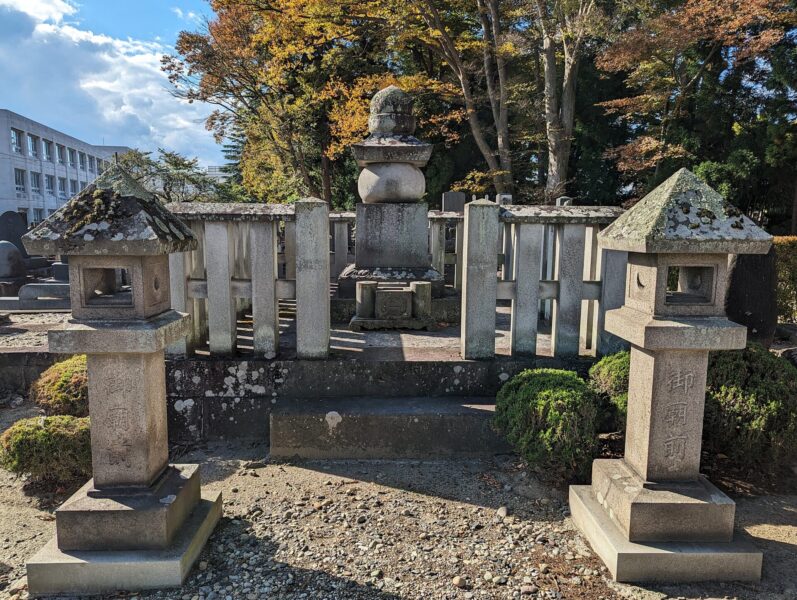
The tomb of Yoshiaki Mogami at Kōzenji Temple (Yamagata City, Yamagata Prefecture)
The origins of the Mogami clan
The Mogami clan is an unavoidable topic when exploring the history of the Mogami Eight Shields, but what kind of family and clan were they, to begin with?
In fact, tracing their ancestry back, they are distant relatives of the Ashikaga clan, the shogunate family of the Muromachi period
A statue of Shiba Iekane, a distant ancestor of the Mogami clan (Nakashinda Castle Ruins: Kami-cho, Kami-gun, Miyagi Prefecture)
The Mogami clan is a branch of the Shiba clan , one of the three powerful families , and the Shiba clan traces its origins to the Ashikaga family, who branched off from the Ashikaga clan in the mid-Kamakura period
Ieuji was originally the legitimate heir who should have succeeded the Ashikaga clan, but he was disinherited due to the intervention of the Hojo Tokuso family, which led him to establish a new family
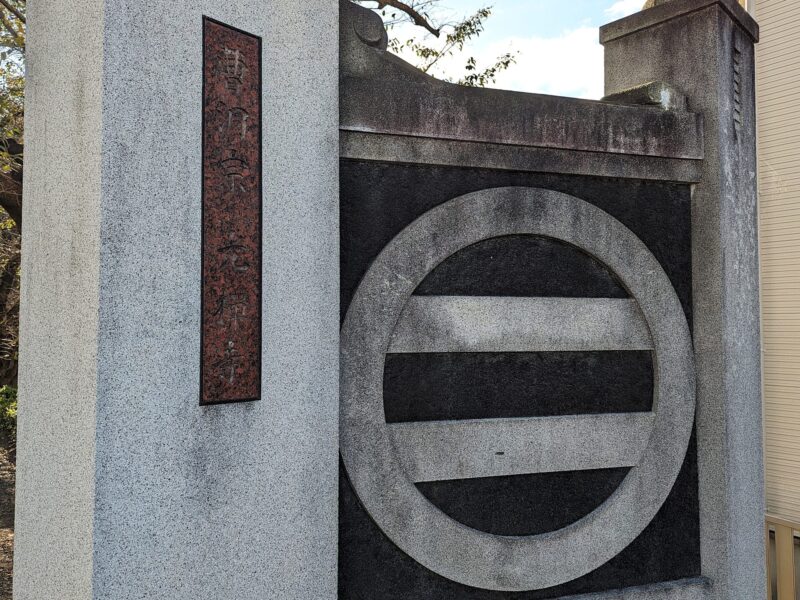
The "Maru ni Futatsu Hiki Mon" crest is located at the entrance of Kōzenji Temple, the family temple of the Mogami clan (Yamagata City, Yamagata Prefecture)
Therefore, the Mogami clan, like the Ashikaga clan"two horizontal lines"family crest, and it can be said that there was a rational basis for the exceptional treatment they received, such as Yoshimori and his son Yoshimitsu being granted the title of Gosho (Imperial Palace) and receiving a character from Shogun Yoshiteru's name.
Given these circumstances, the Mogami clan was a family that could traditionally hold the position"Ushu Tandai,", and they may have had a strong sense of pride in their leadership role in the area.
If that was the case, then being forced to come under the control of the Date clan must have been an all the more humiliating period for them
The repeated internal conflicts and temporary reconciliations through political marriages, even among members of the same clan, have naturally caused serious damage to the local security system and governing structure
The local self-governing bodies, run by the kokujin (local samurai), played a crucial role in this process
This has become a bit long, but with the above background in mind, let's take a closer look at the Mogami Eight Shields, a coalition of local lords that can be considered a local power in Dewa Province
[Series] What was the "Mogami Yatsudate," a coalition of local lords in Dewa Province?
- Author of the original text for Seibido Publishing's "Illustrated Dictionary of the Heian Period: A Visual Guide to Enjoying Life. " - Honorable Mention for "The Land of Star Readings" at the 3rd Misato Western Treasury Literary Awards. - Honorable Mention for "Io-san's Bride's Meals" at Everystar's "Delicious Time" competition. - "Swordsman's Communications" at the 9th Historical and Period Novel Grand Prizes, "Exhilarating! Entertainment Swordsman Award" (book publication project in progress). - 5th Dan in Iaido, 4th Dan in Jodo.


![What are the Mogami Eight Shields? [Part 1]](https://jp.neft.asia/wp-content/uploads/2026/04/my_ic01-1200x900.jpg.webp)




![What are the Mogami Eight Shields? [Part 2]](https://jp.neft.asia/wp-content/uploads/2026/04/my_ic02-150x150.jpg.webp "[Part 2] What is the Mogami Yatsudate, a confederation of local lords in Dewa Province? | Members of the Mogami Yatsudate, a confederation of local lords in Dewa Province")