


Shiwa Inari Shrine, one of the three major Inari shrines in Japan, is one of the most powerful spots in Iwate Prefecture!

Iwate Prefecture has many power spots, including Morioka Hachimangu Shrine, but among them, Shiwa Inari Shrine, which is sometimes counted as one of the "Three Great Inari Shrines of Japan," is attracting attention as one of the top two .
the nearbyShiwafuru Inari Shrine, the Nanbu clan generously donated to both Inari shrines and worshipped them with great care.
Shiwa Inari Shrine,"Shiwa's Inari-san,"is particularly revered for its miraculous powers in warding off bad luck, praying for success in exams, and ensuring traffic safety.
Where is Shiwa Inari Shrine?

from the center of Morioka City alongPrefectural Road 162 (Shiwa-Shizukuishi Line). Surrounded by ancient cedar trees, the shrine, situated at the foot of the mountains where the Takinagawa River originates, has a solemn atmosphere befitting its status as one of Iwate Prefecture's most powerful spiritual spots.

It's easy to get confused because there's another Shiwa Koinari Shrine near the prefectural road just before Shiwa Inari Shrine, but the landmark for visiting Shiwa Inari Shrine is the "largest torii gate in Tohoku" located on the side road to the south
The history of Shiwa Inari Shrine began with the "Battle of Zenkunen"

originated during the Former Nine Years' War in the late Heian period,Minamoto no Yoriyoshiset up camp at Jingaoka in Shiwa Town in 1057 and enshrined a divided spirit of Fushimi Inari Shrine to pray for victory. During the Muromachi period, it was revered by the Shiba clan, who ruled the area, and was subsequently worshipped for a long time by the Nanbu clan, who succeeded them, as a place of prayer for their family.
During the Meiji period, it was designated as a "prefectural shrine," a high ranking in the "old shrine ranking" system, which indicates the status of shrines, and after the Pacific War, it was designated as a "special shrine" by the Association of Shinto Shrines and was considered a shrine of high status alongside Morioka Hachimangu Shrine


The three enshrined deities of Shiwa Inari Shrine
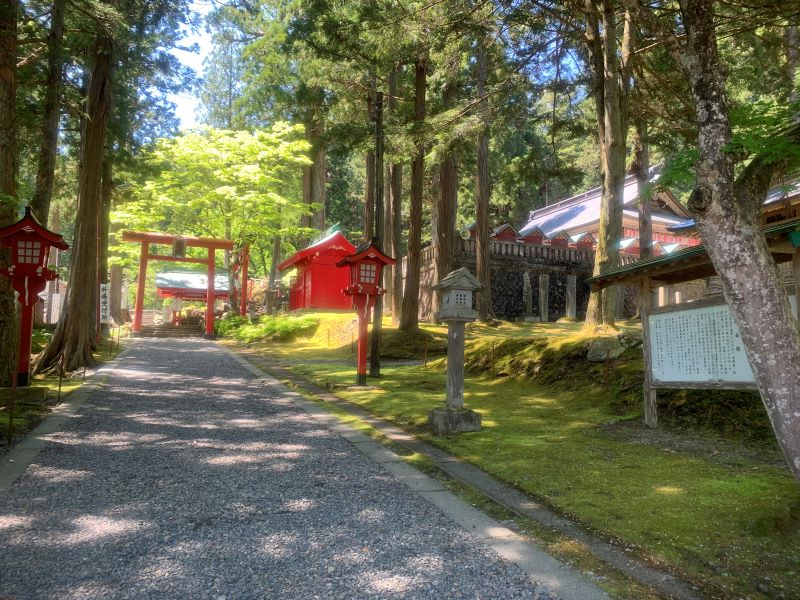
The following three deities are enshrined at Shiwa Inari Shrine
Ukanomitama no Okami (Okami of Uka)

He is the main deity of Fushimi Inari Taisha Shrine and is widely worshipped throughout the country as the Inari god (O-Inari-san). He was once the god of grain, but now he is also worshipped as the god of agriculture and the god of commerce and industry, and is often enshrined on factory grounds as well as on the rooftops of buildings and department stores
Sarutahiko-no-Okami

Because he is said to have guided the people during the "Descent of the Heavenly Grandson," which marks the beginning of the Yamato court , he is worshipped as the god of roads and travelers, and is sometimes treated as a guardian deity of roads. He is a god who protects traffic safety and safe travel, and in festivals, a figure playing the role of Sarutahiko, wearing a red mask with a long nose like a tengu, and dressed in costume with tall geta sandals and a spear, sometimes leads the portable shrine.
Omiya Nohme-no-Okami (Omiya Nohme-no-Okami)
Amenouzume-no-Mikoto, she is often worshipped together with Sarutahiko-no-Okami, who is considered his wife. It is said thatAmaterasu-Omikamihidthe Amano-Iwato (Heavenly Rock Cave), she danced in front of the cave to attract Amaterasu-Omikami's attention and persuade her to open it.
For this reason, he is considered a god of improvement in the arts and crafts, and is also worshipped as the patron deity of the hospitality industry and the god of safety and harmony in the home
What are the benefits of Shiwa Inari Shrine?
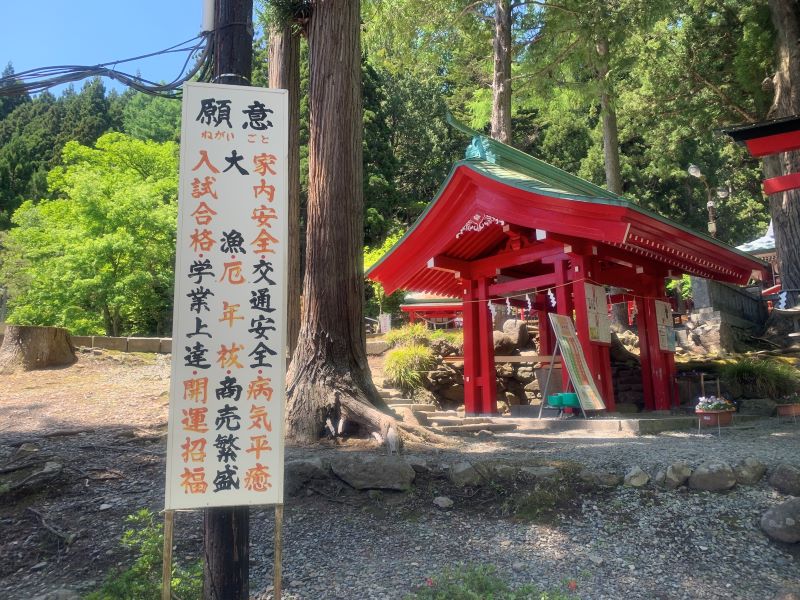
safety at home, traffic safety, business prosperity, abundant harvests, bountiful catches, workplace safety, academic success, protection from bad luck, safe travel, and good fortune, and like other "Inari-san" shrines, it is believed to grant blessings for all kinds of wishes in all aspects of life.

The fact that Inari-san is a deity who can grant various wishes may be the reason why the worship of Inari-san spread throughout Japan.
I visited Shiwa Inari Shrine!

If you turn off Prefectural Road 162 onto a side road along the Takinagawa River, you'll be greeted by a large red torii gate, said to be the largest torii gate in Tohoku
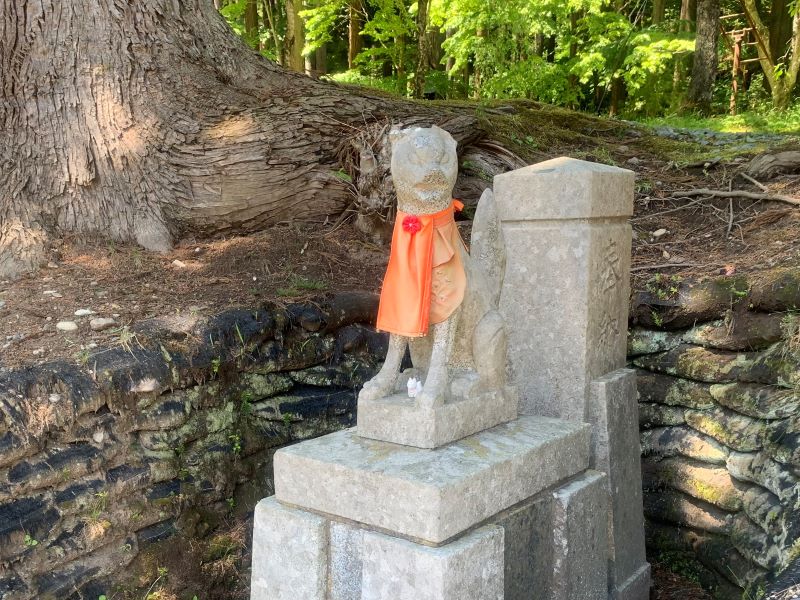
On either side of the large stone torii gate leading to the shrine"ear-missing foxes."It is said that in the past, this area"Mizubun"(meaning "water") is still preserved in the story. Both foxes were caught in the crossfire and lost their ears.

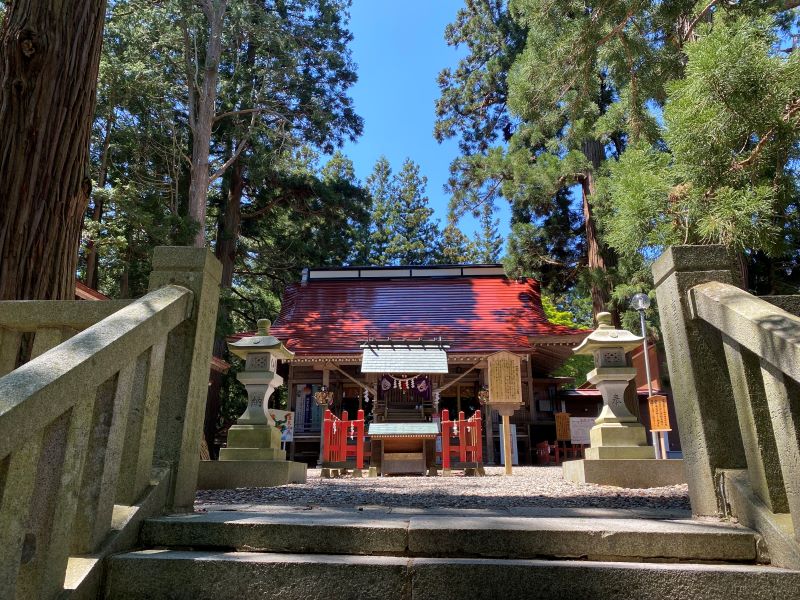
After passing in front of the Kagura Hall on the right side of the approach and passing under three torii gates, you will find the shrine office (where you can get amulets and red seals) on your left, and directly in front of you is a temizuya (water purification basin) where you can purify your hands and mouth


To the right of the torii gate in front of the main shrine arethe "Goshinba Shrine"andthe "Chufu-yoke Jumyo Shrine,"which offers protection against strokes. Here, "chufu" refers to the after-effects of a stroke, and it seems that strokes, which occur suddenly, were a frightening illness both then and now.

A "wisteria ring" is permanently placed in front of the torii gate of the main shrine , but a "rat ring" is also set up on June 30th for the summer purification ceremony, so only at this time are both rings present.
Pass through the Wisteria Ring three times, left, right and then left again, while praying for good health in the first half of the year, and then go up the stone steps to the worship hall

To the right of the worship hall are the twelve zodiac shrines, each dedicated to a guardian fox of the zodiac. After paying my respects to the guardian fox of my zodiac sign (the Year of the Pig), I went around to the back of the worship hall

The "Money-Stroking Lion" in front of the main hall has a sign that reads , "Stroke it with a banknote to receive good fortune in money," and it is said that stroking the lion's head with a banknote will bring you good luck in money.

Behind the main shrine building are the " Hitokotonushi Shrine," which is said to grant one wish, and the "Omuro," where offerings are made . Further up the mountain is the "Inariyama Sando," a path lined with red torii gates that leads to the "Yamazumi Shrine" and the "Sacred Tree . "

This sacred tree, said to be 1,200 years old, has an overwhelming presence that seems to command the surrounding cedar trees, and four stone fox statues are placed at its base, as if protecting the sacred tree.
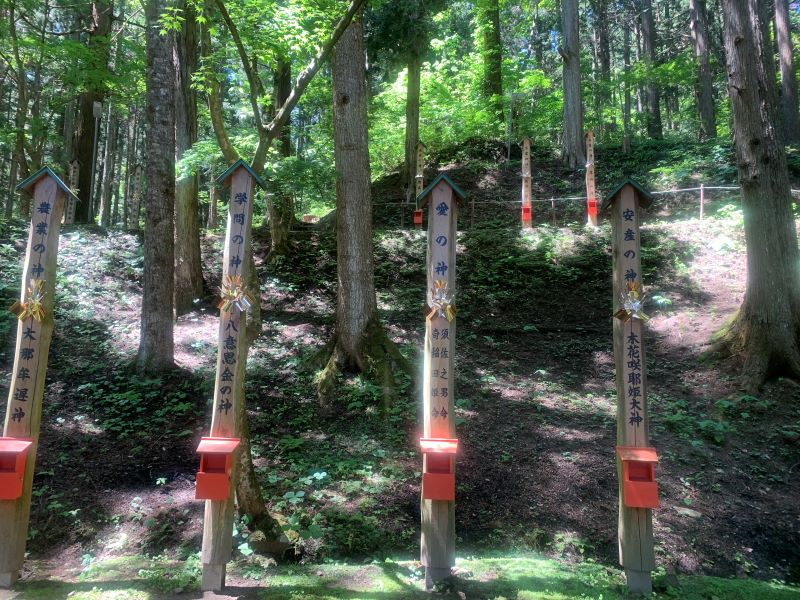
On the path to the sacred tree, there are pillars dedicated to many gods. You can choose the god who will grant your wish and pray to him

Furthermore, within the shrine grounds,a "Vehicle Purification Hall". Prayers for traffic safety at Shiwa Inari Shrine are said to be very effective.
Shiwa Inari Shrine <Information>
- Name: Shiwa Inari Shrine
- Address: 17-1 Masuzawamaedaira, Shiwa-cho, Shiwa-gun, Iwate Prefecture
- Phone number: 019-673-7608
- URL:Shiwa Inari Shrine Official Website
Google Map
The other Inari shrine next door is Shiwafuru Inari Shrine
Shiwa Koinari Shrine, a mummified white fox, a divine messenger serving the gods, is enshrined in front of the main hall. It is said to have emerged from a hollow at the base of a sacred tree that was felled by a typhoon in 1954.

Perhaps because of this, Shiwako Inari Shrine is featured as one of the Inari shrines throughout Japan in the anime"Inari, Konkon, Koi Iroha," whichis set in Fushimi Inari, Kyoto, and it seems to be considered one of the anime's pilgrimage sites.
Shiwako Inari Shrine <Information>
- Name: Shiwako Inari Shrine
- Address: 108 Masuzawa Komori, Shiwa-cho, Shiwa-gun, Iwate Prefecture
- Phone number: 019-673-7903
- URL:Shiwa Koinari Shrine Official Website
Google Map
summary
Shiwa Inari Shrine is a small Inari shrine located in a rural area outside the city center, but you can feel an indescribable aura of power within its grounds. Not only the sacred tree, but also the"Parent and Child Cedars,", andthe "Married Couple Cedars"stand in abundance, creating a landscape truly befitting a sacred place. And the neighboring Shiwa Koinari Shrine, while also an Inari shrine, is another power spot where you can feel a different aura.
Why not visit these two adjacent Inari shrines?

I'm a former Edoite (Tokyoite) who loves Morioka and the six prefectures of Tohoku, and I'm a big fan of history, gourmet food, travel, sports, alcohol, and choral singing.
I'll introduce you to interesting things, delicious food, and great places in Tohoku!
Please support NEFT's article creation!
NEFT gathers and publishes articles about the history, culture, and tourism information of various regions in Tohoku
If you enjoyed this article, we would be grateful if you would consider supporting our future interviews, article creation, and website management
*Clicking "Tip" will open the tip sending screen for the external service "codoc"
Other articles

[Iitate Village, Fukushima Prefecture] The most beautiful village blessed with nature...

[The Legend of the Three Lakes of Northern Tohoku: Part 1] A magnificent folk tale spanning three prefectures...

"Kenji Miyazawa Fairy Tale Village" in Hanamaki City allows you to enjoy the world of Kenji's stories...

The railway version of an electric car? ACCUM, a battery-powered train running on the Oga Peninsula (Akita Prefecture)

Tadami Line: Japan's most scenic local train line (Fukushima Prefecture)

[Fukiage, Miyagi Prefecture] "Onikobe Onsenkyo" is a little-known hot spring spot...

"Sanuki," "Hakata," "Inaniwa"—brands to enjoy in Morioka...

[Iwate Prefecture] Stylish Western-style canned mackerel "Ça va?"...

[Daisen City, Akita Prefecture] What is Koshio Shrine? A secret shrine in Daisen City, Akita Prefecture...

[Miyagi Prefecture] Choose from hidden hot springs, famous hot springs, and unique spring qualities in Miyagi Prefecture...

Lake Hachirogata, once the second largest lake in Japan [Autumn...
