


Aizu Higan Shishi | A folk performance from the Aizu region, danced during the spring equinox [Fukushima Prefecture]

What is Aizu Higan Shishi?
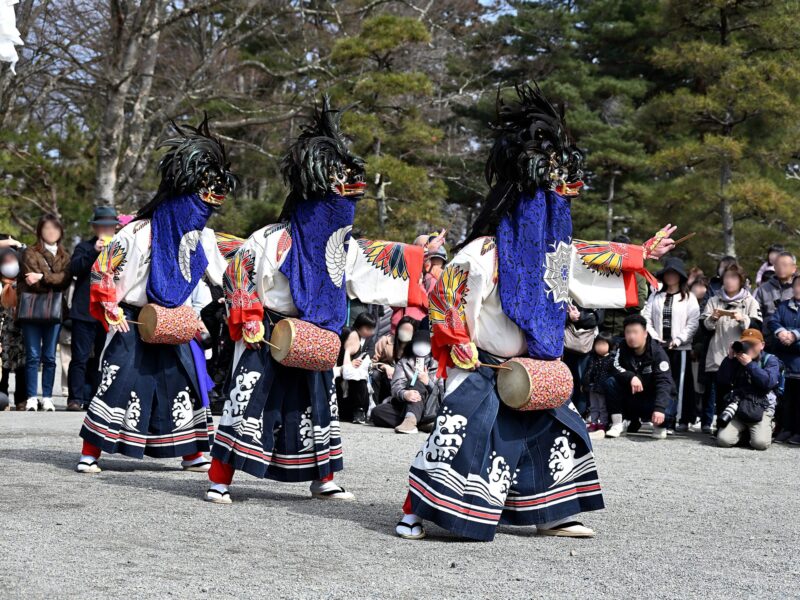
lionwidely distributed in eastern Japan, mainly in the Kanto region. It consists of a group of threelions, each performing alone, and is a folk art that is paraded, offered, and performed in various locations throughout the Aizu Basin around the time of the spring equinox (Spring Equinox) to pray for a bountiful harvest and the safety of the family.
The origin of Aizu Higan Shishi
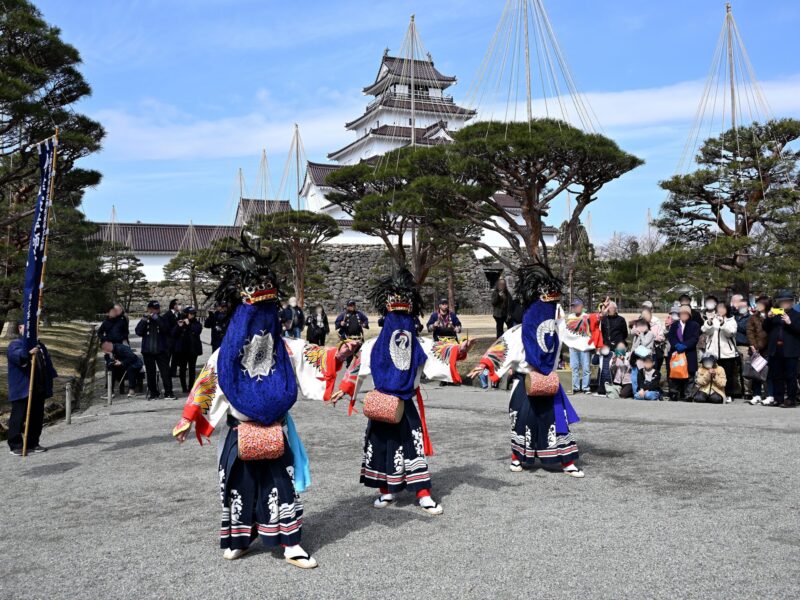
The origin of the Higan Lion is
- The theory that it originated in the late Heian period (during the Former Nine Years' War)
- The theory that it originated when Gamo Ujisato took up his domain
- The theory that it originated when Hoshina Masayuki entered the domain
- The theory that it was introduced from Shimotsuke Province during the Kan'ei era (1624-1645)
Although several theories exist, the most widely accepted is the one found in the origin story of the "Shimoshiba Higan Shishi," a traditional lion dance passed down in Shimoshiba, Sekishiba-cho, Kitakata City, which is said to be the oldest in the Aizu region. The theory is that Kakutayu Furuhashi, a lion dance performer from Shimotsuke Province (present-day Tochigi Prefecture), settled in Shimoshiba during his travels in the Kan'ei era and taught the dance .
The existence of a stone pagoda at Anrakuji Temple in Shimoshiba, said to be the grave of Kakutayu Furuhashi, who introduced the Higan Shishi dance, and the existence of a document from 1724 in which Choshichi Kimura and three others from Tennei Village, Aizu County (Tennei, Aizuwakamatsu City) requested to learn the lion dance from Kanzaburo Kobayashi of Shimoshiba, are cited as supporting evidence
Komatsu Shishi, who assisted Yamakawa Okura in his return to the castle during the Boshin War
There are also historical anecdotes in which the Higan Shishi played an active role in important historical events, such as the following:
On August 23, 1868, during the Aizu War (Boshin War), Wakamatsu Castle (Tsuruga Castle) was besieged by the new government forces and began a siege
Yamakawa Okura , a senior retainer of the Aizu domain who was in charge of defending Nikkoguchi (present-day Tajima, Minamiaizu town) located south of Aizu , heard the news and hastily began to retreat to Wakamatsu Castle to provide relief, approaching the Komatsu settlement (present-day Komatsu, Kitaaizu town, Aizuwakamatsu city), just one step away from the castle.
Therefore, Yamakawa devised a plan to avoid losses and break through the enemy's siege to enter the castle by performing a dance with the "Higan Shishi" to lull the enemy into a false sense of security, and then making a grand entrance into the castle
It is said that the "Komatsu Higan Shishi" troupe then confidently passed by the astonished Choshu and Ogaki domains, performing their dance as they entered the castle
Because of this achievement, the Komatsu Higan Shishithe Aizu Matsudaira family's crest (Aizu Aoi), and even today, the cheek coverings of the lead lion in the Komatsu Higan Shishi are dyed with the Aizu Aoi crest.
This episode was also depicted as a memorable scene from the Aizu War in the 2013 NHK Taiga drama " Yae no Sakura " (Yae's Cherry Blossoms)
Composition, costumes, and instruments of Aizu Higan Shishi (Lion Dance of the Aizu Equinox)

The lion dance groupthe lead lion, the female lion, and the male lionIn addition,the dancer, the archer, the pole bearer, the flutist, and the small drummer, and the group generally consists of about 12 people in total.

program is"Niwairi," "Yamaoroshi," "Tanba Kakushi," "Meshijishi Kakushi," "Yumimai," "Bomai," "Oogiri," "Sodemai," "Heimai,"and "Bachimai," but this performance typically features around 5 acts and lasts approximately 20 to 30 minutes.
The lion's head is covered with "glossy black bird feathers," and according to the Shimoshiba Lion's website, these are made from the tail feathers of the Aizu Jidori chicken, of which only two to three can be obtained from a single bird
A thin silk cheek wrap is attached below the mouth , and each cheek wrap has a different crest dyed onto it, making it possible to distinguish between the lions by the difference in the crest

In the case of the Tennei Lion dance, the lead lion (left) is depicted with a yaguruma (arrow wheel ), the female lion (center) with a tsurumaru (crane) , and the male lion (right) with a sagari-fuji (wisteria)
Then, each lion ties a small drum to their waist and performs a dance while beating the drum with thin sticks in both hands
Reference sites
Traveling around the Tohoku region, I enjoy drinking delicious sake and exploring the local history, traditions, and customs. I write articles based on my interests. I'm currently interested in folk performing arts, local toys, and folk beliefs
Please support NEFT's article creation!
NEFT gathers and publishes articles about the history, culture, and tourism information of various regions in Tohoku
If you enjoyed this article, we would be grateful if you would consider supporting our future interviews, article creation, and website management
*Clicking "Tip" will open the tip sending screen for the external service "codoc"
Other articles

Arrived in Sendai! Went to the Evangelion and Japanese Sword Exhibition!

What is the legend of Hachirotaro? Three stories that even locals don't know much about...

The legendary pyramid that lies dormant in Kazuno city is called Kuromanta!.

Kinoshita Koma – One of the three great horses in Japan, worn on the chest of a horse presented as a tribute...

What is the relationship between Oda Nobunaga and Yamagata? A rare portrait and a memorial to Nobunaga...

Fukushima Prefecture: 5 Recommended Cherry Blossom Spots | A Satisfying Photo Trip...

One of Japan's top five cherry blossoms and one of Japan's three largest...

Is there a statue of a sumo wrestler crying at night? The family temple of Yoshiaki Mogami's daughter...

[Sendai City, Miyagi Prefecture] Restoration of the damaged equestrian statue of Date Masamune will begin in late March...

[Kawauchi Village, Fukushima Prefecture] "...

Enjoy a fruit detox course at Fruit Peaks...
