


The Ancient Emishi Hero Aterui and the 38-Year Tohoku War: Part 1 | The Hero of Isawa who Defeated the Imperial Army of Yamato

Introduction
It is well known that although we refer to it as "Japan" in general, its scope has changed little by little over the years
For example, Hokkaido was confirmed as Japanese territory in 1869 (Meiji 2), and Okinawa, which was under American rule after the Pacific War, was returned to the mainland in 1972 (Showa 47)
Even in ancient times, there wasn't a clearly defined national division called "Japan," and there were people living in lands across the archipelago that were beyond the reach of Yamato's rule
This was also true of the people called "Emishi" who lived in the eastern provinces, or Tohoku region . The term "Aipi-shi" appears in the section of the Nihon Shoki (Chronicles of Japan) before the enthronement of Emperor Jimmu, and it is thought that this is the first appearance of the term Emishi.
As the Yamato royal authority developed, it expanded its territory into the eastern and northeastern regions where the Emishi lived, resulting in conflicts between the two groups
For the Emishi, it was a form of resistance against domination and oppression, but the most intense and tense period in history was from the end of the Nara period to the beginning of the Heian period, and the conflict between Yamato and Emishi during this time is sometimes called the "Thirty-Eight Years' War."
At that time, several powerful leaders emerged from among the Emishi, who were said to have no wide-ranging coalition
One of the most well-known figures among themAterui. He was the chieftain of the Emishi tribe, based in the area around Izawa in Mutsu Province (present-day Oshu City, Iwate Prefecture) from the late Nara period to the early Heian period.
In this article, we will focus on Aterui and unravel the 38-year war that took place in the Tohoku region between the Yamato and Emishi
Who was Aterui, the ancient Emishi hero?
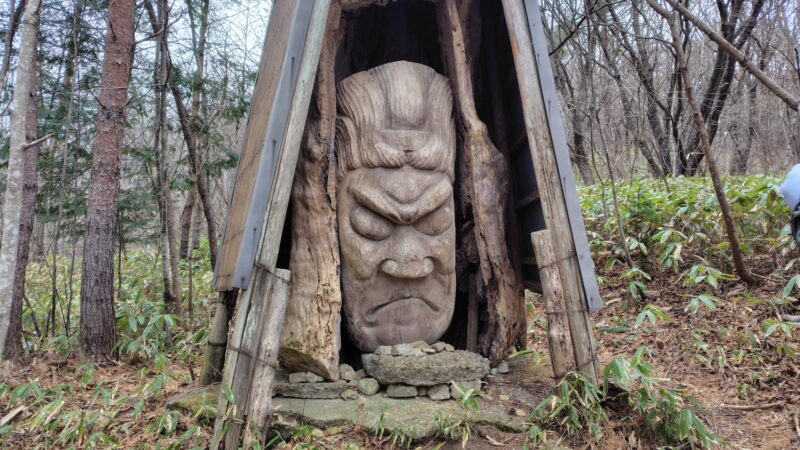
First, let's summarize what we know about Aterui, the famous Emishi chieftain
As mentioned earlier, he was the chief of the Emishi of Isawa, and it is recorded that he was active from the end of the 8th century to the beginning of the 9th century, and it is said that he gave the Yamato Imperial Army, which was advancing into the Tohoku region, a great deal of trouble
Aterui's name is recorded in the "Six National Histories," a series of historical records compiled by the Ritsuryo state .
The Six National Histories area compilation of six official histories: the Nihon Shoki, Shoku Nihongi, Nihon Koki, Shoku Nihon Koki, Nihon Montoku Tenno Jitsuroku, and Nihon Sandai Jitsuroku.
It covers history from the mythological era to the end of the 9th century, and was published in stages over a period of approximately 200 years, from the beginning of the 8th century to the beginning of the 10th century
There are several Emishi whose names are recorded in these historical records, but it is no exaggeration to say that Aterui is a representative tribal leader who left a particularly large impact, given the scale of his battles with the Imperial Court and the length of his resistance
About Aterui's achievements
The name Aterui first appears in historical records in the Shoku Nihongi, in the entry for June 8th year of the Enryaku era, 789 AD (hereafter referred to as the Julian calendar)
Having already planned to bring the Tohoku region under their control for a long period of time, the imperial court launched a large-scale military operation in this year known as the "Conquest of the Barbarians in the Eighth Year of Enryaku."
It is recorded that in the Battle of Subushi , which is believed to have broken out in late May of the same year , an Emishi army of about 1,500 men repelled an imperial army of approximately 4,000 men.
The battle is said to have taken place near Aterui's residence, but it is not clear whether he directly commanded the Emishi
However, the descriptions suggest that there was a strong leader who not only had the advantage of geographical location but also used precise military tactics to defeat a force superior in numbers, and it is possible that Aterui was involved as the actual leader
The next historical text in which Aterui appears is the "Nihon Kōki," in the entry for "April 802" (Enryaku 21) .
This article reported that Aterui, who had continued to resist, had finally surrendered to the imperial army along with Iwagu no Kimimore, another Emishi chieftain, and 500 of his companions
The army led by the imperial court at this timethe renowned Shogun Sakanoue no Tamuramaro, who is said to have proposed the pardon of Aterui and More, who had accompanied him to Heian-kyo, and the delegation of governance over the Tohoku region.
In the end, Tamuramaro's wish was not granted, and Aterui and More were executed by decision of the Imperial Court, but it is a noteworthy fact that they had been fighting against the Imperial forces for at least the 13 years recorded in historical records, and probably even longer
Aterui was recognized as one of the greatest warriors of his time not only for his bravery but also for his political ability and spirituality
About the name Aterui
Of these six national histories, Aterui appears in the Shoku Nihongi (Continued Chronicles of Japan) in the entry for the sixth month of the eighth year of Enryaku (789), written as "阿弖流為"
Furthermore, in the "Ruiju Kokushi" (or "Ruiju Kokushi"), a re-edited version of the Six National Histories, and in the "Nihon Kiryaku" (Abridged History of Japan), a history book compiled during the Heian period, the entry for Enryaku 21 (802) mentions "Ōhaka no Kimi Ateri."
Since there are two ways to write it, "Aterui" and "Aterii," it may actually have been pronounced somewhere between "Aterui" and "Aterii."
Furthermore, the surname (kabane) "Ōhaka no Kimi" found in the "Ruiju Kokushi" and "Nihon Kiryaku" is also noteworthy.
A surname is a title given to powerful clans by the Yamato royal authority in ancient times
In the 13th year of Emperor Tenmu (684), the "eight ranks of surnames" were established: Mahito, Asomi, Sukune, Imiki, Michinoshi, Omi, Muraji, and Inagi
Previous surnames included Omi (minister), Kimi (lord), Muraji (vassal), Atahi (director), Miyatsuko (manager), and Obito (head), and Aterui's "Ootoko" is a name that was originally given to powerful local clans by adding the name of their base to their title, but was later given to the Emishi chieftain and later changed to "ko."
However, some point out that since Aterui had been fighting the Imperial army for a long period of time, it is natural to think that the surname "Otomo no Kami" was given to him after he surrendered
It is still unclear how to read "Ootoko," and various hypotheses have been put forward, including "tamo" and "Otsuka/Ohaka."
One theory is that "Tamo" is a Japanese reading of the place name in the area where Aterui repelled the Imperial army, and that "Otsuka/Ohaka" comes from the keyhole-shaped tomb, Tsunozuka Kofun, located in Isawa, Aterui's base
Who was "More" who died along with Aterui?
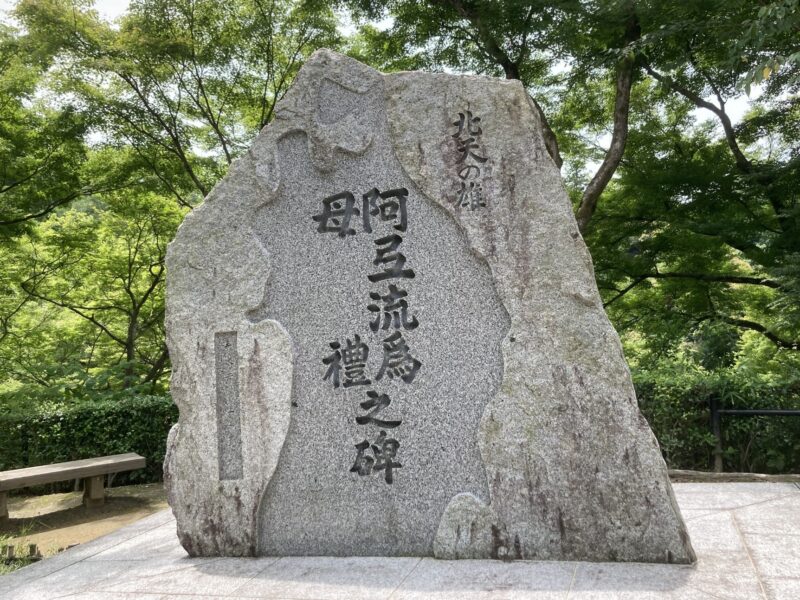
As mentioned earlier , the account in the Nihon Kōki (Later Chronicles of Japan) of Aterui's surrender to the imperial army led by Tamuramaro also mentions a person named "Bangu no Kimi no More."
Nicknamed "More," his detailed history is unknown as he only appears in the articles from his surrender to his execution, but given that he shared the surname "Kimi" (Prince) like Aterui and that his name itself is recorded, it is believed that he was one of the powerful Emishi chieftains
There are various theories about the location of More's base, based on the principle that this surname should be named after the area in which the chief was active, but it is not clear which chief he was
Some studies have compared the name with the current place name of Oshu City in Iwate Prefecture, taking into account the possibility of misreading of the pronunciation or kanji characters, but there is no doubt that he was an important figure who worked with Nise and Aterui to lead the Emishi army and was even accompanied to Heian-kyo
He is often described as a "vice general," but this is not clear, and it cannot be denied that the scarcity of records has made him somewhat less memorable
However, it is thought that the Emishi were able to resist the Imperial forces for such a long period of time due to clever military strategies, including cooperation between tribes
When considering the chain of command for such a group, many personnel are needed, including not only the commander but also the staff members who will assist him as a team, and captains who will lead the operational units
The fact that not only Aterui's name but also More's is recorded in historical records suggests this background, and he was likely an excellent leader with the ability and virtue to be missed even by Tamuramaro, who was once his enemy
[Series] What is the ancient Emishi hero Aterui and the 38-year war in Tohoku?


- Wrote the original text for Seibido Publishing's "A Pictorial Dictionary of the Heian Period to Enjoy Visually."
- Received an honorable mention in the "3rd Misato Western Treasury Literary Award"
for "The Land of Star Readings." - Received an honorable mention in Everystar's "Delicious Time" competition for "Io-san's Bride's Meals.
" - Made her debut as an author with "Swordsman's Postman: Meiji Sword Fighting Postal Records."
"9th Annual Historical and Period Novel Award" <Exhilarating! Entertainment Swordsman Award>
"15th Japan Historical Fiction Writers Association Award" (Newcomer Award for Original Paperback Novel)
- Iaido 5th Dan, Jodo 4th Dan
Please support NEFT's article creation!
NEFT gathers and publishes articles about the history, culture, and tourism information of various regions in Tohoku
If you enjoyed this article, we would be grateful if you would consider supporting our future interviews, article creation, and website management
*Clicking "Tip" will open the tip sending screen for the external service "codoc"
Other articles

How do you address people in Tsugaru dialect? "Odo," "Oga," "Appa," etc.
Aizu-Tajima Gion Festival Photo Report: Part 1 - The large floats at the evening festival...

If you cry, the "Mocco" will come!? The trauma of Tsugaru children...

[Part 1] What is Mochi Honzen in Ichinoseki and Hiraizumi? | Everything is made with mochi...

Not just Akita dogs! Odate city's natural monument, the "Akita Three Chickens"...

Kitakata (Fukushima Prefecture): A town of storehouses with over 4,000 surviving storehouses

[Sendai City, Miyagi Prefecture] Latest information and history of the 2022 Sendai Tanabata Festival...
[Kaminoyama City, Yamagata Prefecture] Ushu Street, used by 13 feudal lords during the Edo period...

The Maezawa Curved House Collection is a quintessential Japanese landscape, where many traditional "curved houses" remain...
A Christian and one of the "Seven Philosophers of Rikyu" | A man of many faces...

The Katta Shrine in Zao Town, the center of the "Swan Faith" in the southern part of the prefecture...
