


[Iitate Village, Fukushima Prefecture] The most beautiful village blessed with nature, "Madaiina Village Iitate"

Iitate Village is a village surrounded by beautiful nature on a plateau at an altitude of 400m in the northern part of the Abukuma Mountains. Iitate Village coexists with its abundant nature and is a member of the "Most Beautiful Villages in Japan Association."
What kind of place is Iitate Village?

Iitate Village is located in the northern part of the Abukuma Mountains, about an hour's drive from Fukushima City.
It is characterized by a cool climate typical of highland areas, with an average annual temperature of around 10 degrees Celsius and an annual rainfall of around 1300 mm. While winters are harsh, summers are pleasantly cool. Amidst abundant nature, Iitate Village has preserved and passed down its unique "madeina" lifestyle.
However, in the 2011 Great East Japan Earthquake, which was an unprecedented disaster, Iitate Village was affected by the nuclear accident and the entire village was forced to evacuate
The evacuation order was lifted six years later, in 2017.
Currently, only about 1,500 people live in Iitate Village, roughly one-quarter of the number before the earthquake.
In Iitate Village, a "Hometown Resident Certificate" is issued to anyone who is interested in the village, recognizing them as a "Hometown Resident."This is intended to deepen connections with those who support Iitate Village and to cherish heartfelt exchanges for a long time.
More than 900 people, both outside the village, outside the prefecture, and even outside the country, possess a "Hometown Resident Certificate," a testament to their affection for Iitate Village, and all those involved with the village are moving forward together.
What is "Madai," the symbol of Iitate Village?
Iitate Village is known as "Madaiina Village."
The word "madei" originates from the word for "true hand" (a hand with both hands intact). It carries
meanings such as "without sparing time and effort," "carefully," "with all one's heart," "modestly," "with all one's heart," "taking one's time," and "slowly."
"Eat your food to your heart's content."
"Raise your children to be well-fed."
The word "madei" has been used since ancient times. The Iitate style of slow living is called "madei life" and has been the basic philosophy behind village development
Specialties of Iitate Village
Iitate Beef, a type of Japanese Black beef, is highly regarded as a brand of beef. Before the earthquake, the area was known as a producer of Iitate Beef brand Wagyu beef, with 230 cattle farms raising 2,800 cattle
However, the nuclear accident forced everyone to evacuate the village. Cattle farmers were forced to close their businesses or relocate to other areas, continuing their operations elsewhere.
In 2019, dairy farming resumed in Iitate after 8 years and 4 months! Eight breeding farms have reopened, earning profits by selling calves born to their cows to other areas. (November 2020)
Hoping for the revival of Iitate beef, the village roadside station is selling retort products such as hamburger steaks that can be stored at room temperature for 365 days
Other known local specialties include highland vegetables that take advantage of the highland conditions, flowers such as lisianthus, frozen rice cakes, frozen radishes, and doburoku sake
The village's symbol: Iitate Village Roadside Station Madeikan

The roadside station opened in August 2017 as one of the bases for the reconstruction and revitalization of Iitate Village
The first thing that catches your eye when you enter the roadside station building is the flowers that spread across the ceiling!Madei-kan is themed around "flowers," the village's main industry, and the roof in the center of the building is designed to resemble a "flower basket."You will be greeted by vibrant flowers that are lovingly cared for throughout the year.
The Maidaikan is an essential part of village life, housing a local product center, a farm stand, a food corner, and a convenience store. As it is one of the few commercial facilities in the village, it was visited by many villagers and construction workers at lunchtime
The farm shop sells vegetables lovingly grown by the villagers who have resumed farming in Iitate Village as a base for reconstruction, as well as seasonal flowers such as lisianthus, baby's breath, and stock. When I visited in August, colorful dahlias were on sale at bargain prices. Apparently, there are repeat customers who come to buy fresh flowers

alsofrom Iitate Village, which is designated as a special zone for doburoku (unrefined sake),such as doburoku and local sake. In addition, you can enjoy meals such as a special pork bowl made with rice from Iitate Village and natsuhaze soft serve ice cream topped with plenty of homemade natsuhaze jam.
To the north of Madei-kan is the multi-purpose plaza "Fukaya Kaze no
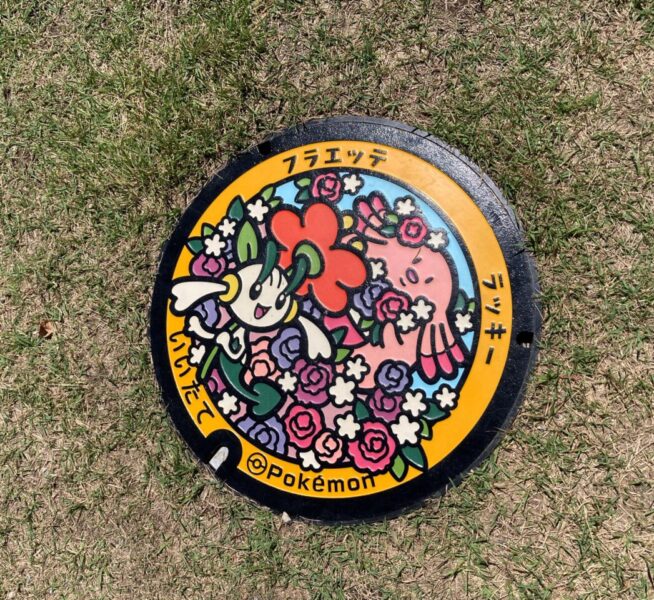
Ko Hiroba" (Fukaya Wind Child Plaza). It offers a spacious area where children can run around freely, with flower-lined walking paths and grassy fields. We also found Iitate Village's Pokemon manhole cover, "Poke Futa"!
There is also an indoor sports facility with wooden slides and puzzles, so you can play to your heart's content regardless of the weather.

Madeikan <Information>
- Name: Iitate Village Roadside Station Madeikan
- Address: 12-1 Fukaya-mae, Iitate Village, Soma District, Fukushima Prefecture
- Phone number: 0244-42-1080
- Access: 1 hour by car from JR Fukushima Station, 30 minutes by car from Minamisoma IC on the Joban Expressway
- Business hours: March to October 9:30 to 18:00, November to February 9:30 to 17:00
- Closed: Every Wednesday, New Year's holidays
Google Map
Ebisu-an, a place for villagers to relax

Ebisu-an is a long-established restaurant that has been operating in Iitate Village for over 60 years.After the Great East Japan Earthquake in 2011, it relocated to Fukushima City and continued operations, but in April 2019, it became the first restaurant to reopen in the village after a six-year absence.
Ebisu-an's specialty is its udon noodles, which are handmade early every morning!Among them, the "Gomoku Udon" is said to be the most popular menu item. It's a hearty bowl topped with plenty of stir-fried ingredients such as cabbage, chives, carrots, and pork.
On this day, I had "niku udon" (udon noodles with meat) and "
oinari sushi" (rice wrapped in fried tofu). Ebisu-an's handmade noodles have a nice chewiness; rather than being smooth and easy to swallow, they have a firm, chewy texture reminiscent of "suiton" (flour dumplings) or "dango-jiru" (dumpling soup). It was a comforting and nostalgic bowl of udon, even though it was my first time trying it.

During lunchtime, in addition to villagers in the middle of farm work, many workers who had come to Iitate Village for reconstruction work also frequented the place. It
seems to be a place of relaxation for people involved with Iitate Village.
Additionally, in 2018, the idol group Arashi visited the restaurant as part of the NHK Red and White Song Battle. Being a fangirl, I got to dine at the same table as the Arashi members, which I'll tell you just between us
Ebisu-an <Information>
- Name: Ebisu-an
- Address: 101 Iihimachi, Iitate Village, Soma District, Fukushima Prefecture
- Phone number: 0244-43-2018
- Business hours: 11:00-15:00
- Closed: Tuesdays
Google Map
Madeina Village Iitate Summary

When I visited Iitate Village in August, it was a midsummer day with temperatures exceeding 30 degrees, but the cool breeze in Iitate Village made it a very pleasant place. The sunflower fields blooming across from the "Madeikan Roadside Station" are somehow tranquil, and you'll forget the passage of time and want to gaze at them forever
Iitate Village is steadily moving forward, having recovered from the earthquake!
We hope you will take the time to learn about the current state of "Madeina Village Iitate," which is moving forward "without sparing any effort" and "carefully."

A housewife and writer born and raised in Fukushima. She
loves freshly picked Fukushima "hard peaches." Her
hobbies include driving and gourmet food.
She hopes to share the charm of Tohoku with others.
Please support NEFT's article creation!
NEFT gathers and publishes articles about the history, culture, and tourism information of various regions in Tohoku
If you enjoyed this article, we would be grateful if you would consider supporting our future interviews, article creation, and website management
*Clicking "Tip" will open the tip sending screen for the external service "codoc"
Other articles

Delicious soft-serve ice cream at a roadside station in northern inland Akita! Made with fruit...

Follow in the footsteps of Hideyo Noguchi! Recommended spots scattered throughout Fukushima prefecture...

Recommended scenic driving routes in Tohoku! Mount Kurikoma...

[Semboku City, Akita Prefecture] A hot topic of craft beer! It's called...

[Craft Beer in Aizu and Southern Fukushima Prefecture] From long-established breweries...

[Yonezawa City, Yamagata Prefecture] Harakata Sashiko is a symbol of Yonezawa's tradition and culture!

[Yamagata Prefecture] It's summer! It's festival time! The long-awaited Hanagasa (flower hat) is back!.

Aizuwakamatsu City, a city of nature and history, is home to a cutting-edge senbero bar...

Three Sengoku warlords from Aomori Prefecture! Tsugaru Tamenobu, Ishikawa Takanobu, and Namioka Tomonaga

A textile born from the charm of nature! Try wearing Yonezawa Tsumugi...

Appearing in the first episode of the anime "That's Journey"!.
