


A large guardian deity imbued with wishes for good health and protection from illness. What is this "doll" that wards off evil? [Tamura City, Fukushima Prefecture]

A large doll, about 4 meters tall
In Tamura City, Fukushima Prefecture, there is a deity known as "Oningyo-sama," a guardian deity that has been passed down through generations. Characterized by its piercing gaze and outstretched sword, it continues to attract the faith of people as a god that protects the region from disease and disaster
This time, we'll delve into the history and appearance of "Oningyo-sama," the guardian deity that Tamura City is so proud of!
What is the "Doll-sama," the guardian deity of Tamura City?
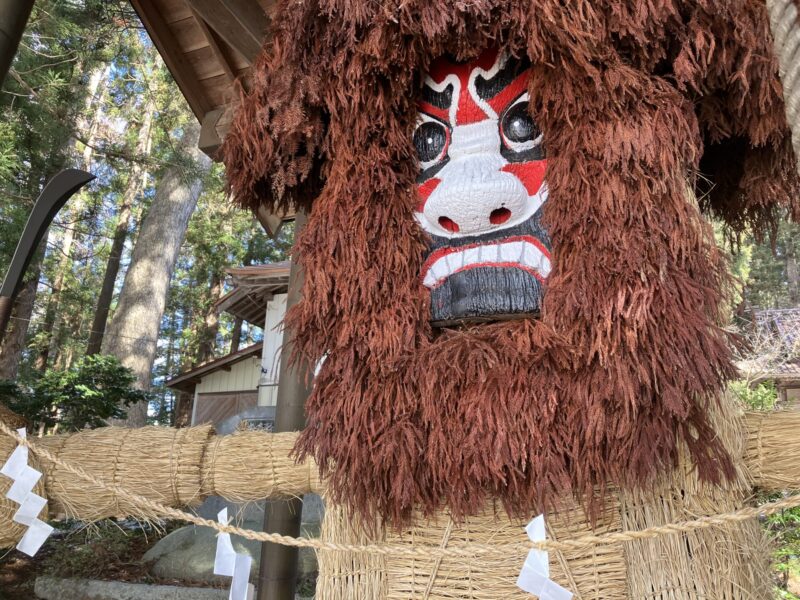
The "dolls" enshrined in three locations within Funahiki-cho, Tamura City, are actually giant protective dolls
It stands about 4 meters tall. It has a wooden frame covered in straw and is adorned with a terrifying mask. Furthermore, it holds a sword or naginata in its hands and stands there with its long arms outstretched, as if blocking the way
The origins of dolls are ancient, and although the details are unclear, it is said that they were triggered by an epidemic that spread during the Edo period
It is said that to protect the people of this area from illness and disaster, dolls were enshrined along the Iwaki Highway, which connected the neighboring town of Miharu to Iwaki City
Each doll is made using a wooden mask and natural materials such as straw and cedar leaves
Each of the three dolls has its own unique characteristics
The dolls enshrined in three locations within Funahiki-cho, Tamura City, each have slightly different expressions and accessories. Comparing them is one of the enjoyable aspects of visiting the area
This time, we'll take a look at each one individually and tell you about their unique characteristics
Dolls in the house
The Yakata doll is enshrined on a hill in the mountains, not far from the Funabiki-Miharu Interchange. It seems that its location and orientation were different in the past, but it is now enshrined in a park facing west
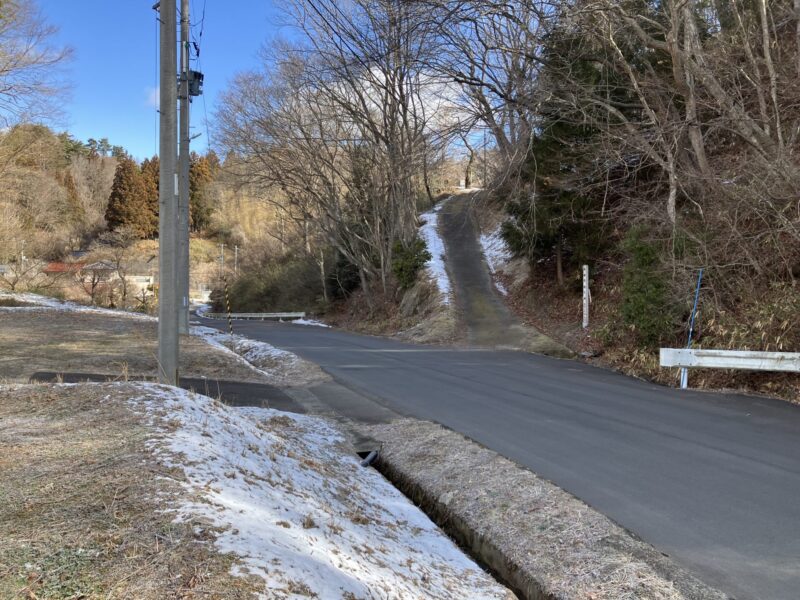
The entrance is at the top of a steep slope. It's a little easy to miss, so if you're driving nearby, slow down and look carefully. There's a parking area across the road that's also used for events

After walking up the slope, you'll come to an open park. Then, take the small set of stairs that branch off from one corner of the park. As you climb the stairs, winding around the hill, an impressive giant doll will appear before you
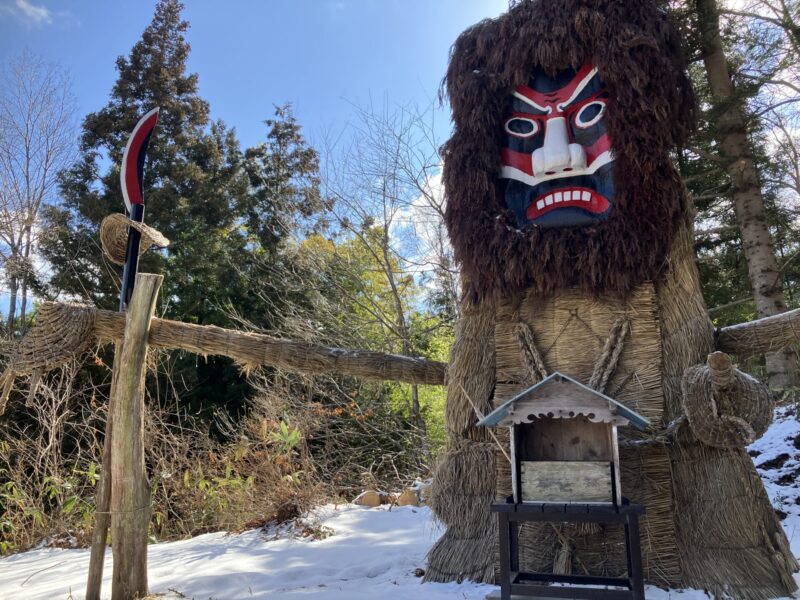
He has slanted eyes and bared teeth. He has bushy hair and a beard. He holds a sharp naginata in his right hand and a sword tucked into his left hip
The masks used for the dolls in the takata (festival hall) date back to 1960 (Showa 35). The carved wooden masks are large, standing 125 centimeters tall, and are vividly colored. It is said to be a tradition to replace the support pillars and frame every 50 years
Dolls in the house
- Name: House Doll
- Address: 1 Ashizawa Kumota-mae, Funahiki-machi, Tamura City, Fukushima Prefecture 963-4316
Google Map
The dolls of Park Bridge
The Hokubashi dolls are enshrined on the side of a gentle hill overlooking Prefectural Road 113 (Koriyama-Ogoe Line). Their elevated position, seemingly overlooking human activity, gives them the aura of true guardian deities
The location is easy to find, but the stairs at the entrance are a bit steep, so be careful of your footing as you climb
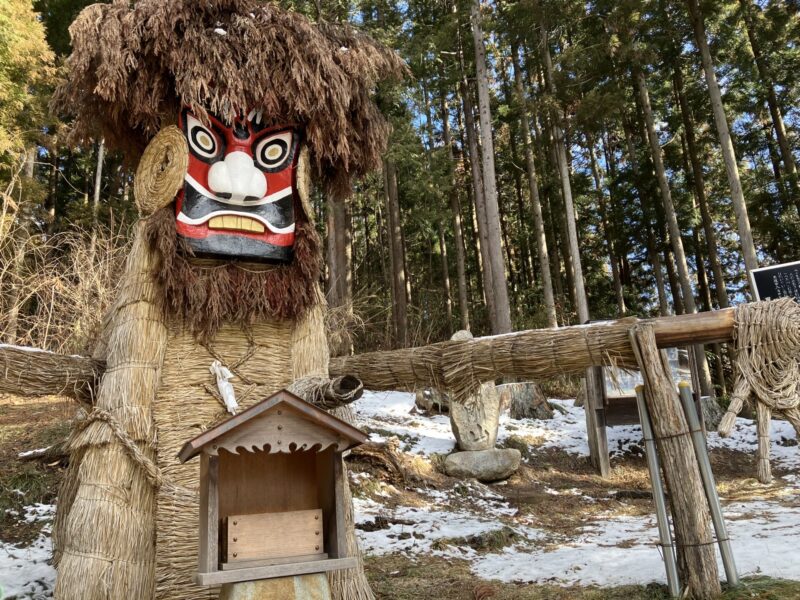
Once you reach the top, a doll will appear with its arms outstretched, with a cedar forest behind it
Its mouth is rather small, but its colored teeth look like gold teeth. It has no beard on its cheeks, giving it a clean-cut appearance
The old wooden mask bears an inscription dating back to the first year of the Ansei era (1854), indicating that the doll has a long history
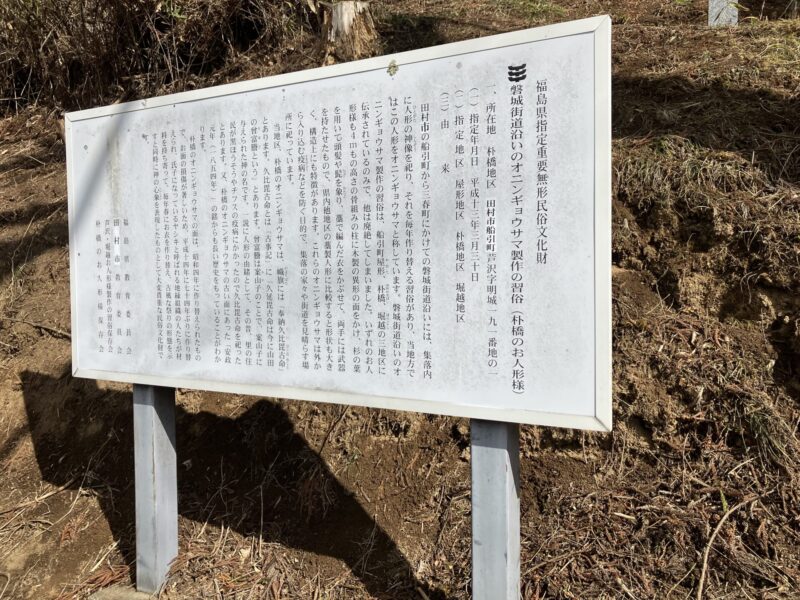
Detailed information signs are also posted here
The dolls of Park Bridge
- Name: The Doll of Park Bridge
- Address: 963-4316 Fukushima Prefecture, Tamura City, Funahiki-machi, Ashizawa Hobashi
Google Map
Horikoshi Dolls
The Horikoshi doll is enshrined within the grounds of Akashi Shrine, in a corner of a village along Prefectural Road 57, a busy road. It could be said that it is the doll "closest to the residents."
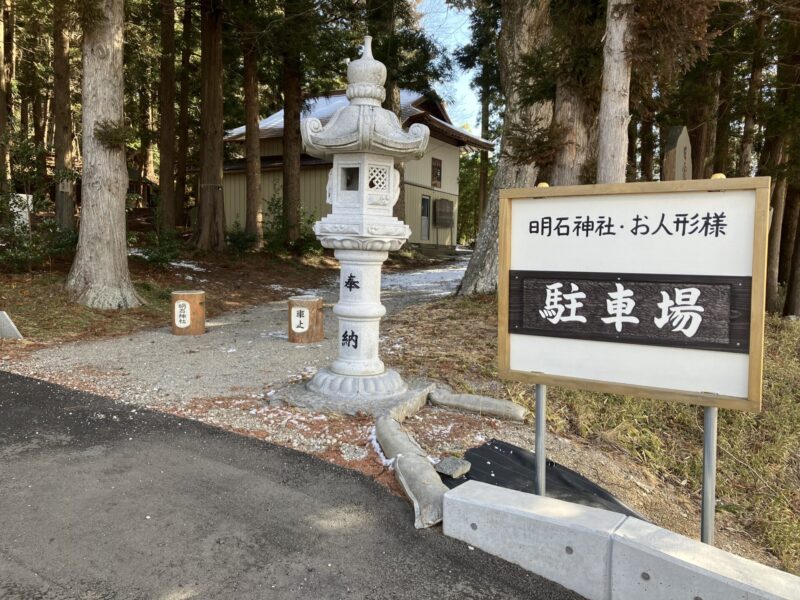
Actually, there's a reason why Horikoshi's doll is in its current location
The Horikoshi dolls, which were enshrined in Bessho, had their tradition discontinued once in 1907 (Meiji 40). However, although the tradition ceased, the wooden masks used for the dolls were carefully preserved at Akashi Shrine, and in the Heisei era, local residents raised their voices and revived the tradition
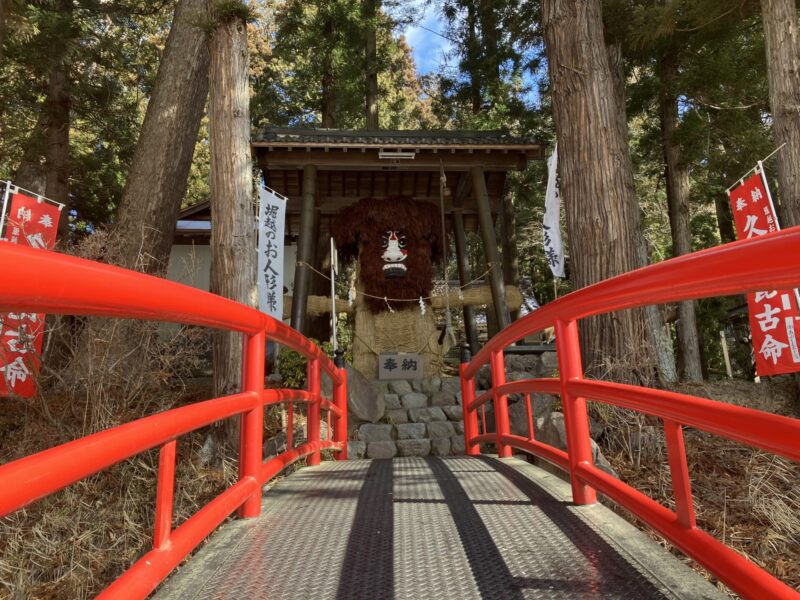
The Horikoshi dolls are enshrined beyond a red bridge, which can be reached directly from the sidewalk. The cedar trees of this historic shrine are all magnificent in appearance and match the atmosphere of the dolls
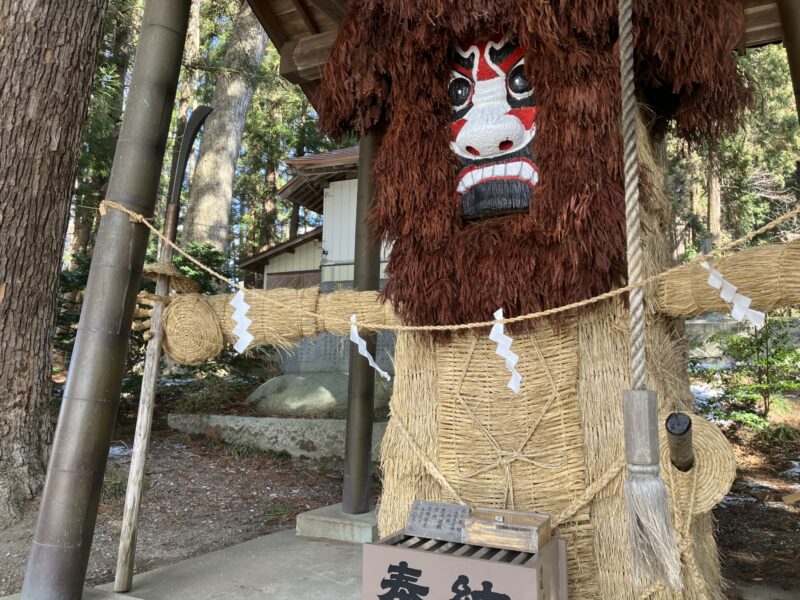
Horikoshi's dolls hold a naginata (a type of pole weapon) in one hand and wear a sword at their left hip. However, they also have endearing, round eyes and noses, and a somewhat gentle appearance, which is another distinctive feature
The wooden mask is older than those currently worn by the other two dolls, and is thought to have been made during the Edo period. It is said to have been carved from a single piece of zelkova wood, and its three-dimensional form is astonishing
Horikoshi Dolls
- Name: Horikoshi Doll
- Address: 1-1 Horikoshi Myojinmae, Funahiki-machi, Tamura City, Fukushima Prefecture 963-4204 (within the grounds of Akashi Shrine)
Google Map
Actually, dolls change their appearance depending on the season
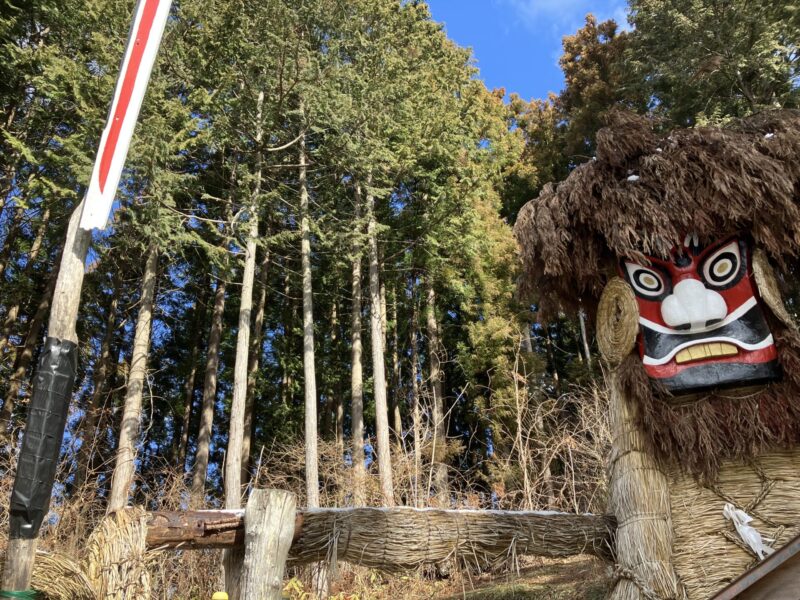
These dolls have passed down their form and the faith they inspire to this day, but in fact, the dolls change their appearance depending on the season
The dolls are made from natural plants. Therefore, in Tamura City, there is a custom of "changing the clothes" of the dolls once a year. To change the clothes of each doll, local residents gather to weave straw, make new clothes and decorations, and replace the cedar leaves used for the hair and beard
The timing for changing the dolls' clothes is determined for each doll, and every year between April and May, all three dolls are reborn in their new appearance. As a result, the dolls that have just received their new clothes have a fresh, vibrant look with lush green cedar leaves. Then, as winter approaches, their clothes change to more subdued colors
Dolls that have witnessed the history of Tamura City
This time, we've focused on the "Oningyo-sama," a protective deity for warding off evil spirits in Tamura City
These dolls, which preserve a custom born in a time when people feared disease, continue to be seen today. Even in modern times, people entrust their wishes for good health and protection from illness to these majestic figures. Tamura City offers a variety of nature-based activities, such as Abukuma Cave and Mushimushi Land, the kingdom of rhinoceros beetles. When you visit, why not go and see the dolls and offer your wishes for good health and protection from illness?

Woman in her 30s / Resident of Koriyama City, Fukushima Prefecture / Writer who handles local gourmet information / Favorite phrase is coexistence and co-prosperity
Please support NEFT's article creation!
NEFT gathers and publishes articles about the history, culture, and tourism information of various regions in Tohoku
If you enjoyed this article, we would be grateful if you would consider supporting our future interviews, article creation, and website management
*Clicking "Tip" will open the tip sending screen for the external service "codoc"
Other articles

Tadami Line: Japan's most scenic local train line (Fukushima Prefecture)

[Fukushima] Let's visit Iitate Village, a beautiful Japanese village! Roadside station "Ma...

[Part 1] Japan's first nautical chart, "Map of Kamaishi Port in Rikuchukoku" and the discovery of Kamaishi...

The legend of the goddesses of the three mountains of Tono and the place where the three goddesses split...

The "Matagi," master bear hunters who live in the mountains, are from the Ani Matagi village...

[Tohoku] Where should we go during Golden Week in 2023? Zoos and aquatic...

[Oga Peninsula, Akita Prefecture] Full of Viewpoints. A Place Created by the Earth...

[Fukushima City, Fukushima Prefecture] A summer tradition in Fukushima City, Fukushima Prefecture! Japan's No. 1...

[Fukushima Prefecture] The Lakes of Urabandai, where you can see a variety of colors...
[Paleolithic Sites in Aomori Prefecture: Part 2] The Paleolithic period in Japan...

The Ani Mine, which was said to be the best in Japan during the Edo period and supported the Kubota Domain,...
