


How was the Tohoku region sung about in the third volume of the Railway Songs? (1) Ueno (Tokyo) - Shiroishi (Miyagi)

Do you think that "Tetsudo Shoka" (Railway Song ), which begins with "A single whistle blows at Shinbashi," is a song about the Tokaido Main Line heading west from Tokyo?
Actually, there are five volumes of the Railway Song (some say there are six or seven), and only the first volume sings about the Tokaido Main Line.
The third volume features railway lines in the Tohoku region. What exactly does the Railway Song refer to in the Tohoku region?
What is the Railway Song?
"Railway Song) is a song published in 1900 during the Meiji era. It sings about the areas along the railway lines that ran through Japan at the time, and it became a nationwide hit. It can be considered one of the origins of local-themed songs.

The song's title includes "Geography Education," and it's said that children in the Meiji era learned about famous places and place names throughout Japan through this song. Many children in the Heisei era (including myself) learned about place names and local products from all over Japan through the video game "Momotaro Dentetsu," and I feel that this song is quite similar
The lyricist of the Railway Song was Takeki Owada (1857-1910), who was from Iyo Province (present-day Ehime Prefecture). There were multiple composers, and in fact, there were several melodies for the Railway Song. However, only one melody is currently known as the Railway Song, and this was composed by Umewaka Ono (1869-1920), who was from Yamashiro Province (present-day Kyoto Prefecture)
Beginning with the first volume published in May 1900, five volumes were released during 1900, and their contents are as follows:
- Volume 1: Tokaido edition
- Volume 2: Sanyo/Kyushu edition
- Volume 3: Oshu and Iwaki
- Volume 4: Hokuriku Region
- Volume 5: Kansai, Sangu, and Nankai Chapters
With 5 volumes, there were a total of 334 verses, making it for a long timethe longest song in Japan(although this record has since been broken). Some theories suggest that the Railway Songs comprise a total of 6 or 7 volumes, including the later additions of the "Hokkaido Edition" and the "Iyo Railway Song."
In any case, as the title suggests, Volume 3 mainly covers the Tohoku region. Specifically, it features areas along the current JR Tohoku Main Line, Iwate Galaxy Railway Line, Aoimori Railway Line, and JR Joban Line (of course, the Tohoku Shinkansen did not exist at that time)
This time, we'll take a look at what's sung about in the third volume, specifically the part where the train travels north along the Tohoku Main Line from Ueno Station in Tokyo through Fukushima Prefecture
In creating this article, I referred to this website for the lyrics. Please note that more than 70 years have passed since the deaths of all the authors of the Railway Song, and the copyright has expired in many countries, including Japan and the United States
Volume 3, No. 1: Ueno
The train, billowing smoke, is now leaving Ueno. Where is it headed? All the way to Aomori in Mutsu? It will fly all the way there in one go
(The kanji characters and kana spellings have been updated to reflect current usage.)
*From now on, for stations related to the Tohoku Main Line, even those with very simple names, the pronunciation will be written at least once. Thank you for your understanding
The current Tohoku Main Line starts at Tokyo Station, but at the time, Tokyo Station had not yet opened, and the starting station for trains going to the Tohoku region was Ueno Station. Even after Tokyo Station opened, Ueno remained the starting and ending station for medium- and long-distance trains on the Tohoku Main Line until the Ueno-Tokyo Line opened in 2015
As is typical in railway songs, the narrator apparently boarded a train that departed from Ueno Station and headed north to Aomori Station. Since there were no express or limited express trains at that time, the journey to Aomori took a considerable amount of time
The current JR Ueno Station has elevated platforms for the Yamanote Line, Keihin-Tohoku Line, and Ueno-Tokyo Line, ground-level platforms for trains that originate or terminate at Ueno Station, and underground platforms for the Shinkansen. However, in 1900, only the ground-level platforms should have existed. On the current ground-level platforms, there is a monument inscribed with a poem by Ishikawa Takuboku, a poet from Iwate Prefecture

I long for the accent of my hometown, and I go to the train station to hear it amidst the crowds
This poem expresses the feelings of someone who has come to Tokyo from the countryside and feels nostalgic upon hearing the dialects spoken by passengers disembarking from the train that came from their hometown. Ueno Station was the final stop for trains carrying people from the Tohoku region and other areas, so it can be said that this station particularly matches the feelings expressed in this poem
It should be noted that in 1900, the line from Ueno Station to Aomori Station was not part of the national railway that was the predecessor of JR, but rather was treated as the main line of a group of lines managed by the Nippon Railway (Nippon Tetsudo), a private railway company (although it should actually be called a semi-governmental, semi-private company)
Currently, the line from Tokyo Station to Morioka Station is the JR East Tohoku Main Line, the line from Morioka Station to Metoki Station in Aomori Prefecture is the IGR Iwate Galaxy Railway Line, and the line from Metoki Station to Aomori Station is the Aoimori Railway Line


Numbers 2-16: Oji - Nishinasuno
The train travels north, passing through stations such as Oji, Akabane, Urawa, Omiya, and Oyama
Along the way, I changed trains at Utsunomiya to the current JR Nikko Line, and took my time making detours to visit places like Nikko Toshogu Shrine and Kegon Falls
I made a detour and hurried back to Utsunomiya, then continued north. I reached Nishinasuno on bus number 15. I entered the Tohoku region on bus number 17
Route 17: Higashi-Nasuno (present-day Nasushiobara) to Shirakawa
The green breeze of Higashi-Nasuno, Fukuya Kuroiso Kurodahara, Where is this place? The setting sun casts a red shadow over Shirakawa Castle
Feeling the wind blowing towards the green leaves (a green breeze) in Higashi-Nasuno (present-day Nasushiobara), passing Kuroiso and Kurodahara, and then going past Toyohara Station (which doesn't appear in the lyrics), you finally enter Fukushima Prefecture
Currently, the first station you encounter upon entering Fukushima Prefecture is Shirasaka, followed by Shin-Shirakawa. However, the Railway Song does not omit these stations (although it does skip Toyohara Station), and neither was open as of 1900. Thefirst stationwas Shirakawa.
Although there was no train station at the time, Shirasaka was not entirely devoid of anything. Shirasaka was one of the post towns on the Oshu Kaido road. Of course, the castle town of Shirakawa was also one of the post towns
The castle of Shirakawa bathed in the setting sun is Shirakawa Komine Castle , located just north of the station . It is believed to have been built in the mid-14th century and is designated as a national historic site

Furthermore, along with Morioka Castle and Wakamatsu Castle in Aizuwakamatsu City, it is counted as one of the three most famous castles in the Tohoku region, and also as one of Japan's 100 most famous castles
Komine Castle Ruins<Information>
- Name: Komine Castle Ruins
- Address: 1-6 Kakuuchi, Shirakawa City, Fukushima Prefecture 961-0074
- Opening hours: (Triple turret) (April to September) 9:00 AM to 5:00 PM / (October to March) 9:00 AM to 4:00 PM
- Official URL: Komine Castle Ruins | Shirakawa City Official Homepage
Google Map
No. 18: Shirakawa Barrier
The site of the checkpoint, where the autumn wind blows, is here, the ancient battlefield of the Meiji Restoration where the Imperial army defeated the Aizu forces
The checkpoint in question is, of course, the " Shirakawa Barrier ," which served as one of the gateways to Oshu (northern Japan) from the Nara period to the Heian period . The site of the checkpoint is a nationally designated historical site. However, it is located about 11 km south of Shirakawa Station.


The phrase "the autumn wind blows" originates from the following waka poem composed by a Buddhist monk named Nōin during the Heian period
Though I left the capital city with the mist, the autumn wind now blows at Shirakawa Barrier
This means, "I left the capital (Kyoto) as the spring mist rose, but by the time I reached Shirakawa Barrier, the autumn winds were already blowing."
The statement "the government army defeated the Aizu soldiers" is, of course, referring to the Boshin War, which broke out in 1868
Towards the end of the Edo period, Shirakawa was under the direct control of the shogunate, and with the restoration of imperial rule, it became part of the new government's territory. However, during the Boshin War, forces supporting the former shogunate, such as the Aizu Domain and the Ouetsu Reppan Alliance, seized Shirakawa from the new government forces, considering it a vital line of defense
As the new government forces moved to recapture Shirakawa, a fierce battle for control of Shirakawa raged from late April to mid-July 1868. This battle is known as the "Battle of Shirakawa-guchi." Shirakawa Komine Castle, which was mentioned earlier, was attacked by the new government forces in the early stages of the Battle of Shirakawa-guchi and was burned down and fell
Shirakawa Barrier Site<Information>
- Name: Shirakawa Barrier Ruins
- Address: Shirakawa Seki, Hatayado Sekinomori, Shirakawa City, Fukushima Prefecture, 961-0038
- Official URL:From here to Michinoku "Shirakawa Barrier Site" (National Historic Site) | Shirakawa City Official Homepage
Google Map
Number 19: Izumizaki, Yabuki, Sukagawa, Koriyama
Izumizaki, where water flows over rocks; Yabuki Sukagawa, winter comes; Koriyama, where ice forms; nearby lake waters are Inawashiro
At that time, the next station after Shirakawa was Izumizaki
"Iwamoru Mizu no Izumizaki" (水森崎岩萌る水) literally translates to "Izumizaki where water leaks from the rocks," but I was unable to confirm if there is such a place nearby. It seems more likely that the phrase "Iwamoru Mizu" was simply added to the beginning of the name, playing on the station name Izumizaki
We then proceeded to Yabuki and Sukagawa. Izumizaki, Yabuki, and Sukagawa were all post towns on the Oshu Kaido road. Sukagawa, in particular, was one of the largest post towns on the Oshu Kaido
Furthermore, Sukagawa was home to SukagawaCastle, the base of the Sukagawa Nikaido clan. Currently, ita town of special effects. The annual "Taimatsu Akashi" festival held in November is also famous.


Then winter arrives and they arrive in Koriyama , where the water is frozen . I suspect that this "ice" probably doesn't have any deep meaning and is simply a play on the place name "Koriyama." After all, in song number 17, there is a wind blowing through green leaves (a green breeze), so the seasons don't seem to match.
Although Koriyama's development began relatively late, after the Meiji era, it has now become one of the leading commercial and industrial cities in the Tohoku region. Its population is the second largest in Tohoku after Sendai, and larger than that of Fukushima City, the capital of Fukushima Prefecture
And about 10km west of Koriyama is Lake Inawashiro
No. 20: Iwakoshi Line (JR Ban'etsu West Line)
The Iwaetsu Railway, which began here and continues to Echigo, is still only halfway through construction and currently only extends to Wakamatsu and Aizu
The Iwaetsu Line, which stretched from Koriyama to Echigo (Niigata Prefecture), is the currentJR Ban'etsu WestLine. It runs from Koriyama Station, passing through Inawashiro Station, Aizuwakamatsu Station, Kitakata Station, and other stations, to Niitsu Station in Akiha Ward, Niigata City, Niigata Prefecture.

As of 1900, as mentioned in the lyrics, the line was open to Wakamatsu Station (now Aizu-Wakamatsu Station) operated by the private Iwakoshi Railway. Although it was extended to Kitakata Station in 1904, it was acquired by the government two years later in 1906, after which the extension to Niigata Prefecture was realized
While he made a significant detour to Nikko, he only mentioned the Iwakoshi Railway and Aizu-Wakamatsu without actually making any detours there
Kawageta Station, located along the Ban'etsu West Line , was once served by the Numajiri Railway (later known as the Bandai Express Electric Railway). The lyricist and composer of "Kogen Ressha ga Iku" (The Highland Train Goes On), a song about this railway, were both from Fukushima Prefecture.

At Aizu-Wakamatsu Station, you can transfer to the Tadami Line, sometimes called "Japan's most scenic local train line." This article explains it in more detail

Furthermore, Kitakata Station was once the starting point of a local railway line called the Nicchu Line. Please also check out the article about this line

Number 21: Hiwada, Motomiya, Nihonmatsu
The guidebook also states that those going to see Hiwada Honmiya Nihonmatsu and Kurozuka in Adachigahara should get off the train
Continuing north from Koriyama, we pass through Hiwada, Motomiya, and Nihonmatsu. These stations are located at the foot of Mount Adatara. They were all post towns along the Oshu Kaido road

Regarding Kurozuka in Adachigahara... I'll just say that it's the tomb of a legendaryhag who attacks travelers seeking lodging,. More detailed information is available at the link below, but please view it at your own risk, as some may find it grotesque.


As indicated in the guidebook, "Those who wish to see it (at Nihonmatsu) should get off the train," and since Adachi Station, the next station after Nihonmatsu Station, had not yet opened at that time, Nihonmatsu Station was undoubtedly the closest station to Kurozuka
Kurozuka<Information>
- Name: Kurozuka
- Address: 4-126 Adachigahara, Nihonmatsu City, Fukushima Prefecture 964-0938
- Official URL:Kurozuka | Nihonmatsu City Tourism Association
Google Map
Number 22: Matsukawa, Fukushima
After passing Matsukawa and going through the tunnel, you arrive at the town of Fukushima, the site of the prefectural capital and the former castle town of the Itakura clan
We pass Matsukawa and emerge from a tunnel. Since Kanayagawa and Minami-Fukushima stations didn't exist at the time, the next station after MatsukawaFukushima, the capital of Fukushima Prefecture.

Building - Own work, CC BY-SA 4.0,
https://commons.wikimedia.org/w/index.php?curid=191377546
Although present-day Fukushima has a smaller population compared to Koriyama and Iwaki, it was the center of the Fukushima Domain during the Edo period. Perhaps for this reason, when Fukushima Prefecture was established in the Meiji era, the prefectural government was located there, despite its location at the northernmost tip of the prefecture
According to the Fukushima Prefectural History, the reason why the prefectural office was located in Fukushima is unclear. However, Koriyama was not a very large town at the time, so it may not have been a suitable location for the prefectural office
Furthermore, there were several towns within the current Fukushima Prefecture that had flourished since the Edo period, other than Fukushima itself. However, it is easy to imagine that the government would have been reluctant to make Aizu or Nihonmatsu, which had clearly opposed the new government during the Boshin War, the prefectural capital
As the lyrics indicate, the Itakura clan served as the lords of the Fukushima domain during the late Edo period
Yuji Koseki (1909-1989), the composer of "Kogen Ressha wa Iku" (The Highland Train Goes On), mentioned in number 20, was from Fukushima City. The departure melody for the conventional lines such as the Tohoku Main Line at Fukushima Station is "Kogen Ressha wa Iku," while the departure melody for the Tohoku Shinkansen platform is "Eikan wa Kimi ni Kagayaku" (The Crown Shines on You), also composed by Koseki.


Route 23: Ou South Line (JR Ou Main Line/Yamagata Line)
Nearby is a famous spot for stones where Shinobu-mojizuri prints begin, and the railway to Yonezawa branches off from this town
"Shinobu-mojizuri" refers to a type of woven garment with a disordered pattern that was made in the Shinobu region of Fukushima Prefecture (around Fukushima City and Date City) . Some people may recognize the term as it appears in the Hyakunin Isshu (One Hundred Poets, One Poem Each).
And the "famous stone spot" refers to the place where the large stones used to create this "Shinobu Mojizuri" are located. The "Shinobu Mojizuri Stone" is located about 5km northeast of Fukushima Station. It is within the grounds of Fumon-in Temple, a temple of the Soto Zen sect
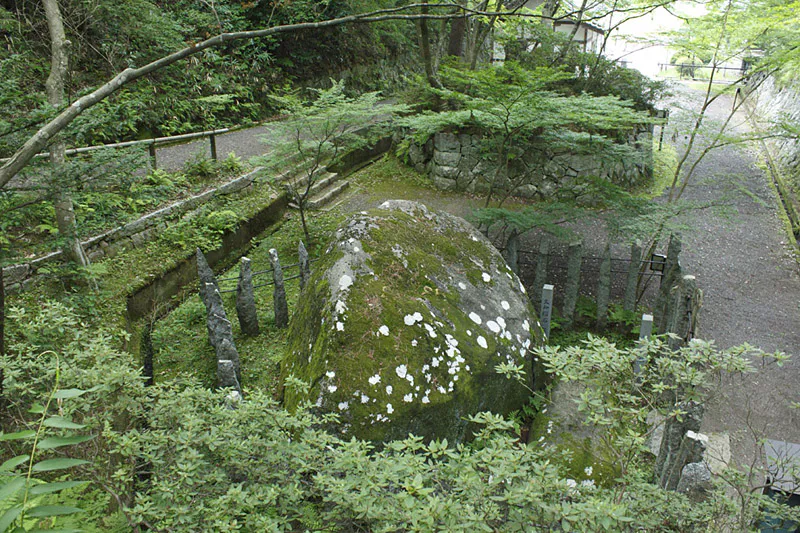

The railway line branching off at Fukushima Station towards Yonezawa is the currentJR Ou Main Line. The current Ou Main Line runs from Fukushima to Aomori, passing through Yonezawa, Yamagata, Shinjo, Yokote, Omagari, Akita, Odate, Hirosaki, and other stations. The section from Fukushima Station to Shinjo Station is sometimes called the Yamagata Line. It is also part of the route for the Yamagata Shinkansen.


In 1900, the Ou Line was divided into the South Ou Line, which was under construction from Fukushima, and the North Ou Line, which was under construction from Aomori. As of April 1900, the South Ou Line had already opened from Fukushima Station to Akayu Station in Yamagata Prefecture, via Yonezawa Station
The railway line between Fukushima and YonezawaItaya Pass, characterized by steep slopes and heavy snowfall in winter. The entire section of the Ou Main Line from Fukushima to Yonezawa is sometimes referred to as "Itaya Pass," and the railway has been battling the harsh natural environment of Itaya Pass ever since its construction.

The station located midway up the Itaya Pass is not served by Yamagata Shinkansen trains; only local trains stop there. The "Toge no Chikara Mochi" ( Mountain Pass Power Rice Cake ) sold at the station along the way has become a local specialty.

Shinobu Bunchi Suriishi<Information>
- Name: Nobuo Bunchi Suriseki
- Address: 68 Mojizuri, Yamaguchi, Fukushima City, Fukushima Prefecture 960-8202
Google Map
Number 24: Nagaoka (now Date), Koshikawa, Shiraishi
Some people get off at Nagaoka and head to Iizaka for hot spring treatments, and I hear that beyond Kosugō, Shiroishi is already in the province of Rikuzen
Nagaoka refers to the current Date Station. The station was renamed in 1914 because it was being confused with Nagaoka Station in Niigata Prefecture
Currently, you can get to Iizaka Onsen from Fukushima Station by taking the Fukushima Kotsu Iizaka Line . However, back then, there was no railway to Iizaka Onsen, so perhaps the song is about people traveling to Iizaka Onsen on foot from Nagaoka Station.


Although not mentioned in the lyrics, the stations in Fukushima Prefecture at that time ended with Kori and Fujita, following Nagaoka (Date). Kaida was not yet open. Incidentally, Kori, Fujita, and Kaida were all post towns on the Oshu Highway. The area around Kori is also the birthplace of Date Terumune, the father of Date Masamune


Kosugo is the first station in Miyagi Prefecture, and after passing Kosugo, you arrive at Shiroishi. Both Kosugo and Shiroishi were post towns on the Oshu Kaido road
That's all for today
Series <Railway Song>


A former railway engineer and current freelance writer who has loved trains since childhood, his dream is to make train travel his career
Please support NEFT's article creation!
NEFT gathers and publishes articles about the history, culture, and tourism information of various regions in Tohoku
If you enjoyed this article, we would be grateful if you would consider supporting our future interviews, article creation, and website management
*Clicking "Tip" will open the tip sending screen for the external service "codoc"
Other articles

Three "special" power spots hidden in Bandai Atami Onsen...

Why was the traditional craft "Akabeko" born? Exploring its origins and history...

From one to nine, "place names with 'to' in them" [Ichinohe and Ninohe edition]...

[Fukushima Prefecture] Picking out local specialties that can be used as "hot pot ingredients"...

[Kami Town, Miyagi Prefecture] A photogenic spot! A spectacular view of flower fields...

[Iwate Prefecture] Tracing Morioka's coffee shop culture: "Good old coffee shops"...

[Yamagata Prefecture] Tours, experiences, and tastings in Yamagata, the wine kingdom of Tohoku...

Hanamaki's proud two-sword hero, Shohei Otani! A monument decorating the city...

Tour the precious cultural assets remaining in Minamiaizu, the southern part of the Aizu region [...

5 Fukushima Local Sake Selections: Perfect Souvenirs and Gifts for Your Special Occasion...

Top 10 wineries in Iwate Prefecture! Unique wineries...
