


A pilgrimage to three locations in Yamagata Prefecture known as the "Dewa 100 Kannon," featuring 33 Kannon statues. [Yamagata Prefecture]

The origin of the 33 Kannon pilgrimage in Yamagata Prefecture is said to be the "Mogami 33 Kannon Pilgrimage," which began during the Muromachi period
This pilgrimage to the 33 Kannon temples, which is said to have begun about 580 years ago, gradually spread to neighboring areas. In the Edo period, the"Okitama 33 Kannon" pilgrimage, and in the early 1700s,the "Shonai 33 Kannon" pilgrimagewas established in the Shonai domain.
Visiting three of the 33 Kannon pilgrimage sites is sometimes called the "Hundred Kannon Pilgrimage," and is referred to as the "Japan's Hundred Kannon."
- The Thirty-Three Kannon Temples of Saigoku(Wakayama Prefecture, Osaka Prefecture, Nara Prefecture, Kyoto Prefecture, Hyogo Prefecture, Shiga Prefecture, Gifu Prefecture)
- Bando Thirty-Three Kannon Temples(Kanagawa Prefecture, Tokyo, Saitama Prefecture, Gunma Prefecture, Tochigi Prefecture, Ibaraki Prefecture, Chiba Prefecture)
- Chichibu Hyakukannon(Saitama Prefecture)
Visiting all three of these places would require a considerable amount of time and money
In that respect, the "Dewa Hundred Kannon" pilgrimage , which consists of the "Mogami Thirty-Three Kannon," the "Shonai Thirty-Three Kannon," and the "Okitama Thirty-Three Kannon, " is completed entirely within Yamagata Prefecture, making it easy to undertake.
*The "Dewa Hyakukannon" (100 Kannon of Dewa Province) actually consists of 102 temples, including the first and extra temples, not 100

The pilgrimage to the 33 Kannon temples is traditionally undertaken by dressing in white pilgrim attire, carrying a walking stick, and walking in white tabi socks. However, in modern times, it is perfectly acceptable to visit each Kannon temple by private car or bus and simply collect the temple stamps
It's certainly true that visiting a Kannon statue leaves you feeling refreshed. The pilgrimage to the 33 Kannon temples is probably a way for Japanese people to cleanse their souls
While some temples may not offer Goshuin (temple stamps) on the spot, they can sometimes be obtained at designated temples or locations, so please check before you begin your pilgrimage
The Thirty-Three Kannon Pilgrimage began in Nara during the Nara period
The Thirty-Three Kannon Pilgrimage is said to have originated in the early Nara period when Tokudo Shonin , who founded Hase-dera Temple in Yamato Province (Sakurai City, Nara Prefecture) , designated 33 temples dedicated to Kannon Bodhisattva, who is said to transform into 33 different forms to save people, as sacred sites.
The pilgrimage to the 33 Kannon temples spread throughout Japan over many years
During the Edo period, it is said that there were more than 400 pilgrimage sites , including wide-area pilgrimages such as the now-famous Saigoku Thirty-Three Kannon Pilgrimage and Bando Thirty-Three Kannon Pilgrimage , as well as smaller regional pilgrimages such as the Chichibu Thirty-Four Kannon Pilgrimage and the Aizu Thirty-Three Kannon Pilgrimage (Aizu region of Fukushima Prefecture).
The legend of Princess Kōhime is passed down through generations at the "Mogami Thirty-Three Kannon Temples"

The "Mogami Thirty-Three Kannon" pilgrimage route tells the sad story of Hikarihime, the daughter of Yorimune, the fifth head of the Mogami family, who ruled the Mogami region
The story takes place during the Muromachi period (around 1400), when two warriors compete for the affections of the beautiful Princess Kōhime. The warrior who lusts after her is sentenced to death, and her beloved dies of illness, leading Kōhime to embark on a pilgrimage to the 33 Kannon temples
This journey is said to be the beginning of the "Mogami Thirty-Three Kannon Pilgrimage," but there is also a theory that the "Mogami Thirty-Three Kannon Pilgrimage" already existed at that time. (Reference:Mogami Yoshiaki Historical Museum)
The area where the "Mogami Thirty-Three Kannon" pilgrimage sites are scattered spans the Murayama region (which was called Mogami County during the Edo period) and the Mogami region (which was called Murayama County during the Edo period), centered around Shinjo City, and includes present-day Yamagata City, Murayama City, Sagae City, Obanazawa City, and Tendo City, all of which were part of the territory of the Mogami clan

The "Mogami Thirty-Three Kannon" pilgrimage begins at Wakamatsu Kannon (Wakamatsu Kannon) / Jakujoji Temple in Tendo City
Wakamatsu-ji Temple is the " Wakamatsu-sama" that is sung about in the Hanagasa Ondo song as "Congratulations, congratulations, Wakamatsu-sama . "
The second temple is [Yamadera/Senjuin (Yamagata City)], followed by the third temple [Senjudo/Kichijoin (Yamagata City)], and the pilgrimage ends with the 33rd temple [Niwatsuki/Getsuzouin (Ayukawa Village)], but an extra temple, [Yowoterasu/Tentokuji (Mogami Town)], is included
List of the Thirty-Three Kannon of Mogami
- First temple on the pilgrimage route: Wakamatsu Kannon (Tendo City)
- Second temple on the pilgrimage route: Yamadera (Yamagata City)
- Third temple on the pilgrimage route: Senjudo Kannon (Yamagata City)
- Fourth temple on the pilgrimage route: Ennoji Temple (Yamagata City)
- Fifth temple on the pilgrimage route: Karamatsu Kannon (Yamagata City)
- Temple No. 6: Hirashimizu Kannon (Yamagata City)
- Temple No. 7: Iwanami Kannon (Yamagata City)
- Temple No. 8: Mutsukunugi Kannon (Yamagata City)
- Ninth temple on the pilgrimage route: Matsuo-san Kannon (Yamagata City)
- Temple No. 10: Kaminoyama Kannon (Kaminoyama City)
- Temple No. 11: Takamatsu Kannon (Kaminoyama City)
- Temple No. 12: Hasedo Kannon (Yamagata City; temple stamps are available at Temple No. 1, Wakamatsu Kannon, and Temple No. 33, Niwatsuki Kannon)
- Temple No. 13: Mikawamura Kannon (Yamabe Town)
- Temple No. 14: Okamura Kannon (Nakayama Town)
- Temple No. 15: Otomo Kannon (Sagae City)
- Temple No. 16: Nagaoka Kannon (Sagae City)
- Temple No. 17: Naganobori Kannon (Nishikawa Town)
- Temple No. 18: Iwaki Kannon (Kahoku Town)
- Temple No. 19: Kurotori Kannon (Higashine City)
- Temple No. 20: Komatsuzawa Kannon (Murayama City)
- Temple No. 21: Isazawa Kannon (Isazawa/Obanazawa City)
- Temple No. 22: Nobesawa Kannon (Obanazawa City)
- Temple No. 23: Rokusawa Kannon (Obanazawa City)
- Temple No. 24: Kaminohata Kannon (Obanazawa City)
- Temple No. 25: Obanazawa Kannon (Obanazawa City)
- Temple No. 26: Kawamae Kannon (Oishida Town - The location of the stamp office changes every year, so please inquire beforehand)
- Temple No. 27: Fukabori Kannon (Oishida Town - The location of the stamp office changes every year, so please inquire beforehand)
- Temple No. 28: Shionosawa Kannon (Oishida Town)
- Temple No. 29: Oishida Kannon (Oishida Town)
- Temple No. 30: Nyumura Kannon (Goshuin stamp available at Tateno's residence, Obanazawa City)
- Temple No. 31: Tomizawa Kannon (Mogami Town)
- Temple No. 32: Taroda Kannon (Goshuin stamp available at Meigakuin, Mogami Town)
- Temple No. 33: Niwatsuki Kannon (Sakegawa Village)
- Extra: Yo-o-terasu/Se-sho Kannon (Mogami Town)

The Thirty-Three Kannon of Mogami
- For inquiries, please call 023-647-2333 (Yamagata Tourism Information Center)
- URL:Mogami Thirty-Three Kannon
The Thirty-Three Kannon of Mogami [Main Cultural Properties]
First temple on the pilgrimage route: Wakamatsu Kannon (Tendo City)

- Wakamatsu-ji Kannon Hall(National Important Cultural Property)
- Painted wooden panel depicting a sacred horse(Nationally designated Important Cultural Property)
- Gilt bronze hanging image of the Bodhisattva Kannon(National Important Cultural Property)
- Votive slips and pilgrimage slips(Yamagata Prefecture designated cultural property)
- Wooden seated statue of Gyōki Bodhisattva(Tendo City designated cultural property)
*Official URL:Wakamatsu-ji Temple
Third temple on the pilgrimage route: Senjudo (Yamagata City)
- Thousand-Armed Kannon Bodhisattva(Nationally Designated Important Cultural Property)
Ninth temple on the pilgrimage route: Matsuo-yama Kannon (Yamagata City)
- Matsuo-san Kannon-do(National Important Cultural Property)
- Kannon Bodhisattva and Seishi Bodhisattva(Yamagata Prefecture Designated Cultural Property)
- Katsura tree and Higan cherry blossom(natural monument of Yamagata City)
Temple No. 33: Niwatsuki Kannon (Ayukawa Village)

- Amida Hall / Thousand Buddha Statues(Designated Tangible Folk Cultural Property of Sakagawa Village)
The "Shonai Thirty-Three Kannon" began at the Dewa Sanzan mountains

The "Shonai Thirty-Three Kannon"consists of 33 temples plus a first temple and an extra temple, making a total of 35 temples.
The "Shonai 33 Kannon" pilgrimage begins with Kōtaku-ji Temple, which is said to have established thepilgrimage route. Shōzen-in Temple, the main temple of Kōtaku-ji Temple, is the first pilgrimage site. Themainly those of the Dewa Sanzan mountains, such as Dainichibō (the ninth pilgrimage site, in Tsuruoka City), Nangaku-ji Temple (the 29th pilgrimage site, in Tsuruoka City),Chūren-ji Temple (), as well as Kannon-ji Temple (in Sakata City) as an extra.
List of the Thirty-Three Kannon Temples of Shonai
- First temple on the pilgrimage route: Arazawa-ji Temple (Tsuruoka City)
- First temple on the pilgrimage route: Shōzen-in Temple (Tsuruoka City)
- Second temple on the pilgrimage route: Kongojuin Temple (Tsuruoka City)
- Third temple on the pilgrimage route: Zenkoji Temple (Yamagata Prefecture)
- Temple No. 4: Chogenji Temple (Tsuruoka City)
- Fifth temple on the pilgrimage route: Yōjuji Temple (Tsuruoka City)
- Temple No. 6: Koshōji Temple (Shōnai Town)
- Temple No. 7: Hokoin Temple (Tsuruoka City)
- Temple No. 8: Jizoin Temple (Tsuruoka City)
- Temple No. 9: Oami Dainichibo (Tsuruoka City)
- Temple No. 10: Jichiin Temple (Sakata City)
- Temple No. 11: Entsuji Temple (Sakata City)
- Temple No. 12: Sokoji Temple (Sakata City)
- Temple No. 13: Hozoji Temple (Sakata City)
- Temple No. 14: Jōkei-ji Temple (Shōnai Town)
- Temple No. 15: Ryutaku-ji Temple (Sakata City)
- Temple No. 16: Kaizenji Temple (Yuza Town)
- Temple No. 17: Tokoji Temple (Sakata City)
- Temple No. 18: Enmei-ji Temple (Sakata City)
- Temple No. 19: Ryutoji Temple (Yuza Town)
- Temple No. 20: Kokokuji Temple (Sakata City)
- Temple No. 21: Shoyo-ji Temple (Yuza Town)
- Temple No. 22: Dosenji Temple (Mikawa Town)
- Temple No. 23: Shodenji Temple (Tsuruoka City)
- Temple No. 24: Reiganji Temple (Shonai Town)
- Temple No. 25: Ryugu-ji Temple (Tsuruoka City)
- Temple No. 26: Chofuku-ji Temple (Tsuruoka City)
- Temple No. 27: Seikoji Temple (Tsuruoka City)
- Temple No. 28: Ryukaku-ji Temple (Tsuruoka City)
- Temple No. 29: Nangakuji Temple (Tsuruoka City)
- Temple No. 30, Shokoji Temple (Tsuruoka City)
- Temple No. 31, Shimenji Temple (Tsuruoka City)
- Temple No. 32: Kichijoji (Tsuruoka City)
- Temple No. 33, Seiryu-ji Temple (Tsuruoka City)
- Unofficial pilgrimage site: Kannonji Temple (Sakata City)
Shonai Thirty-Three Kannon
- For inquiries, please call 023-647-2333 (Yamagata Tourism Information Center)
- URL:Shonai Thirty-Three Kannon
Shonai Thirty-Three Kannon [Main Cultural Properties]
First temple on the pilgrimage route: Shōzen-in Temple (Tsuruoka City)

- Golden Hall(Nationally Designated Important Cultural Property, Japan Heritage Site)
Temple No. 18: Enmei-ji Temple (Sakata City)
- 23 stone steles(designated cultural properties of Yamagata Prefecture)
Temple No. 9, Dainichibo (Tsuruoka City)
- Gilt bronze standing statue of Shakyamuni Buddha(Nationally designated Important Cultural Property)
- Sokushinbutsu ShinnyokaiShonin
Temple No. 29: Nangaku-ji Temple (Tsuruoka City)

- Sokushinbutsu TetsuryuKai Shonin
*The original Kannon Hall is located some distance from the Nangaku-ji Temple grounds ("Nanokamachi Kannon Hall," Honmachi 2-chome, Tsuruoka City), but it is unmanned. Therefore, the pilgrimage site for the Thirty-Three Kannon Pilgrimage is the Kannon Hall within the Nangaku-ji Temple grounds, and you can also receive a temple stamp there
Temple No. 31, Shimenji Temple (Tsuruoka City)
- Sokushinbutsu Tetsumonkai Shōnin
The "Okitama Thirty-Three Kannon" statues are dedicated to the spirit of Naoe Kanetsugu

The "Okitama Thirty-Three Kannon" is said to have originated when Ofune- no-kata, a concubine of Naoe Kanetsugu, a senior retainer of Uesugi Kagekatsu, the first lord of the Yonezawa domain, established 33 sacred sites of Kannon in the Yonezawa region after Kanetsugu's death to mourn his spirit.
List of the Thirty-Three Kannon Temples of Okitama
- First temple on the pilgrimage route: Kamikosuge Kannon (Yonezawa City / 400m to the stamp office / Mr. Gahiko's residence)
- Second temple on the pilgrimage route: Takamine Kannon (Iide Town)
- Third temple on the pilgrimage route: Kurosawa Kannon (Iide Town)
- Fourth temple on the pilgrimage route: Nakamura Kannon (Iide Town / 2.4km to the stamp office / Nagaoka Residence)
- Fifth temple: Kunomoto Kannon (Nagai City / Goshuin stamps are available at the 21st temple, Onogawa Kannon)
- Temple No. 6: Tokiwa Kannon (Nagai City)
- Temple No. 7: Takadama Kannon (Shirataka Town)
- Temple No. 8: Miyama Kannon (Shirataka Town)
- Temple No. 9: Sugisawa Kannon (Shirataka Town / Stamp office: Hashimoto's residence)
- Temple No. 10: Miyano Kannon (Nagai City / Stamp office: Henjo-ji Temple)
- The eleventh temple on the pilgrimage route is Hagyu Kannon (Iide Town / Goshuin stamps are available at the 21st temple, Onogawa Kannon)
- Temple No. 12: Akayusho Kannon (Nanyo City)
- Temple No. 13: Sekidera Kannon (Shirataka Town / The Kannon Hall and stamp office are located at Mr. Sato's residence)
- Temple No. 14: Oitame Kannon (Kawanishi Town)
- Temple No. 15: Hinome Kannon (Yonezawa City / Goshuin stamp is available at Temple No. 14: Okirei Kannon)
- Temple No. 16: Ayukai Kannon (Shirataka Town / Stamp Office: Chochin Kobo Toyokuni)
- Temple No. 17: Ashizawa Kannon (Nagai City / The Kannon Hall and stamp office are located at the Takeda family residence)
- Temple No. 18: Niiyama Kannon (Nanyo City)
- Temple No. 19: Sasano Kannon (Yonezawa City)
- Temple No. 20: Hotokezaka Kannon (Shirataka Town / Stamp office: Daishoin Temple (abbot))
- Temple No. 21: Onogawa Kannon (Yonezawa City)
- Temple No. 22: Hirono Kannon (Shirataka Town / Stamp office: Shinno family residence)
- Temple No. 23: Kawai Kannon (Yonezawa City)
- Temple No. 24: Kuwayama Kannon (Yonezawa City)
- Temple No. 25: Akashiba Kannon (Yonezawa City)
- Temple No. 26: Toyama Kannon (Yonezawa City)
- Temple No. 27: Takaoka Kannon (Shirataka Town / The stamp office is 3.2km away, behind Temple No. 16: Ayugai Kannon)
- Temple No. 28: Miyazaki Kannon (Nanyo City)
- Temple No. 29: Matsuoka Kannon (Shirataka Town)
- Temple No. 30: Hase Kannon (Nanyo City)
- Temple No. 31: Ikagawa Kannon (Nagai City / Stamp office: Murakami's residence)
- Temple No. 32: Mori Kannon (Nagai City / Stamp Office: Mori Community Center)
- Temple No. 33: Tozukayama Kannon (Yonezawa City)
*The fourth temple on the pilgrimage route, Nakamura Kannon, has completed disaster recovery work and will be open to visitors from spring 2026
Okitama Thirty-Three Kannon
- For inquiries, please contact: 0238-32-2929 (Okitama Thirty-Three Kannon Pilgrimage Association Secretariat)
- URL:Okitama Thirty-Three Kannon
Okitama Thirty-Three Kannon [Main Cultural Properties]
Fourth temple on the pilgrimage route: Nakamura Kannon Matsuo-san Tenyo-ji Temple (Iide Town)

- Nakamura Kannon-do(Yamagata Prefecture Designated Cultural Property)
Temple No. 8: Miyama Kannon, Daifukuyama Kannonji (Shirataka Town)
- Miyama Kannon-do(National Important Cultural Property)
Temple No. 10: Miyano Kannon, Daihizan Fumonbo (Nagai City)

- Standing statue of Hayagriva(Yamagata Prefecture Tangible Cultural Property)

My love of travel led me to work for a travel magazine some time ago, and now I work as a travel writer for an online publication. I have visited all 47 prefectures in Japan, focusing on the Tohoku region, and I enjoy soaking in hot springs and experiencing traditional Japanese culture, including old townscapes, lifestyles, and performing arts and crafts
Please support NEFT's article creation!
NEFT gathers and publishes articles about the history, culture, and tourism information of various regions in Tohoku
If you enjoyed this article, we would be grateful if you would consider supporting our future interviews, article creation, and website management
*Clicking "Tip" will open the tip sending screen for the external service "codoc"
Other articles

Includes railway-related works! By Yuji Koseki, a composer from Fukushima City...

The Kiha 80 series diesel railcar made a major contribution to the construction of local express train networks
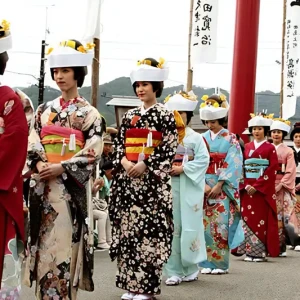
Aizu-Tajima Gion Festival, famous for Japan's largest bridal procession [Fukushima Prefecture]...

Daian-ji Temple, the family temple of the Mizusawa Date clan and Rusu clan, located in Mizusawa, Oshu...

Lake tazawa ski resort boasts stunning slopes and local gourmet food...

[Yamagata Prefecture] View the history of safflower culture from Risshakuji Temple in the mountains...

A locomotive, passenger train, and diesel railcar!? A truly bizarre train formation...

[Miyagi Prefecture] Even more delicious sasa kamaboko! Recommended products and...

[Yamagata Prefecture] What is Hanagasa Ondo? From an overview to interesting anecdotes...

[Aomori Prefecture] Learn about heavy snow while facing nature...

[Part 2] The Mogami Eight Shields, a coalition of local lords in Dewa Province...
