This site is an online media that delivers all sorts of trivia about the six Tohoku prefectures, from sightseeing and gourmet spots to local customs, history, and more
Konpira Barrel Floating Ceremony | A traditional folk event in Yamagata Prefecture to pray for protection against water-related disasters on the Mogami River
Konpira Barrel Floating Ceremony | A traditional folk event in Yamagata Prefecture to pray for protection against water-related disasters on the Mogami River
Yamagata Prefecture has long been blessed with many resources by the Mogami River
However, nature, while providing blessings, also brings unavoidable disasters. In Yamagata Prefecture, there is a custom called "Konpira Taru Nagashi" (floating barrels at Konpira Shrine) that has been practiced since ancient times by the people living in the Mogami River basin
Currently, it is the only remaining example of this Konpira faith, located in the Kawamukai district of Nakayama town, Higashimurayama district, Yamagata Prefecture. This time, we covered a festival related to this faith
What is Konpira worship?
Konpira worship is the practice of worshipping Konpira Gongen, a syncretic deity combining mountain worship and Shugendo (mountain asceticism), enshrined at Kotohira -gu, one of the temple buildings of Zozusan Matsuo-ji in Kotohira-cho, Kagawa Prefecture .
At Matsuo-ji Temple, it is said that the temple was founded when En no Ozunu , a sorcerer from the Asuka period and considered the founder of Shugendo, encountered a divine manifestation from Kumbhira of Tenjiku (India) while climbing Mount Zozu.
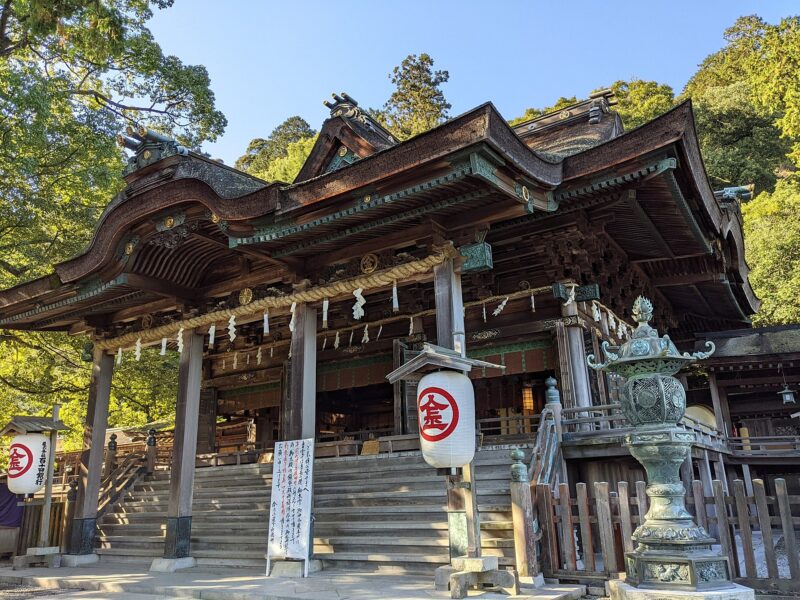
The main hall of Kotohira Shrine (Kagawa Prefecture)
Kumbhira is a water deity that personifies a crocodile living in the Ganges River. As it is also the mount of Ganga, the goddess who presides over the Ganges River, it has long been revered as a guardian deity of maritime traffic , and has attracted the faith of people involved in water transport in particular.
This is how the deity "Kumbhira" (or Konpira Gongen) was introduced to Japan, but crocodiles do not inhabit Japan
Therefore , Konpira Gongen came to be identified with Ōmononushi-no-kami , a deity appearing in Japanese mythology (Kojiki and Nihon Shoki) and considered to be an incarnation of a snake , and it is believed that Konpira Gongen came to be worshipped as the "snake god who controls water."
What is Konpira Taru Nagashi?
Yamagata Prefecture has prospered since ancient times through river transport on the Mogami River
Based in Sakata Port, a port of call for Kitamae ships,safflower, ramie, and ricewere transported from the inland areas to the Kansai region, while conversely,Hina dolls and ceramics, were transported inland via the Mogami River.
For the people of Yamagata, the "Mogami River water transport" was an indispensable part of their economic activities, allowing them to sell local products and obtain items that were unavailable locally
At the same time,Japan's three fastest-flowingrivers. It is only natural that the belief in Konpira-sama, who is believed to bring good fortune for safe navigation and river transport, spread.
Barrels with flags used in the Konpira barrel-floating ceremony
"Tarunagashi" is a custom of "proxy pilgrimage" that spread throughout the Mogami River basin . It is believed that people who could not visit Kotohira Shrine directly because they lived far away hoped that barrels filled with sacred sake and offerings would reach Kotohira Shrine by passing through the hands of strangers.
Barrel floating was once practiced in various parts of Yamagata Prefecture
The "barrel floating" ritual, which is now said to only remain in the Kawamukai district of Nakayama Town, was apparently once practiced in various parts of Yamagata Prefecture
The Konpira barrel floating ceremony in Kawamukai district, Nakayama town, has become the only one of its kind in the prefecture
The document written by Kazuo Noguchi, which was distributed at the Konpira barrel-floating festival venue in the Kawamukai district, states:
Sakata City
Honjo, Asahi Village, upper reaches of the Akagawa River in Shonai
Otori area, upstream of the Otori River, a tributary of the Akagawa River
Mogami Town
Shinjo City
Nanyo City, Nanbu Ohashi area
It is noted that they were able to collect records and testimonies found in various documents
Handling the barrels that have come down the river,
A place where you pick it up and place it in the village shrine
A place where you drink the alcohol inside
A place where you drink alcohol, refill it with new alcohol, and send it out again
It seems that the situation varies considerably from region to region, and I was also curious to know how many barrels actually made it safely to Kotohira Shrine
Scenes from the "Konpira Barrel Floating Ceremony" held on June 1, 2026
The custom of floating barrels down the Konpira River has now been preserved by a preservation society and designated as an intangible folk cultural property of Nakayama Town
Konpira-do Temple in Kawamukai district, Nakayama town, Yamagata Prefecture
In 2026, the ceremony was held at the Konpira-do temple in the Kawamukai district, starting at 9:00 AM on June 1st
Barrels and sake offered to Konpira-do
Inside the hall, in addition to the barrels that would actually be floated, many sake barrels and bottles of sake were offered as offerings, and the mayor of Nakayama Town also attended the festival
The conch shell is blown and the festival begins
Yamagata Prefecture, home to the "Dewa Sanzan" mountain range consisting of Hagurosan, Gassan, and Yudonosan, retains a strong culture of mountain worship and Shugendo (mountain asceticism), and elements of this can be seen in every aspect of this barrel-floating festival.
According to the distributed materials, the head priest who conducts the ceremony is"Hoin-san,", and the blowing of conch shells at key points also suggests that the ceremony is rooted in Shugendo tradition.
Currently, fishing line is attached to the barrels so they can be collected each time
Once the prayers and offerings at the temple are complete, the location shifts to the Mogami River, where the barrel-floating ceremony finally takes place
On this day, a sacred rope and three barrels were thrown into the Mogami River
On this day, a sacred rope (shimenawa) and three barrels (taru) were thrown into the Mogami River, and the entire festival ceremony concluded about an hour after it began
Currently, the barrels are collected by canoe
Nowadays, perhaps due to changing times, fishing line is attached to the barrels, and everything thrown into them is later retrieved by canoe
lastly
With the passage of time,transporting goods by boat on the Mogami Riverhas almost completely disappeared. It could be said that the gradual fading of the custom of floating barrels down the Konpira River was an inevitable consequence.
However, that is precisely why the customs of the Kawamukai district, which pass on the culture of the past to the present, are so valuable. I hope they will continue for many years to come
Traveling around the Tohoku region, I enjoy drinking delicious sake and exploring the local history, traditions, and customs. I write articles based on my interests. I'm currently interested in folk performing arts, local toys, and folk beliefs











![Daito-ryu Aikijujutsu [Part 1]](https://jp.neft.asia/wp-content/uploads/2026/01/aiki_tkd01-300x300.jpg.webp)